Why You Don’t Need to Break the Bank for a Safe, Functional Bird Cage
Let’s be honest: walking into a pet store and seeing cage prices north of $200 can make you question whether you can afford a feathered friend at all. The truth is that a complete, safe, and comfortable bird cage setup is absolutely achievable for under $50 — provided you know exactly what to buy, what to skip, and where to find the best deals. Whether you’re bringing home a budgie, cockatiel, finch, or lovebird, this guide walks you through every single component you need, with real product names and prices that won’t blow your budget.
Disclosure: This post contains affiliate links. If you click through and make a purchase, we may earn a small commission at no extra cost to you. Thank you for supporting this site!
I’ve spent years helping new bird owners set up their first cages, and I’ve learned the hard way which $5 accessories are worth every penny and which ones end up in the trash. This article is your bird cage setup guide for maximizing every dollar while keeping your bird happy, healthy, and stimulated.
The $50 Bird Cage Setup: What You Actually Need
Before we dive into specific products, let’s establish a realistic baseline. For under $50, you cannot buy a brand-new, large powder-coated cage — that’s simply not realistic. However, you can assemble a complete, high-quality setup if you already have the cage or find one secondhand. This guide assumes you already have a suitable cage (or are buying a used one for $10–$20 from Facebook Marketplace or Craigslist) and need everything inside it.
Here’s the breakdown of what a functional bird cage setup best practice requires:
- Perches – at least two different diameters and textures
- Food and water bowls – stainless steel or ceramic (no plastic)
- Toys – minimum 2–3 for foraging and shredding
- Cage liner – safe, absorbent and easy to change
- Mineral block or cuttlebone – for beak health and calcium
- A basic cage cover – for sleep and security
Total cost for all of the above? Roughly $35–$48 if you follow my specific recommendations below.
1. Perches: The Most Overlooked Health Essential
Most cheap cages come with those awful plastic dowel perches. They look fine, but they’re actually terrible for your bird’s feet. A bird that spends all day on a uniform, smooth perch develops bumblefoot (a painful infection) and arthritis. You need variety in diameter, texture, and material.

What to Buy Under $10
product: Prevue Pet Products 2-Pack Manzanita Perch (Small) — $6.99
These are natural branch perches with varying thickness. Your bird’s feet will grip different sections, exercising the muscles and preventing pressure sores. Manzanita wood is dense, won’t splinter, and lasts for years. The small size works for budgies, finches, and lovebirds.
product: JW Pet Company Sand Perch (8-inch) — $5.49
This is a cement-style perch with grit embedded in it. It helps trim your bird’s nails and beak naturally. Important: place this only as the highest perch in the cage — birds will naturally spend more time there, but you don’t want them standing on it all day because it can irritate feet if used exclusively.
Total for perches: $12.48
Actionable Tip
Grab a small branch (clean, pesticide-free apple, willow, or eucalyptus) from your backyard. Bake it at 200°F for 30 minutes to kill any bugs, then attach it with stainless steel hardware. That’s a free perch that’s actually better than most store-bought options.
2. Food and Water Bowls: Stainless Steel or Ceramic Only
Plastic bowls are cheap, but they’re a nightmare. Birds chew plastic, which releases harmful chemicals and creates sharp edges. Plastic also harbors bacteria in microscopic scratches. Never use plastic bowls.
You need at least two bowls — one for food, one for water. If you have a larger bird, add a third for fresh vegetables.
Best Budget Options
| Product | Material | Price | Best For |
|---|---|---|---|
| Living World Stainless Steel Cup (4 oz) | Stainless Steel | $4.99 | Budgies, finches, cockatiels |
| Katie’s Bazaar Ceracoop Ceramic Bowl (Small) | Ceramic | $7.99 | Lovebirds, small conures |
| You & Me Stainless Steel Lixit Bottle (8 oz) | Stainless Steel | $6.49 | Any bird (use with bowl for backup) |
Total for bowls: $9.98–$14.47
I recommend getting two stainless steel cups ($9.98 total) and one water bottle as backup. The bottle costs $6.49, but it’s optional if you’re strict about changing water twice daily.
Actionable Tip
Buy an extra set of bowls so you can rotate them. While one set is soaking in hot, soapy water, the other is already clean and dry in the cage. This prevents you from skipping cleaning days because you’re “too busy.”
3. Toys: Every Dollar Here Pays Dividends in Bird Happiness
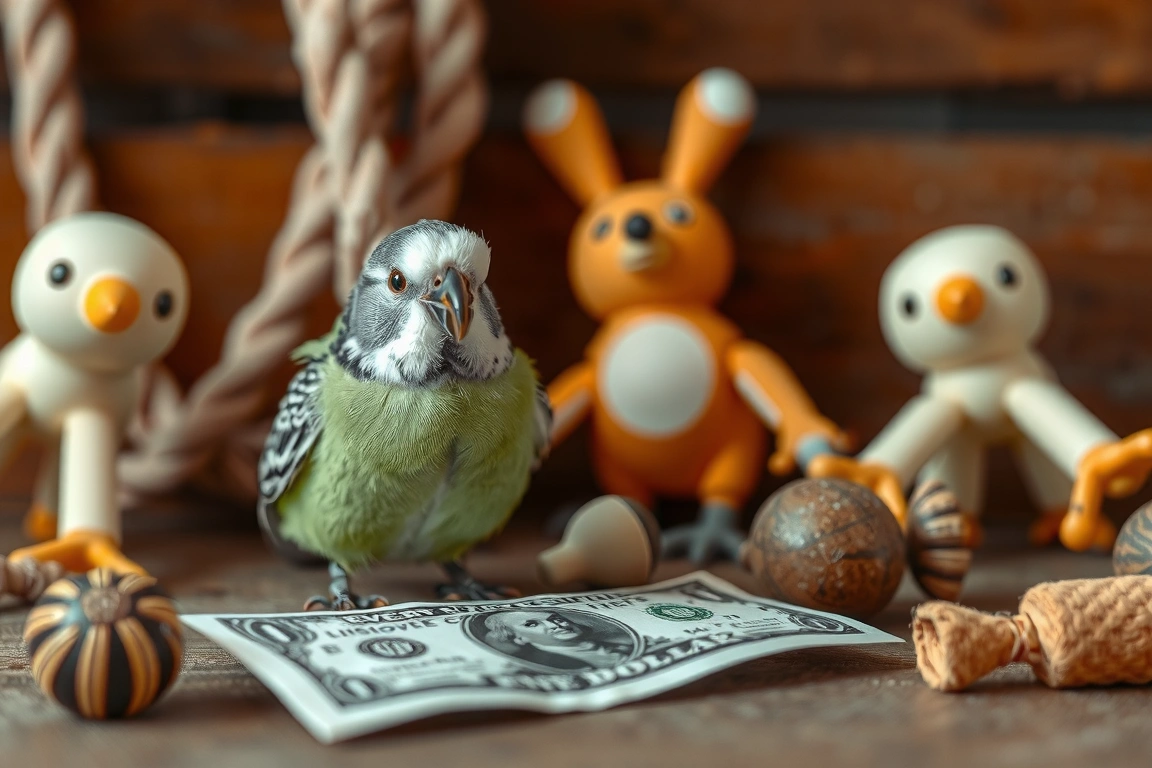
Toys aren’t optional — they’re essential for mental stimulation. A bored bird plucks feathers, screams, and develops behavioral issues. But you don’t need a $15 toy from a boutique pet store. The best bird cage setup guide trick is to buy inexpensive, destructible toys and rotate them weekly.
Three Toys Under $5 Each
1. Planet Pleasures Woven Palm Leaf Bird Toy (Small) — $4.99
This is a shreddable palm leaf ball. Small birds love picking at the fibers, which mimics natural foraging behavior. Hang it near a perch and watch your bird destroy it over a few days.
2. JW Pet Company Birdie Boing Toy (4-inch) — $4.49
This is a rope-like bouncy toy with colorful beads and fabric strips. Budgies and cockatiels go crazy for it. The twisting motion encourages climbing and play. Inspect it weekly for loose threads and trim them.
3. Homemade Foraging Toy — $0.00
Take a small paper cupcake liner, put a few millet seeds or a tiny piece of apple inside, crumple it loosely, and wedge it between cage bars. Your bird will spend 20 minutes figuring out how to open it. This costs nothing and provides more enrichment than many expensive toys.
Total for toys: $9.48
Actionable Tip
Never put all new toys in the cage at once. Introduce one toy at a time, spaced 3–4 days apart. A cage full of unfamiliar objects stresses birds out. Let them approach each toy on their own terms.
4. Cage Liners: The Cheapest Option Is Also the Best
You’ll see “bird cage liners” sold in pet stores for $8–$12 per pack. They’re paper sheets shaped to fit standard cages. They’re overpriced, and they don’t absorb anything well.
The best bird cage setup liner material is plain, unprinted newspaper or butcher paper. You can get newspaper for free from recycling bins, or buy a roll of kraft paper at a dollar store for $1.50 that lasts a month.
What Not to Use
- Pine shavings – they’re dusty and can cause respiratory issues
- Corn cob bedding – grows mold quickly in humid environments
- Walnut shell bedding – sharp fragments can injure feet
- Paper pellets – expensive and not necessary for small cages
Cost for liners: $1.50 per month (or free if you use newspaper)
Actionable Tip
Cut your liner paper to exact cage size and use two layers. In the morning, remove the top layer if it’s soiled, leaving the clean bottom layer. This takes 15 seconds and keeps the cage fresh between deep cleanings.
5. Cuttlebone and Mineral Block: Cheap Health Insurance
A cuttlebone or mineral block provides calcium, helps trim your bird’s beak, and gives them something to chew. Both cost under $2 and last 2–3 months.

Product: Vitakraft Natural Cuttlebone with Holder — $1.99
This comes with a plastic holder that clips to the cage bars. Don’t throw away the holder — it keeps the cuttlebone from falling to the bottom where it gets dirty and ignored. Some birds ignore cuttlebone at first. If yours does, scrape the surface gently with a knife to expose the softer inner layer. The scent and texture will attract your bird.
Product: JW Pet Company Mineral Block (Small) — $2.49
This is a compacted mineral block with iodine and trace minerals. Some birds prefer this over cuttlebone. offering both (total $4.48) covers all nutritional bases.
Total for supplements: $4.48
6. Cage Cover: A Simple Cloth Improves Sleep Quality
Birds need 10–12 hours of uninterrupted, dark sleep. If your bird’s cage is in a living room or bedroom where lights stay on, a cover is non-negotiable. A poor night’s sleep causes hormonal imbalances, aggression, and feather plucking.
Product: Prevue Pet Products Cage Cover for Small Bird Cages (20″ x 20″) — $9.99
This is a fitted cover made from breathable cotton and polyester blend. It’s blackout-grade — no light seeps through. The fabric is machine washable, which is essential because birds occasionally “redecorate” at night.
Alternative: Use an old dark-colored bedsheet or large towel (free). Fold it to fit over the cage, leaving a small gap at the bottom for ventilation. Avoid fleece or microfiber — they trap heat and don’t breathe well.
Total with store-bought cover: $9.99
Complete Budget Breakdown: Grand Total
Here’s the exact bird cage setup guide shopping list with costs:
| Item | Product | Cost |
|---|---|---|
| Perch 1 | Prevue Manzanita 2-Pack | $6.99 |
| Perch 2 | JW Sand Perch | $5.49 |
| Bowls (2) | Living World Stainless Steel | $9.98 |
| Toy 1 | Planet Pleasures Palm Leaf | $4.99 |
| Toy 2 | JW Birdie Boing | $4.49 |
| Liner | Free newspaper or $1.50 kraft paper | $0.00 |
| Cuttlebone | Vitakraft with holder | $1.99 |
| Mineral Block | JW Pet Mineral Block | $2.49 |
| Cage Cover | Prevue Pet Products Cover | $9.99 |
| Total | — | $46.42 |
That leaves you $3.58 under your $50 budget, which you can spend on a small bag of millet spray ($2.99) — a high-value treat for taming and training.
Where to Find These Products for Even Less
Prices I listed above are from Amazon and Chewy, but you can beat them with a little effort:
- Facebook Marketplace / Craigslist — People often sell entire cage setups for $20–$30. You’ll find perches, bowls, and toys included. Disinfect everything with diluted white vinegar (1:4 with water) before using.
- Dollar Tree — Small stainless steel bowls ($1.25 each), binder clips for attaching toys (2 for $1.25), and kraft paper rolls ($1.25).
- Thrift stores — Look for small ceramic ramekins (oven-safe) for $0.50 each. They make great food bowls.
- Pet store clearance bins — Check the “as-is” or clearance section. Toys with damaged packaging but intact contents are often marked 50–70% off.
Common Budget Setup Mistakes (and How to Avoid Them)
I’ve seen new bird owners waste money on these three things repeatedly. Save yourself the hassle:
Mistake #1: Buying a “Starter Kit” Cage
These $30–$40 cages from big box stores come with “everything included” — plastic bowls, a dowel perch, and two plastic toys. The cage is usually too small, the bowls are unsafe, and the toys get ignored. You end up replacing everything within a month. Pass on these.
Mistake #2: Overloading on Accessories Right Away
Your bird needs space to move. A cage cluttered with perches, toys, and swings stresses the bird and makes cleaning difficult. Stick to 3–4 items total in the first week, then add more as you understand your bird’s preferences.
Mistake #3: Ignoring Placement
Even the best bird cage setup best practices fail if the cage is in a bad spot. Keep the cage:
- Away from drafts (windows, AC vents)
- Away from direct sunlight (can cause overheating)
- At eye level or higher (birds feel safer)
- In a room where the family spends time (birds are social)
For the Love of Your Pet
Care guides, breed insights, and gentle advice for happier pets.