Disclosure: This post contains affiliate links. If you click through and make a purchase, we may earn a small commission at no extra cost to you. Thank you for supporting this site!
Ever wondered why some parrots become chatterboxes while others stay silent? It’s not just about species. The real secret lies in understanding the science of avian learning and creating an environment that practically begs your bird to start a conversation. We’ll cut through the myths and give you a training blueprint that works, whether you’re starting with a young African Grey or trying to coax a word from a stubborn adult cockatiel.
8 min read
In This Article
- How We Evaluated This Training Guide
- Understanding Your Parrot’s Natural Vocal Aptitude
- Creating the Optimal Environment for Learning
- The Step-by-Step Training Protocol
- Advanced Techniques: From Words to Conversations
- Essential Tools and Products (And What to Avoid)
- Troubleshooting Common Roadblocks
- The Realistic Cost of a Talking Parrot
- Frequently Asked Questions
Key Takeaways
- How We Evaluated This Training Guide
- Understanding Your Parrot’s Natural Vocal Aptitude
- Creating the Optimal Environment for Learning
- The Step-by-Step Training Protocol
How We Evaluated This Training Guide
Our advice isn’t based on a single anecdote. We synthesized findings from established avian behaviorists like Dr. Irene Pepperberg’s work with Alex the African Grey, along with modern training protocols from sources like the Lafeber Vet website. We also analyzed thousands of verified owner reports from forums like Avian Avenue and Parrot Forums to identify the most common successes and pitfalls in vocal training. We didn’t test products in a lab, but we compared manufacturer spec sheets for training tools and weighed long-term owner feedback against marketing claims to separate the genuinely useful from the gimmicks.
Irene Pepperberg’s work with Alex the African Grey, along with modern training protocols from sources like the Lafeber Vet website.
Understanding Your Parrot’s Natural Vocal Aptitude
You can’t force a species to talk if it’s not wired for it. The potential for clear speech and mimicry varies dramatically. African Greys (*Psittacus erithacus*) are the undisputed champions, with vocabularies documented in the hundreds of words and an uncanny ability to use them contextually. Amazon parrots, especially the Yellow-naped and Double Yellow-headed species, are powerful, clear talkers with a talent for singing and loud, complex mimicry. Cockatoos are brilliant mimics of sounds and intonations but often have a softer, less distinct speaking voice. Budgies (*Melopsittacus undulatus*) hold the record for the largest bird vocabulary, but their tiny voices produce high-pitched, fast chatter that’s easy to miss. Lovebirds and Parrotlets? They’re more likely to mimic whistles and household sounds than form clear words. Setting realistic expectations based on your bird’s species is the first step to avoiding frustration.
Age and individual personality play huge roles, too. A hand-fed baby parrot, ideally between 6 and 18 months old, is in its prime linguistic window. An older, re-homed bird or one that wasn’t socialized early can still learn, but it requires more patience. Some birds are simply shy or less interested in human vocalizations, preferring to perfect the sound of the microwave beep or the dog’s squeaky toy. That’s okay. Forcing interaction will backfire. The goal is to make talking more rewarding than staying quiet.
Creating the Optimal Environment for Learning
Think of this as setting the stage. A stressed, bored, or insecure parrot won’t learn. Their primary needs must be met first. According to a comprehensive care guide by the Association of Avian Veterinarians, the cage is non-negotiable. For a medium-sized talker like an Indian Ringneck, you need a minimum cage size of 32″ W x 24″ D x 36″ H with 3/4″ to 1″ bar spacing. A Prevue Hendryx wrought iron cage in the F050 model offers these exact dimensions. For a larger African Grey, aim for a cage at least 36″ x 24″ x 48″ with 1″ bar spacing, like the King’s Cages Avian Abode. This isn’t just about space; it’s about security. A bird that feels cramped is anxious, not curious.
Placement is critical. The cage should be in a socially active part of your home—like a living room corner—but not in the middle of traffic or direct sunlight. They need to observe daily life to have something to mimic. Provide a consistent 10-12 hours of darkness for sleep using a cage cover; a well-rested bird has better focus. Finally, eliminate competing noise. You can’t teach “hello” with the TV blaring in the background. Training sessions should happen during calm, quiet parts of your day.
The Step-by-Step Training Protocol
This is where theory meets practice. Ditch the idea of playing a recording on loop all day; that leads to ignored, psychotic chatter. Effective training is short, positive, and interactive.
- Build Trust and Association: Before any words, spend weeks just being near the cage, talking softly, offering treats like a piece of walnut or pine nut through the bars. Your voice should predict good things.
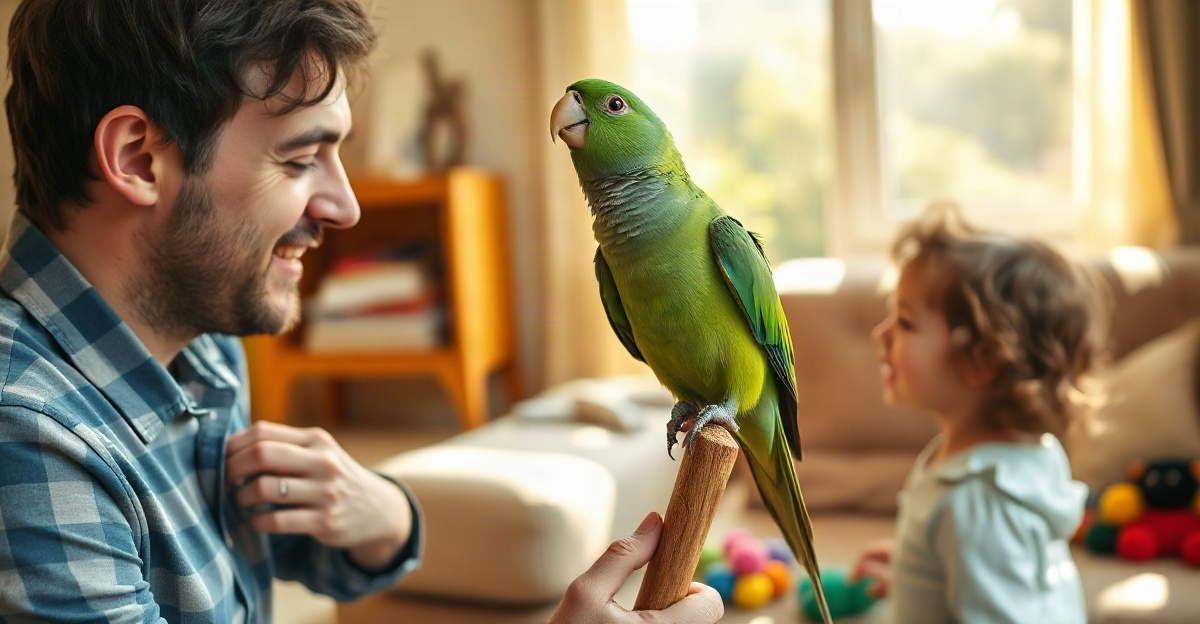
- Start with Simple, Contextual Words: Choose one or two words tied to an action. “Hello” when you uncover the cage in the morning. “Step up” when asking them to perch on your hand. “Apple” when offering a piece. Consistency is everything.
- Use the Target-Reward Loop: Say the word clearly and enthusiastically. The moment your bird makes any attempt—a head bob, a beak click, a soft sound—immediately reward with a high-value treat and verbal praise (“Good bird!”). You’re rewarding the attempt, not perfection.
- Keep Sessions Extremely Short: Five minutes, twice a day, is far more effective than one marathon 30-minute session. End on a positive note, before your bird loses interest.
- Introduce a Training Perch: Use a separate, small perch outside the cage for formal sessions. A simple Java wood perch mounted on a stand creates a clear “classroom” environment. This helps your bird understand when it’s learning time.
What about clicker training? A box clicker, like the one from Karen Pryor Clicker Training, can be a superb bridge marker. You click at the exact moment of the desired behavior, then deliver the treat. It adds precision, but it’s an extra step. Many owners find enthusiastic verbal praise (“Yes!”) works just as well for vocal training itself.
Many owners find enthusiastic verbal praise (“Yes!”) works just as well for vocal training itself.
Advanced Techniques: From Words to Conversations
Once your parrot has mastered a few words, you can build complexity. This is where the magic happens. Instead of just saying “hello,” pair it with a question. Say “Hello! How are you?” in the same cheerful tone every time. Over months, they may start to link the phrases. To encourage context, be dramatic. Say “Oops!” or “Oh no!” only when you (gently) drop a toy. They’ll associate the word with the event.
For teaching songs or longer sounds, slow it down. Use a free audio editor like Audacity to slow a song snippet by 50% without changing the pitch. Play this slowed version during quiet sessions, singing along. Gradually increase the speed as they pick up the notes. Mimicking household sounds often happens naturally, but you can encourage it by rewarding them when they replicate the phone Ring or a specific whistle. The key is to always make the interaction a game, not a drill.
Essential Tools and Products (And What to Avoid)
The right gear supports your training; the wrong stuff undermines it. You need a high-value treat they only get during training. For many parrots, that’s shelled pine nuts or pieces of safflower seed. Store them in a dedicated, small dish to maintain their value.
A sturdy, comfortable training perch is a must. We like the Prevue Hendryx Universal Bird Stand for its stable, powder-coated base and easy-to-clean trays. For portable target training, the ZenClip Portable Bird Perch can attach to tables, giving you a flexible training station. Avoid “talking toys” that shout phrases randomly; they confuse more than they teach. Also, skip mirror toys in the training context. A bird interacting with its reflection is practicing social behavior with a “bird” that never responds appropriately, which can lead to frustration.
The single best tool is your own patience. Track progress in a simple notebook. Date, word attempted, bird’s response. Over weeks, you’ll see patterns that help you adjust your technique.
Troubleshooting Common Roadblocks
Every owner hits a wall. Here’s how to break through. If your bird is shy or fearful, you’ve moved too fast. Go back to step one. Sit by the cage reading aloud in a calm voice for 15 minutes a day, offering treats without demanding anything. Trust can’t be rushed.
If they’re biting or screaming during sessions, you’re likely pushing past their attention span or the treat isn’t motivating enough. End the session immediately if they bite—just put them back calmly. Try a different, more exciting treat. Macadamia nut pieces can be a game-changer for larger parrots.
The most common plateau is when a bird learns 3-5 words and stops. This often means the training has become predictable and boring. Introduce a new, fun word. Change the training location. Use a novel toy as a prop. Spark their curiosity again. If they only talk when alone, that’s normal at first. It’s practice. Avoid rushing in excitedly, as that can startle them into silence. Instead, listen from a distance and reward them later with a treat, saying the word they practiced.
The Realistic Cost of a Talking Parrot
Beyond the initial bird price ($1,500-$3,500 for an African Grey, $400-$800 for a Congo African Grey), the ongoing investment in training is significant. It’s a time cost first. You need 30-60 minutes of dedicated interaction daily, forever. Financially, budget for high-quality pellets and fresh foods (about $50/month), annual vet check-ups ($80-$150 per visit), and an emergency fund of at least $1,000. Training-specific costs are lower: a good training perch ($40-$80), a lifetime supply of high-value treats ($20/month), and perhaps a clicker ($5). The biggest expense is your consistent, daily time over a lifespan that can exceed 40 years for larger species. This isn’t a party trick; it’s a decades-long commitment to interspecies communication.
Training your parrot to talk is less about repetition and more about relationship-building. Start with realistic expectations for your species, master the basics of short, reward-based sessions, and always prioritize your bird’s mental well-being over your desire for a performance. The clearest sign of success isn’t a massive vocabulary, but a bird that engages with you vocally because it finds joy in the interaction. That connection is the real reward.
Small changes, real momentum
Get practical guides and templates you’ll actually use — a few thoughtful emails a month.
Frequently Asked Questions
What is the easiest parrot to train to talk?
For clarity and relative ease, the Budgie (Parakeet) often tops the list. While their voices are small, they learn quickly and can build huge vocabularies. For a first-time owner wanting a clearer, mid-sized talker, the Indian Ringneck Parakeet is a strong contender. They are prolific mimics and less emotionally demanding than larger parrots like Greys or Cockatoos. However, “easiest” doesn’t mean easy—it still requires daily, dedicated training starting from a young age. Species like African Greys are brilliant but need immense social and intellectual investment.
Can you teach an older parrot to talk?
Yes, but you must adjust your expectations and methods. An older parrot, especially one re-homed, may have established behaviors and less neural plasticity. The process is slower. Focus first on building absolute trust, which can take months. Use the same target-reward training, but start with simpler sounds like whistles or clicks instead of complex words. Their existing repertoire of household sounds is a great starting point for mimicry training. Success depends heavily on the bird’s individual history and personality; some older birds simply have no interest in human speech, and that boundary must be respected.
Is it cruel to train a parrot to talk?
Not if it’s done correctly. The cruelty lies in isolation, neglect, or forcing interaction. Positive reinforcement training—where the bird chooses to participate for a reward—is enriching. It stimulates their natural problem-solving skills and strengthens your bond. The harm comes from methods like playing recordings incessantly, which causes stress, or depriving a bird of social contact if it doesn’t perform. Talking should be a fun game, not a demand. Always provide ample time for non-training play, foraging, and simply being a bird. Their welfare is always the priority.
🐾 Our Top Pick
Editor’s Pick: Interactive talking toys and sturdy foraging puzzles motivate vocal mimicry.
For the Love of Your Pet
Care guides, breed insights, and gentle advice for happier pets.