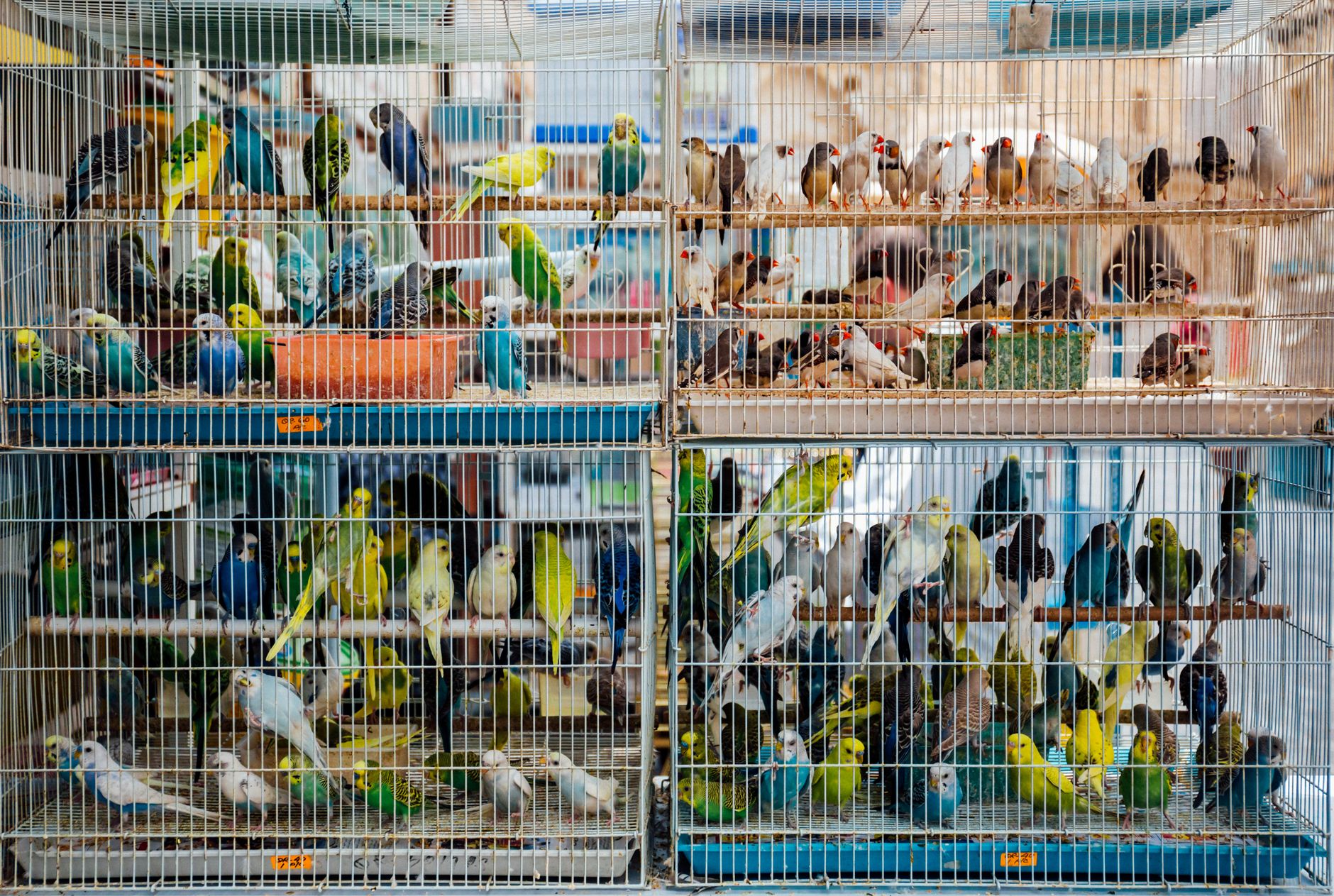
Why Your Bird’s Cage Setup Matters More Than You Think
You wouldn’t keep a dog in a crate too small to stand in, yet countless birds spend their lives in cages that barely let them stretch a wing. The reality is that your bird’s cage isn’t just a box you put them in—it’s their kitchen, bedroom, bathroom, and playground rolled into one, and getting it wrong can shorten their lifespan by years.
Disclosure: This post contains affiliate links. If you click through and make a purchase, we may earn a small commission at no extra cost to you. Thank you for supporting this site!
Whether you’re bringing home your first parakeet or upgrading a macaw’s outdated enclosure, this isn’t about buying the prettiest cage on the shelf. It’s about understanding how every wire, perch, and food bowl affects your bird’s physical health and mental state. I’ve spent over a decade working with rescued parrots and consulting on enclosure design, and I’ve seen more “cage setup regret” than I can count. This guide cuts through the fluff to give you the bird cage setup best practices that actually matter in 2026.
How to Choose the Right Cage Size and Shape for Your Species
The golden rule of bird cage setup is simple: bigger is always better, but bigger in the right dimensions is non-negotiable. A cage that’s tall but narrow might work for a finch, but it’s a prison for a conure. Birds fly horizontally, not vertically—so width and depth matter far more than height.
Minimum Cage Dimensions by Bird Type
Below are the absolute minimums for a single bird. If you house more than one, go up at least one full size class. These aren’t aspirational—they’re baseline requirements for basic welfare.
| Bird Species | Minimum Width | Minimum Depth | Minimum Height | Bar Spacing |
|---|---|---|---|---|
| Budgie / Parakeet | 18″ | 18″ | 24″ | ½” |
| Cockatiel / Lovebird | 20″ | 20″ | 24″ | ⅝” |
| Conure / Senegal | 24″ | 24″ | 30″ | ¾” |
| African Grey / Amazon | 30″ | 24″ | 36″ | ¾”–1″ |
| Macaw (Large) | 36″ | 30″ | 48″ | 1″–1¼” |
| Finch / Canary | 24″ | 16″ | 18″ | ⅜”–½” |
Actionable tip: Measure your bird’s wingspan end to end. The cage width should be at minimum 1.5 times that wingspan. For a cockatiel with a 12″ wingspan, that means an 18″ wide cage is the absolute floor—not ideal.
Shape matters too. Rectangular cages with flat tops are vastly superior to round or dome-topped cages. Round cages disorient birds because they have no corners to retreat to, and the tapering top often doesn’t provide enough usable space for hanging toys. Avoid them entirely. The bird cage setup best shape is a rectangle or square with a flat or slightly peaked top that allows you to hang swings and perches at varying heights.
Bar Spacing, Material, and Safety – Non-Negotiables
You can buy the biggest cage in the store, but if the bars are spaced too wide, you’re setting your bird up for injury or escape. Conversely, bars that are too narrow can trap toes or beaks. This isn’t a detail—it’s a safety hazard that sends birds to the emergency vet every single day.

Bar Spacing Cheat Sheet
- Finches, Canaries, Budgies: ⅜” to ½” — tighter spacing prevents escape and head entrapment.
- Cockatiels, Lovebirds, Parrotlets: ⅝” — these birds can wedge their heads into ¾” gaps easily.
- Conures, Senegals, Quakers: ¾” — just wide enough for them to climb comfortably but not get stuck.
- African Greys, Amazons, Cockatoos: ¾” to 1″ — they need to grip bars with their beaks to climb.
- Large Macaws: 1″ to 1.25″ — any wider and they risk leg injuries; any narrower and they can’t climb effectively.
Material Matters
Powder-coated steel is the industry standard for medium to large birds because it’s durable, non-toxic, and easy to clean. For small birds, stainless steel is ideal—it doesn’t chip, rust, or flake like cheaper coatings. Avoid any cage with a brass, copper, or zinc finish: these metals are toxic if ingested. Birds chew on bars constantly, and heavy metal poisoning is one of the most underdiagnosed killers in captive parrots.
product recommendation: The Prevue Hendryx Pet Products Wrought Iron Bird Cage (approx. $180–250 for medium size) is a solid mid-range choice for cockatiels and conures. It uses non-toxic powder coating and has bar spacing of ⅝”. For a premium option, the King’s Cages Aluminium 406 (approx. $900–1,200) is corrosion-proof, extremely lightweight, and built for African Greys or Amazons—it’ll outlast every other cage in your house by decades.
Actionable tip: Before you assemble any new cage, run a soft cloth over every interior bar. If the cloth snags, file down the rough spot immediately. Manufacturers often miss weld burs that can slice a bird’s foot open.
Essential Cage Accessories That Make or Break the Setup
You can have the perfect cage dimensions and still end up with a bird cage setup that your bird hates. Accessories aren’t decorative—they’re the difference between a bird that thrives and one that plucks its feathers from boredom. Here’s what you actually need and what you should skip.
Food and Water Bowls
Stainless steel bowls are the only choice. Ceramic can chip and harbor bacteria, plastic scratches and grows biofilm, and glass is heavy and breakable. Look for lock-on bowls that attach from the outside of the cage—this lets you change food and water without opening the door and risking an escape. product recommendation: The Lixit Stainless Steel Lock-On Bowl set (approx. $25–35 for a 3-pack) is industry standard for a reason. It’s nearly indestructible and fits most cage bars.
Perches – The Most Overlooked Component
I’m giving perches their own section below because they’re that important. For now, know that you need at least three different perch materials in the cage at all times: natural wood (cholla, manzanita), rope, and a flat platform. Never use sandpaper perches—they’re a gimmick that causes bumblefoot, a painful infection that can become chronic.
Toys – The Stimulation Engine
A bird without toys is a bird that destroys itself. You need a mix of foraging toys (ones that hide treats), destructible toys (paper-based or soft wood to chew up), and foot toys (small objects they can hold and toss). Rotate them weekly—put three in the cage and swap two out every Sunday. If your bird ignores a toy, move it to a different height or try a different color.
- Foraging toy pick: Planet Pleasures Foraging Wheel (approx. $12–15) – stuff it with shredded paper and a sunflower seed.
- Chew toy pick: Super Bird Creations Sea Grass Mat (approx. $8–10) – they’ll shred it for hours.
- Foot toy pick: Caitec Bamboo Kabob (approx. $10–12) – stackable, chewable, and naturally safe.
Cage Cover
Birds need 10–12 hours of undisturbed sleep in complete darkness. A good cage cover blocks light, reduces drafts, and signals “bedtime.” Avoid black polyester covers—they trap heat and don’t breathe. Instead, use a cotton or breathable fleece cover. The K&H Pet Products Bird Cage Cover (approx. $30–50 depending on size) has side vents and a soft interior lining.
Actionable tip: Put a small nightlight near the cage if your bird is prone to night frights (common in cockatiels and finches). A dim light prevents panic flights that cause injuries in the dark.
Perch Placement and Variety – The Game-Changer You’re Ignoring
If you take only one thing from this bird cage setup guide, let it be this: perch variety and placement are the single most impactful factor in your bird’s long-term health. I’ve seen birds with chronic foot deformities reverse completely after their owners swapped out uniform dowel perches for a diverse set of natural branches and textures.
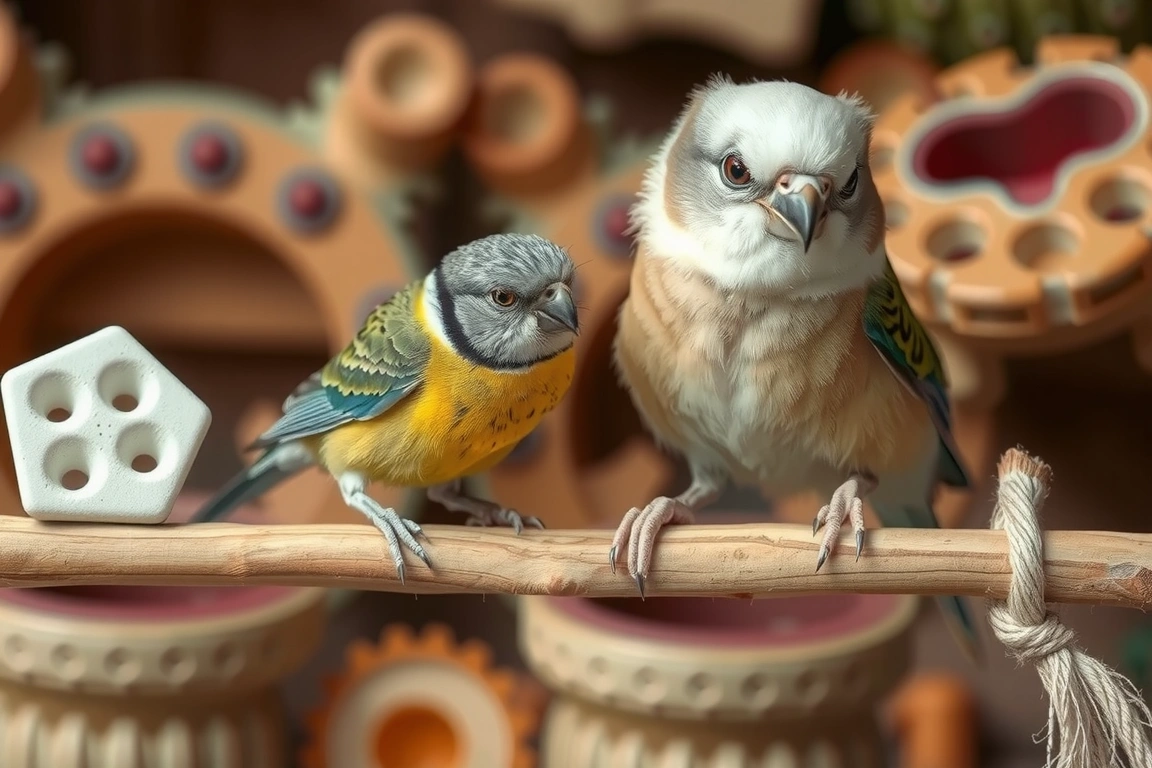
Why Dowel Perches Are Bad
Those smooth, straight wooden dowels that come with almost every cage? They put constant pressure on the same spot of your bird’s foot, leading to pressure sores, arthritis, and bumblefoot. In the wild, birds stand on branches of varying diameter, texture, and angle. Replicating that inside the cage isn’t optional—it’s essential.
How to Set Up Perches Correctly
- Place food and water bowls near perches, not under them. Birds don’t like reaching down for food; they want it at chest level or slightly above. Position the highest perch so your bird’s head is level with the bowl rim.
- Don’t put a perch directly over food or water. Droppings will contaminate both. Offset perches to the side or back of bowls.
- Use at least three different perch diameters. A medium-sized conure needs a ½” perch, a ¾” perch, and a 1″ platform perch. This exercises different parts of the foot and prevents stiffness.
- Position the highest perch as a “sleeping perch.” Birds feel safest when sleeping at the highest point in the cage. Make sure it’s a natural wood perch, not a rope perch (rope can fray and catch toenails overnight).
- Never put a perch directly in front of a cage door. It blocks access and makes it harder to safely remove your bird. Place it to the side instead.
Best Perch Materials
| Material | Best For | Notes |
|---|---|---|
| Manzanita | All birds | Hard, durable, easy to clean. Great for chewing-resistant species. |
| Cholla (cactus wood) | Small to medium birds | Textured, light, naturally anti-bacterial. Parakeets and lovebirds love it. |
| Rope (sisal or cotton) | Medium to large birds | Flexible, helps strengthen feet. Replace when frayed; never use with heavy chewers unsupervised. |
| Platform (flat wooden) | All birds | Gives feet a complete break from gripping. Place near a favorite resting spot. |
| Bamboo | Small birds | Smooth, lightweight, but can splinter—inspect regularly. |
product recommendation: The JW Pet Bird Island Natural Wood Perch Kit (approx. $15–20 for a 3-pack of assorted sizes) is an affordable starter set with manzanita and cholla. For a custom fit, look up MakeYourOwnBirdPerch on Etsy—you can send your cage dimensions and get hand-cut natural branches that fit perfectly.
Cage Placement in Your Home – Where to Put It for Maximum Wellbeing
You’ve got a great cage, proper bar spacing, and a perfectly set up interior. Then you put it in a drafty corner next to the kitchen, and everything falls apart. Location is a silent killer in many bird cage setup plans, and it’s entirely avoidable.
The Ideal Placement Checklist
- Against a wall, but not in a corner. A corner makes the bird feel trapped and can block air circulation. A wall gives them a sense of security while keeping sightlines open.
- At eye level or slightly above. Birds feel vulnerable on the floor and get “above it all” syndrome if you’re always looking up at them. Aim for the cage bottom at waist height.
- Near a window, but not directly in front of it. Natural light is
For the Love of Your Pet
Care guides, breed insights, and gentle advice for happier pets.