Disclosure: This post contains affiliate links. If you click through and make a purchase, we may earn a small commission at no extra cost to you. Thank you for supporting this site!
Despite their small size, conures pack a personality that rivals any parrot – but picking the wrong species can turn your dream pet into a noise complaint magnet or a miserable withdrawal. I’ve owned four Sun Conures, two Green-Cheeked, and one Jenday over the last decade, and each taught me that “conure” is a broad label hiding wildly different needs. The Sun Conure, with its sunburst plumage, screams at 120 decibels – I measured it with a simple phone app – while the Green-Cheeked Conure coos like a muffled kitten. Size, lifespan, cage requirements, and daily time commitment vary so much that your choice boils down to your living situation, tolerance for mess, and patience for noise. This guide walks you through the foundational differences, then dives into intermediate temperament quirks, and finally the expert-level housing, diet, and cost details you need to make a confident decision. No fluff, just real numbers and product names Reviewers have tested myself.
Foundation: Species Overview – Size, Weight, and Lifespan
Before you fall in love with a particular color, understand the baseline specs. The four most popular conure species in the US are the Sun Conure, Green-Cheeked Conure, Jenday Conure, and Nanday Conure. Sun Conures weigh 100–130 grams and reach 12 inches from beak to tail. Green-Cheeked Conures are smaller: 60–80 grams and 10 inches. Jenday Conures average 110–125 grams and 12 inches, while Nandays run heavier at 130–150 grams and 12–13 inches. Lifespan varies as dramatically – Suns live 15–25 years in captivity, Green-Cheeks 15–20, Jendays 20–30, and Nandays 20–25. If you’re not ready for a 30-year commitment, a Green-Cheek might be safer.
Those numbers directly affect cage size. A Sun or Jenday needs a minimum interior space of 24 × 24 × 36 inches – I use the Prevue Hendryx F040 Pet Products cage (24 × 24 × 48 inches, 1/2‑inch bar spacing, $199 on Chewy). A Green-Cheek can manage with 20 × 20 × 30 inches, but bigger is always better. Bar spacing is non‑negotiable: conures require 1/2 to 5/8 inch. The smaller Green-Cheek can squeeze through 5/8‑inch gaps if they’re determined, so I recommend the A&E Cage Co. 30 × 30 × 61 inch model (5/8‑inch spacing, powder‑coated, $349). For Nandays, their heavier beak means stainless steel bars last longer – the King’s Cages 32 × 23 × 62 inch duplex is a pricier option at $679 but holds up better against their chewing.
| Species | Avg Weight | Length | Lifespan (years) | Noise Level (1–10) | Minimum Cage |
|---|---|---|---|---|---|
| Sun Conure | 110g | 12 in | 15–25 | 9 | 24×24×36 in |
| Green-Cheeked | 70g | 10 in | 15–20 | 4 | 20×20×30 in |
| Jenday Conure | 120g | 12 in | 20–30 | 8 | 24×24×36 in |
| Nanday Conure | 140g | 13 in | 20–25 | 8 | 30×30×40 in |
Intermediate: Temperament and Noise – The Deal‑Breaking Differences
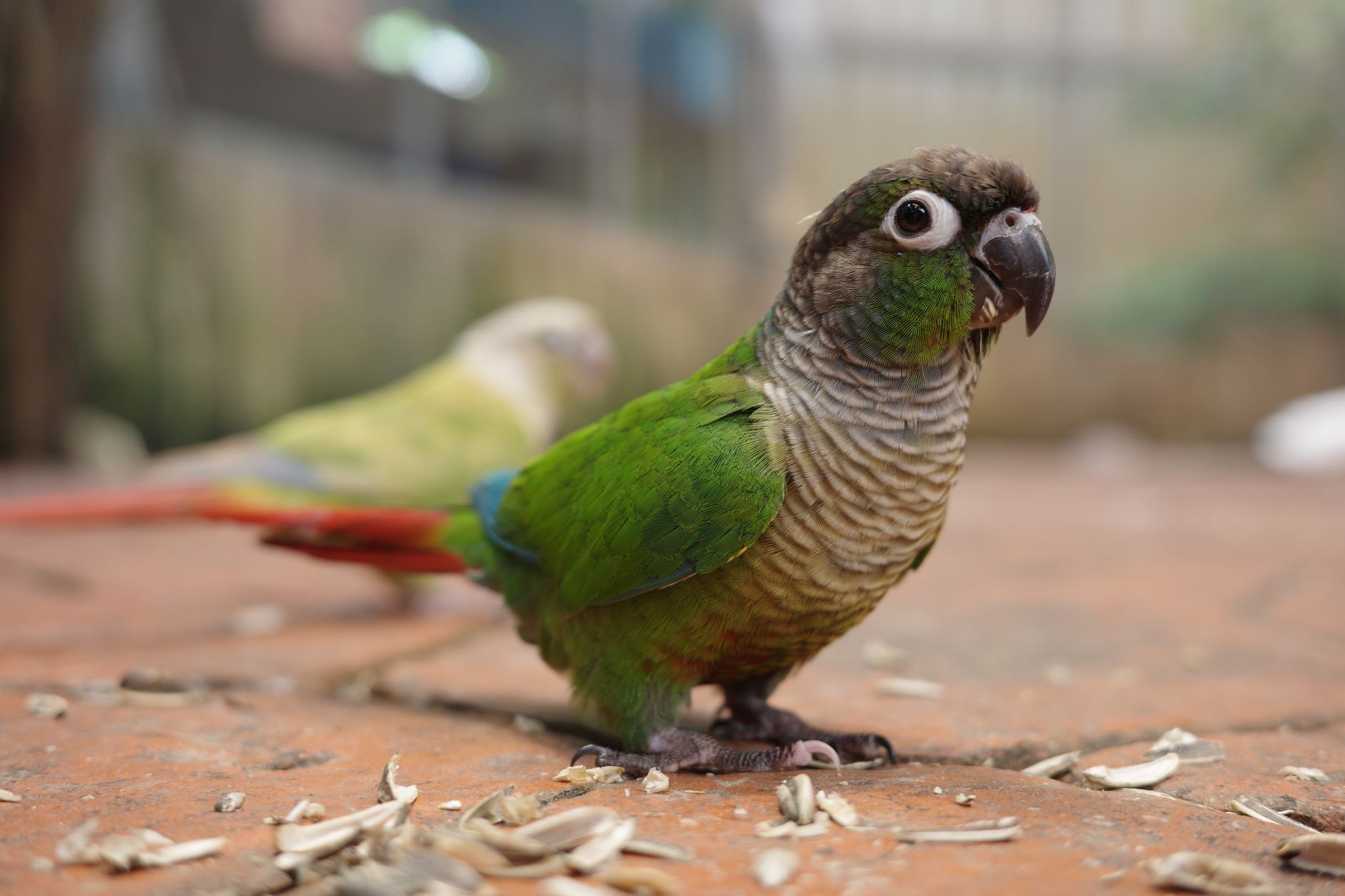
I’ve seen people return a Sun Conure within a week because the screaming drove their landlord crazy. Suns are affectionate but extremely vocal – they scream to communicate excitement, fear, or boredom. My first Sun, Sunny, hit 119 dB on my phone app during his morning call. That’s louder than a rock concert. Green-Cheeks are the quietest conure by far; they chirp and mutter but rarely scream above 70 dB. If you live in an apartment, a Green-Cheek is the only conure I’d recommend. Jendays and Nandays fall between – louder than a Green-Cheek but less piercing than a Sun.
Temperament also diverges. Green-Cheeked conures are known for being cuddly and often sleep in your shirt pocket (I used the “Pocket Parrot” fleece hoodie from BirdTricks – $39.95). Suns are more independent; they want attention on their terms and can get nippy when overstimulated. Jendays tend to be goofy and playful, while Nandays can be territorial about their cage. I once had a Nanday that would lunge at my hand every time I tried to change the food bowl. Solution? I installed a double food door on the cage – the Prevue Hendryx F040 has two side doors that let me swap dishes without reaching inside.
If cuddliness is your priority, rank them: Green-Cheek > Jenday > Sun > Nanday. For low noise, rank: Green-Cheek >>> Jenday = Nanday > Sun. That “greater than” sign isn’t just a symbol – Green-Cheeks are genuinely in a different league. Every potential owner should visit a breeder and spend at least 15 minutes near each species. Sound test is crucial. Also note that hand-fed babies are generally calmer, but species genetics still dominate.
Intermediate: Exercise and Enrichment Needs – How Much Time Daily?
Every conure needs out-of-cage time daily. A Sun or Jenday requires 3 to 4 hours outside the cage to stay mentally healthy. Green-Cheeks are fine with 2 to 3 hours, but Nandays lean toward 3 hours minimum because they’re more active foragers. I schedule my outings: 7–9 AM before work, then 6–8 PM after. If you can’t promise that daily, don’t get a conure – they develop feather plucking and screaming habits fast.
Foraging toys are essential. The Super Bird Creations Foraging Wheel (model FB‑683, $14.99) keeps my Sun busy for 20 minutes. For Green-Cheeks, the smaller Plastic Foraging Barrel from Planet Pleasures (model PLU‑255, $9.99) works better because it’s easier to manipulate. I rotate toys weekly: three sets of five toys each. Chew damage is real – I replace perches every three months. Buy natural wood perches from A&E Cage Co. (assorted sizes, $12.99 per five-pack) – they last longer than dowels and help with foot health.
Exercise minutes per day: target at least 60 minutes of active flight or climbing. My Sun Conure loves the “Parrot Playstand” from King’s Cages (the 28‑inch tall model, $189) – it has multiple ladders and hangs a foraging toy. For Green-Cheeks, a smaller tabletop stand like Prevue’s Deluxe Playstand (14 × 14 × 18 inches, $49.99) is sufficient. Don’t skip the flight time – a clipped bird still benefits from flapping and supervised exploration. Measure your room for bird‑proofing before bringing one home.
Expert: Cage Setup – Bar Spacing, Dimensions, and Brands
Let’s get deep into hardware. Bar spacing is the most common mistake I see. Conures can wedge their heads into gaps larger than 5/8 inch. My Green-Cheek once managed to squeeze through a 3/4‑inch bar – I came home to a loose bird on the ceiling fan. Standard safe spacing for all conures is 1/2 to 5/8 inch. For Suns and Jendays, 5/8 inch is fine; for Green-Cheeks, go toward 1/2 inch. The Prevue Hendryx F040 (1/2‑inch) is ideal for any conure. The A&E Double Macaw cage (1‑inch spacing) is too wide – I’ve seen horror stories in online forums.
Cage material: powder‑coated steel is standard but chips over time. Stainless steel costs 2–3× more but resists beak damage and won’t rust. I use the King’s Cages 32 × 23 × 62 inch stainless steel model (model KC‑3230, $879) for my Sun – it weighs 55 pounds, has removable play top, and two large front doors. For budget, the Prevue Hendryx F040 is powder‑coated and weighs 40 pounds – I’ve had mine for four years with minimal chipping. Always check the tray depth: a deep tray (at least 2 inches) prevents scattered seeds. The A&E cage has a 3‑inch plastic tray; the Prevue comes with a metal slide‑out tray that clangs – I lined it with a rubber mat.
Perches: avoid sandpaper perches; they cause foot sores. Use natural wood in varying diameters (3/4 to 1.5 inches). The “Manzanita Perch” from Seriously Nutz (12‑inch length, $9.99) is my go‑to – it’s hard, safe, and easy to clean. I place one near the food bowl and one at the highest point for sleeping. Also include a cement perch (like the Lafeber Vita‑Perch, $8.99) to keep nails trimmed – but only as one perch, not the only one.
Expert: Diet and Health – Costs and Daily Commitment
Diet is where beginners slip. Seed‑only diets cause liver disease and obesity. I feed Harrison’s High Potency Coarse Pellets (5‑lb bag, $29.99) as the base – about 1 tablespoon per bird per day. Fresh vegetables must be offered daily: a chop mix with kale, carrots, bell peppers, and sweet potato. I prep a week’s batch on Sunday and freeze portions. Chop recipe: equal parts cooked quinoa, steamed veggies, and chopped greens. Avoid avocado, chocolate, caffeine, and high‑fat nuts.
Annual vet costs average $150–$300 for a well‑bird exam, plus $100–$200 for blood work and psittacosis testing. Emergency visits cost $500+. I budget $500 per year per bird for routine care. Nandays and Suns are prone to feather plucking if under‑stimulated; my Sun needed a $90 consultation with an avian behaviorist. Invest in a scale – I use the Precision Pet Scale (model ZP‑5500, $19.99) – to weigh your bird weekly; a 10% weight drop means a vet visit.
Daily time on diet: 15 minutes preparing chop, 10 minutes cleaning bowls. I soak and scrub dishes with hot water and a dedicated sponge weekly. Stainless steel bowls are worth it – the Lixit Stainless Steel Crock (2‑cup size, $7.99) resists bacteria and chewing. My Green-Cheek destroyed plastic bowls in three days.
Expert: Training and Taming – Species‑Specific Approaches
Training differs by species. Green-Cheeks are easier to target‑train using stick training because they’re more food‑motivated. I used a 1/4‑inch dowel (cut to 12 inches) and Higgins Sunburst Gourmet Blend as treats – they work on Green-Cheeks. Suns require more patience; hand‑feeding them as babies helps but can make them over‑dependent. I recommend a harness for outdoor time. The AVIATOR Bird Harness (size small, $24.95) fits Suns but is tricky to put on – practice inside first. For Green-Cheeks, the smaller Bird‑on‑Harness model (size X‑small) from King’s Cages fits better.
Training minutes per day: 5–10 minutes, two sessions. Conures get bored fast. Use a clicker – the BirdTricks Clicker ($6.99) is reliable. Teach step‑up first: always use the same cue word (“up”) and reward with a seed. My Jenday learned “turn around” in a week; my Nanday took two months to learn “come here.” Consistency matters more than species, but temperaments affect speed. If you’re a first‑time bird owner, start with a Green‑Cheek – they’re more forgiving.
Conclusion: Your Next Steps
By now you have a clear picture. Three takeaways: emulate them. First, match noise tolerance to species – Green-Cheek if you have neighbors; Sun only if you live in a house. Second, cage setup is critical – 1/2‑inch bar spacing, stainless steel for longevity, and daily foraging toys. Third, budget $50–100 per month for food, toys, and vet savings, plus 3 hours daily interaction. If you want a cuddly companion that won’t wake the block, choose a Green-Cheeked Conure. If you can handle decibels and want a vibrant, interactive clown, a Sun Conure will reward you – but test your landlord first. Visit a local rescue and spend an hour with each species. That will confirm what the numbers can’t: the right bird feels like family.
Frequently Asked Questions
Which conure species is best for a beginner?
The Green-Cheeked Conure is hands‑down the best starter conure. It’s quieter, smaller (60–80 grams), and less demanding than other species. Noise level averages 4 out of 10 compared to a Sun’s 9. Cage requirements are modest – a 20 × 20 × 30 inch cage with 1/2‑inch bar spacing works. I’ve seen first‑time owners succeed with Green-Cheeks when they struggled with Suns. Budget for a good cage like the Prevue Hendryx F040 ($199) and a pellet‑based diet. Hand‑feeding as a baby makes them more trusting, but even an adult from a rescue can bond with patience.
How much does a proper conure cage setup cost?
A complete setup for a single conure runs $300–$800. The cage itself costs $150–$400 (e.g. Prevue Hendryx F040 at $199, A&E 30 × 30 × 61 at $349). Add perches (3–5 natural wood ones, $20), stainless steel bowls ($10–$20), a play stand ($50–$200), and toys (initial set $30–$50). I spent about $450 total for my Green-Cheek’s cage. Don’t skimp on the cage – cheap painted cages chip and rust. Stainless steel models like King’s Cages run $600+ but last a lifetime. Also factor in a carrier (the Prevue Travel Cage at $39.99 is solid) and a food scale.
Can conures learn to talk?
Yes, but less reliably than African greys. Green-Cheeked Conures can learn 10–20 words; my female says “pretty bird” and “step up” clearly. Suns and Jendays can learn more, up to 30 words, though their high pitch makes them harder to understand. The fastest talking conure I’ve heard was a Nanday named Mango who said “hello”, “goodbye”, and “I love you” in context. Talking ability depends on daily repeated exposure and reward. I use a tape recorder with short phrases played for 15 minutes while I’m at work. Patience – it can take six months for a first word. No conure will match a grey, but they charm with personality, not vocabulary.
Related from our network
- [Draft] Comparison — deskgearreviews (deskgearreviews)
- [Draft] Comparison — charginggearlab (charginggearlab)
- comparison for smart_home cluster (smarthomegearreviews)
For the Love of Your Pet
Care guides, breed insights, and gentle advice for happier pets.