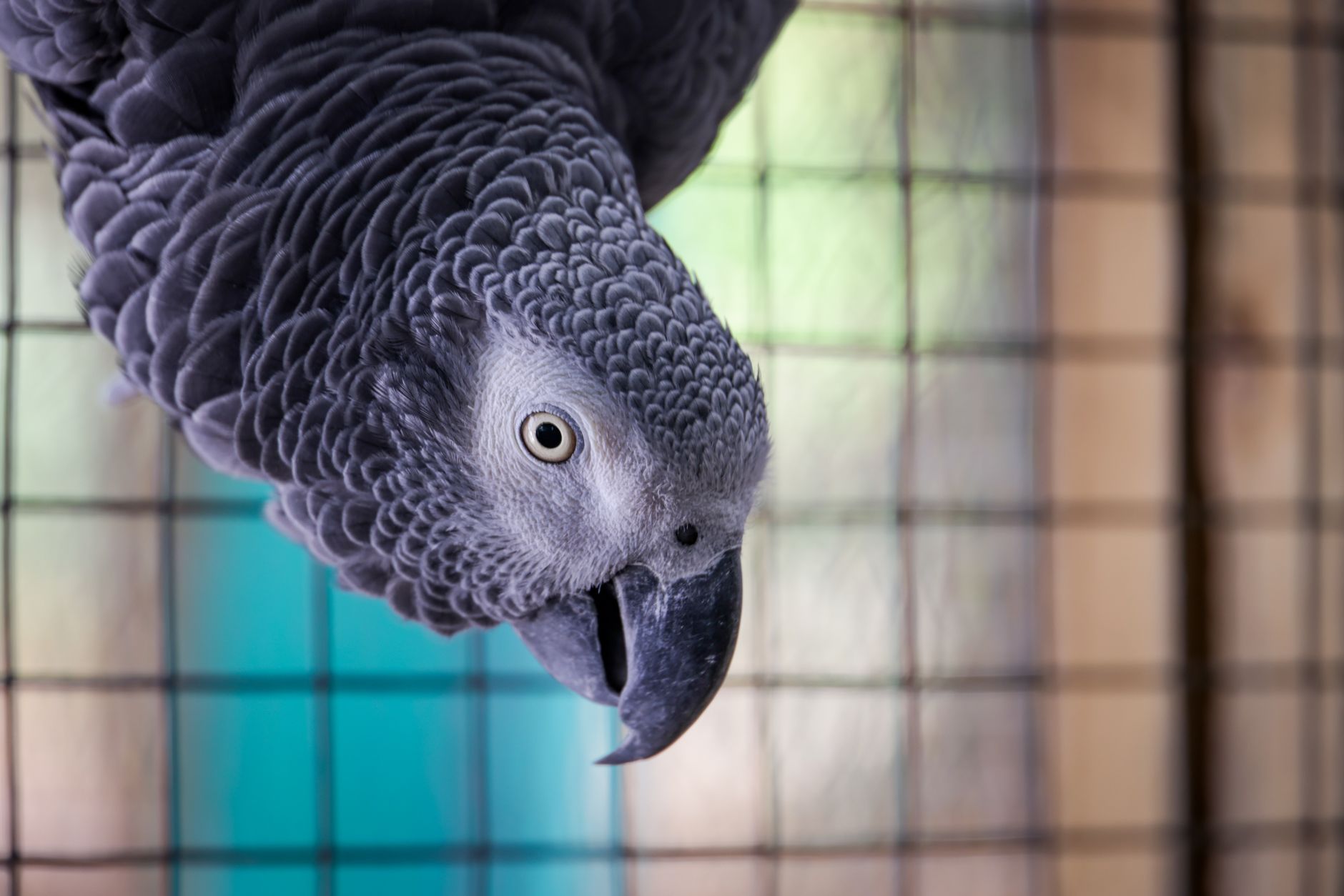
You’ve finally decided to bring home a large parrot. You’ve watched the YouTube videos, read the temperament guides, and imagined the bond. Then you start pricing cages. That’s when the sticker shock hits. A proper setup for an African Grey or a Macaw can cost as much as a used sedan—sometimes more. I’ve been through it twice, first with a Congo African Grey named Zuri, then with a Blue-and-Gold Macaw named Rio. Each setup taught me hard lessons about space, materials, and hidden costs. This isn’t a generic “parrots are expensive” warning. It’s a line-by-line breakdown of what you’ll actually spend, from bar spacing to veterinary deposits, so you can decide which bird fits your home and wallet before you commit.
Space Requirements: Square Footage You Can’t Fake
African Greys and Macaws are both large parrots, but their space needs differ drastically. A single African Grey (Psittacus erithacus) needs a minimum cage footprint of 36 inches wide by 24 inches deep by 48 inches tall. That’s about 6 square feet of floor space, but the real kicker is height—greys love to climb, so vertical room matters. My grey’s cage is a King’s Cages “Aluminum 30×23” model, which measures 30”x23”x48” and cost $1,049 in 2023. It fits in a corner of my home office, but I still needed an additional 4 feet of clearance on all sides for play stands and perches.
Macaws are another beast entirely. A Blue-and-Gold or Scarlet Macaw (Ara ararauna, Ara macao) requires a minimum cage of 36 inches wide by 24 inches deep by 60 inches tall—but that’s the absolute floor. Most avian vets and experienced breeders recommend 48”x36”x60” for larger macaws. That’s 12 square feet of floor space plus headroom. My Rio’s cage is an A&E Cage Company “Mega Macaw” model (48”x36”x72”) that cost $2,799. It dominates my living room. I had to rearrange furniture and clear a 6-foot radius around it to prevent tail feather damage and allow safe play. If you live in an apartment, measure your ceilings—72-inch cages need at least 8-foot ceilings to accommodate the stand and top perch.
Cage Dimensions and Bar Spacing: The Non-Negotiable Details
Bar spacing is where beginners make expensive mistakes. African Greys have a head circumference of about 3–4 inches, so bar spacing must be between ¾ inch and 1 inch. Anything wider risks head entrapment. I’ve seen greys get stuck in 1.5-inch spacing—it’s terrifying. For macaws, bar spacing ranges from 1 inch to 1.5 inches, depending on the species. A smaller macaw like a Hahn’s (Diopsittaca nobilis) can handle 1 inch, but a Green-winged Macaw (Ara chloroptera) needs 1.5 inches. The bar gauge also matters: macaws need at least 5/16-inch thick bars, preferably ⅜-inch, to prevent bending. Most budget cages use ¼-inch bars that warp within a year.
Let’s compare specific brands. King’s Cages offers the “Double Macaw” model (36”x28”x72”) with 1.5-inch bar spacing and ⅜-inch bars for $2,399. A&E’s “Mega Macaw” uses 1.25-inch spacing with 5/16-inch bars—slightly thinner but still adequate. For greys, Prevue Hendryx’s “Wrought Iron” cage (30”x18”x36”) has ¾-inch spacing and ¼-inch bars, priced at $399. That’s a budget option, but I found the bars too thin for a strong grey—Zuri bent a door bar within six months. I upgraded to a stainless steel cage from A&E (36”x24”x48”, 1-inch spacing, 3/8-inch bars) for $1,899. Stainless steel resists rust and chewing, and it’s worth the premium if you plan to keep the bird for decades.
Material Costs: Powder-Coated vs. Stainless Steel
Material choice is the biggest cost driver. Powder-coated steel cages are cheaper but have a finite lifespan. A good powder-coated macaw cage (like the King’s Double Macaw) runs $1,500–$2,500. A comparable stainless steel cage from A&E or King’s starts at $2,800 and goes up to $4,500. For greys, powder-coated cages cost $400–$1,200, while stainless steel starts around $1,500. I learned the hard way that powder coating chips over time, especially around food bowls and door hinges. Zuri’s first cage had chipped spots within two years, exposing bare metal that could rust or leach toxins. Stainless steel eliminates that worry.
Shipping costs are another hidden expense. Large cages ship via freight, and fees range from $100 to $300. Assembly time varies: a macaw cage takes 2–3 hours with a second person, while a grey cage takes 1–2 hours. I paid a local handyman $150 to assemble Rio’s cage because the instructions were terrible. Also factor in play stands. A good macaw play stand (like the “Java Tree” from BirdTricks) costs $200–$400. A grey stand runs $100–$250. Add perches, bowls, and cage liners, and the total setup cost for a macaw easily hits $3,500–$5,000. For a grey, it’s $1,800–$3,000.
Enrichment Expenses: The Monthly Burn Rate
Both species need constant enrichment, but macaws destroy toys faster. A macaw can demolish a $20 wooden toy in an afternoon, while a grey might make it last a week. I budget $80–$100 per month for macaw toys and $40–$60 for grey toys. Specific brands I trust: Planet Pleasures “Palm Frond” toys ($12–$18 each) and Super Bird Creations “Alien” foraging balls ($15–$25). For greys, Caitec “Foraging Wheels” ($18–$25) and “Balsa Blocks” ($10 for a pack of 6) work well. Perches add another $20–$40 per month. Manzanita perches cost $15–$30 each, and you need at least three different diameters to prevent foot problems. Rope perches are cheaper ($8–$15) but need replacement every 3–6 months because macaws shred them.
Foraging toys are essential for both. I use a “Foraging Box” from The Parrot Wizard ($25) and rotate three to five puzzles weekly. Macaws need larger, tougher puzzles—I recommend the “Foraging Tree” from Caitec ($40). Over a year, enrichment costs for a macaw total $1,200–$1,500, compared to $700–$1,000 for a grey. That’s not including food. Both species need high-quality pellets (Harrison’s or Roudybush, $30–$50 per month) plus fresh produce. Macaws eat more volume—expect $60–$80 monthly for a macaw versus $40–$60 for a grey.
Maintenance and Cleaning: Time and Supplies
Cleaning a large parrot cage is a daily chore. Both species produce dust and dander, but greys are notorious for powder down. Zuri’s cage needed vacuuming around it every other day, and I wiped bars with a damp cloth daily. Macaws produce more droppings and food waste—Rio’s cage required spot-cleaning twice a day. Weekly deep cleaning involves scrubbing the grate, changing liners, and disinfecting perches. I use F10SC disinfectant ($25 for a concentrate that lasts months) and white vinegar for daily wipe-downs.
Time commitment: 15–20 minutes daily for a grey, 25–35 minutes for a macaw. Weekly deep cleaning adds 1–2 hours for both. Cage liners: I use “U-Haul moving blankets” cut to size ($10 each, reusable) or “Kaytee Clean & Cozy” paper bedding ($15 per bag, lasts 2–3 weeks). Macaws need heavier-duty liners—I switched to “Puppy Pads” (48×36 inches, $30 for 50) because they absorb more. If you’re not prepared for daily mess, a macaw will overwhelm you. Greys are cleaner but still require consistent effort.
Vet Costs and Care: The Long-Term Financial Commitment
Annual wellness exams for large parrots cost $100–$200 at an avian specialist. Blood work (CBC, chemistry, psittacosis screening) adds $150–$300. Macaws are prone to proventricular dilatation disease (PDD) and cloacal papillomas, while greys are susceptible to hypocalcemia (low calcium) and feather-destructive behavior. Emergency visits easily hit $300–$500 for basic treatment. I had a scare with Rio when he ingested a toy part—that visit cost $450 for X-rays and observation. Zuri once required a calcium injection and blood panel for $250.
Lifespan differences also affect long-term costs. African Greys live 40–60 years in captivity; macaws live 30–50 years (some larger species like Hyacinth can reach 80). Over a 40-year ownership, a grey will cost roughly $30,000 in food, toys, and vet care (excluding the cage). A macaw’s higher monthly costs push that to $40,000–$50,000. That’s assuming no major illnesses. A single surgery (e.g., for egg binding or tumor removal) can cost $1,000–$3,000. I recommend setting up a dedicated savings account for vet bills before bringing either bird home.
Daily Time Commitment: Out-of-Cage Hours and Training
Both species need 2–4 hours of out-of-cage time daily, but macaws require more active engagement. My grey was content to sit on a play stand and watch me work, but Rio needs interactive play—fetch, training sessions, and flight time in a bird-safe room. I spend 30–60 minutes daily on training with Rio (target training, recall, trick practice) and 15–30 minutes with Zuri (foraging puzzles, step-up practice). Macaws are louder and more demanding; if you skip a day, they’ll scream and chew furniture. Greys are quieter but can become neurotic if ignored.
Exercise needs: African Greys need 45–60 minutes of active exercise (climbing, flapping, foraging). Macaws need 60–90 minutes, including flight if possible. I built a PVC play gym for Rio that cost $80 in materials and takes up a 4×4-foot floor space. For Zuri, a tabletop stand works fine. If you can’t commit to daily interactive time, a grey is more forgiving—but neither bird should be left alone for long stretches. Both species can develop behavioral issues (screaming, plucking) from neglect.
Temperament and Species-Specific Considerations
African Greys are often called the “Einsteins” of the parrot world. They score 8/10 on intelligence but 6/10 on ease of care due to their sensitivity. They need mental stimulation constantly—a bored grey plucks. Macaws are playful and affectionate but loud and nippy. Temperament scores: macaws average 7/10 for friendliness but 5/10 for noise level. My macaw’s contact call hits 110 decibels—enough to disturb neighbors. Greys are quieter but mimic sounds obsessively. Zuri imitates my phone’s ringtone perfectly, which is amusing until it’s 6 AM.
Exercise needs in minutes: grey 45–60, macaw 60–90. Lifespan ranges: grey 40–60 years, macaw 30–50 years (Hyacinth up to 80). Macaws are more destructive—they need stronger toys and thicker perches. Greys are more prone to calcium
Related from our network
- Smart Air Fryers Cook Faster Than Ovens: Separating Speed From Hype (kitchentechinsider)
- Complete Guide: What Is The Best (permaeasy)
- [Draft] Comparison — deskgearreviews (deskgearreviews)
For the Love of Your Pet
Care guides, breed insights, and gentle advice for happier pets.