Your budgie sits under the window for hours but never actually goes outside. Maybe you’ve got a full-spectrum bulb somewhere in the cage, or maybe you don’t. Either way, you’re wondering if it’s enough. Here’s the uncomfortable truth: most budgie owners accidentally create a vitamin D deficiency in their birds, and they don’t realize it until something breaks. Vitamin D isn’t just some optional supplement—it’s the foundation that lets your budgie absorb calcium, regulate its immune system, and maintain healthy bone density. Without it, even a perfect diet fails. The worst part? The signs can be subtle enough that you’ll miss them, and by the time you notice feather plucking or egg-binding, your vet bill is about to hit $300-500. This guide cuts through the marketing noise and gives you exactly what your budgie actually needs to stay healthy.
Why Vitamin D Actually Matters for Your Budgie
Vitamin D is misunderstood in avian care. People think it’s just another nutrient on a long list, but it’s genuinely one of the top three things that separates a healthy bird from one heading toward metabolic bone disease. Your budgie’s body produces vitamin D when exposed to UVB light—specifically the UVB-B spectrum between 290-320 nanometers. Without that exposure, their skin can’t synthesize cholecalciferol (the active form), and their intestines can’t absorb calcium properly. This creates a cascading problem: weak bones, muscle tremors, feather quality deterioration, and reproductive issues in females.
What makes this worse is that window glass blocks 99% of UVB rays. Yes, even if your budgie spends six hours a day perched on the windowsill looking at the garden, almost none of that actually benefits their vitamin D production. Sunlight passes through the window, but the UVB component—the only part that matters—gets filtered out completely. I’ve seen birds with seemingly perfect diets develop soft beaks and leg deformities because their owners assumed an indoor window setup was sufficient. The symptoms often show up 6-12 months after a deficiency begins, which means most people don’t connect the dots to lighting at all.
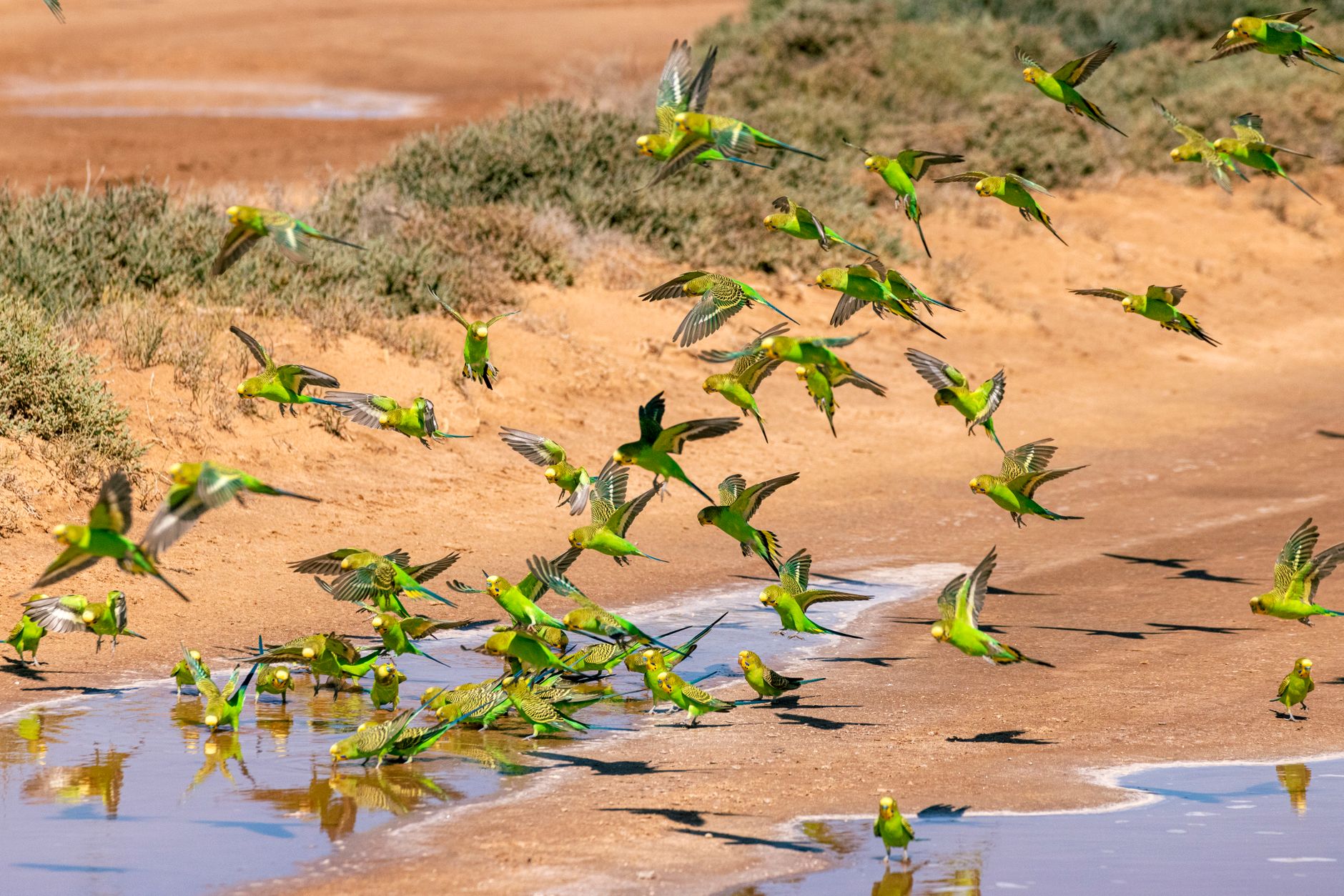
Budgies in the wild get 10-14 hours of direct, unfiltered sunlight daily depending on the Australian season. That’s not just general brightness—it’s consistent UVB exposure that their bodies evolved to expect. When you keep a budgie indoors under household LED or incandescent bulbs, you’re giving them essentially zero UVB. Even if they’re eating a premium diet, their bodies can’t process the calcium properly. Some calcium-rich pellet brands mention vitamin D3 in their ingredient list, and while that helps slightly, it’s not a substitute for UVB light exposure or supplementation.
Recognizing Vitamin D Deficiency Signs in Your Bird
The early signs are easy to miss because they look like normal budgie behavior. Increased perching without activity—sitting in one spot longer than usual—is often the first indicator. Your budgie might seem less interested in toys or flying around the cage. They appear lethargic but not sick enough to worry about. A second-generation sign is behavioral: decreased vocalization or a quieter chirp than normal. Budgies are naturally vocal birds; if yours is suddenly quiet, something’s off nutritionally or environmentally.
Move into the moderate deficiency zone and you’ll see physical changes. Feather quality suffers first—feathers look duller, less vibrant in color, with a ruffled appearance even when the bird isn’t stressed. You might notice abnormal molt cycles or feather loss in unusual patterns. Some owners describe it as their budgie looking “rough” without being able to pinpoint why. Foot problems develop next: weak legs, difficulty gripping perches properly, or a tendency to rest on the cage floor more. I’ve talked to breeders who noticed their birds standing stiffly or favoring one leg without any injury visible.
Severe vitamin D deficiency looks like actual illness, and this is where costs spike. Soft beak tissue, tremors, muscle weakness that progresses to inability to fly properly, and in females, egg-binding complications. A soft-shelled or shell-less egg is a screaming warning sign of vitamin D deficiency in a laying female—it means her body can’t maintain proper calcium regulation for egg production. Once you’re at this stage, you need a vet immediately. The good news is that once you identify the deficiency and address it with proper UVB exposure and possibly supplementation, many birds recover within 4-6 weeks. The bad news is the vet visit will cost $200-400 for diagnostics and medication.
UVB Lighting: The Real Solution (Not the Marketing Hype)
You need UVB light, but not all UVB bulbs are created equal. The market sells full-spectrum bulbs that often don’t actually emit meaningful UVB output, especially in the budget range. What you actually need is a specialized reptile UVB-B bulb rated specifically for birds or small animals. The two best-performing brands are Zoo Med’s ReptiSun 10.0 UVB and Arcadia D3 Dragon. Both emit between 8-10% UVB-B output, which is appropriate for budgies. Don’t cheap out on a $15 generic bulb that claims “full spectrum”—those typically emit 1-2% UVB or none at all.
Here’s the specific setup that actually works: Mount a Zoo Med ReptiSun 10.0 (or equivalent Arcadia) in a T8 or T10 linear fixture positioned 12-18 inches above your budgie’s head. This distance matters because UVB intensity drops significantly with distance—at 24 inches, you get roughly half the UV output compared to 12 inches. The bulb should be positioned so your budgie can sit under it without being forced to; they should have the choice to move in and out of the light. Run it for 10-12 hours daily on a timer. This replicates a natural photoperiod and gives consistent exposure without burning out the bird.
Budget for bulbs and fixtures: A Zoo Med ReptiSun 10.0 bulb costs $35-45, and a basic linear T8 fixture runs $30-60. So you’re looking at roughly $70-100 for an entry-level setup. The bulb needs replacement every 12 months because UVB output degrades even though the bulb still produces visible light—you can’t see the decline, but your bird’s vitamin D production tanks around month 10-11. Keep a calendar reminder for bulb replacement. Some owners skip this and wonder why deficiency symptoms reappear after a year of improvement. That’s why they’re seeing it happen.
If you’re in a situation where UVB lighting isn’t possible—extreme space constraints or incompatible cage setup—vitamin D3 supplementation becomes necessary, but it’s messier and less effective than light. More on that in the next section.
Vitamin D3 Supplementation: When and How to Do It Right
Supplementing with vitamin D3 is insurance, not a replacement for UVB light. Here’s why: your budgie’s body can’t produce excessive vitamin D when exposed to UVB—it self-regulates. But when you’re adding D3 orally or through food, you have to get the dosage exactly right because too much is as problematic as too little. Excess vitamin D3 causes hypercalcemia (too much calcium in the bloodstream), leading to kidney damage, organ calcification, and actually the same symptoms as deficiency in some cases. You can poison your budgie by over-supplementing just as easily as you can harm it by under-supplementing.
The safest oral supplement for budgies is liquid D3 designed specifically for birds. Harrison’s Bird Supplements makes a D3 supplement rated for small parrots, dosed at 400-800 IU per bird, 2-3 times weekly. That’s roughly $15-18 per bottle and lasts 2-3 months. You’ll administer it by mixing a drop into their drinking water or placing it directly on a piece of millet. The problem with water mixing is inconsistency—if the water sits and evaporates, the concentration changes, and if your budgie doesn’t finish the water that day, you don’t know if they got the full dose. Direct application is more reliable but requires handling your budgie daily.
If you use pellets with vitamin D3 included, check the nutritional label for the exact amount. Most quality brands like Harrison’s Adult Lifetime or TOP’s contain 4,000-5,000 IU of vitamin D3 per pound of food. If your budgie eats 1-1.5 teaspoons daily (roughly 8-12 grams), they’re getting 30-60 IU of D3 daily from food alone. This is a baseline, not a complete solution. The National Research Council’s 2011 Nutrient Requirements of Nonhuman Primates lists budgies at roughly 1,000-2,000 IU per kilogram of body weight daily, which translates to about 40-80 IU for a 40-gram budgie. Commercial pellets typically cover part of this, and supplementation covers the gap if UVB light isn’t available.
Never use multivitamin powders as your sole source of supplementation—the vitamin D3 concentration is often vague, and you have zero control over actual dosage. Also avoid giving supplements more than 4-5 days per week unless a vet specifically prescribes it for treatment of an existing deficiency. Oversupplementation is a real risk.
Dietary Sources of Vitamin D and Calcium (The Supporting Cast)
Vitamin D3 in food can’t replace light or supplementation, but it does add a foundation layer. Certain foods contain higher concentrations than others. Dark leafy greens like kale and spinach contain calcium but minimal D3. The better move is mixing in foods that naturally contain both: sprouted seeds have elevated levels of both nutrients during the germination process, roughly doubling their vitamin D content compared to dry seeds. You can sprout millet, sunflower seeds, or commercial sprouting mixes in about 4-5 days using a basic sprouting jar (cost: $8-12). Offer sprouted seeds 2-3 times weekly in small amounts (about half a teaspoon per budgie).
Egg is a complete food that contains vitamin D3, calcium, and fat-soluble vitamin carriers. A hard-boiled egg, crumbled small, can be offered once per week as a treat—roughly a quarter to a half of one egg for a single budgie. Egg yolk contains roughly 110 IU of vitamin D3 and 28 mg of calcium per large egg, so even small portions contribute meaningfully. Some owners feed egg too frequently and create problems with excess protein and fat, so once weekly is the right ceiling.
Your base diet should be quality pellets formulated for budgies, not larger parrots or generic “tropical bird” mixes. Harrison’s Adult Lifetime, TOP’s, or Harrisons High Potency Formula are the three most researched options with reliable mineral profiles. These should make up 60-70% of daily food intake. The remaining 30-40% is fresh vegetables, limited fruit, and treats. A typical daily diet for one budgie looks like: 1 teaspoon pellets (morning), 1-2 teaspoons mixed fresh vegetables (carrots, kale, broccoli), 1-2 treats (spray millet once or twice weekly), and fresh water daily.
Setting Up the Perfect Light Schedule and Cage Environment
Photoperiod affects vitamin D production efficiency and overall health cycles. Wild budgies experience 10-14 hours of daylight depending on the Australian season. You don’t need to match this exactly, but staying within 10-13 hours daily gives you the best outcome. More than 14 hours of light pushes birds toward behavioral problems like aggression and hormonal issues. Less than 10 hours and you get lethargy and mood decline.
Here’s a practical schedule: UVB light on from 8 AM to 6 PM (10 hours), with general room lighting the rest of the time. If you work and the cage is in a bedroom, morning light might not work—shift to 12 PM to 10 PM instead. The goal is consistency and avoiding dramatic day/night shifts. Some owners run their cage light for only 4-6 hours daily and wonder why their birds seem depressed. Budgies need that full photoperiod for normal behavior and vitamin metabolism.
Placement matters as much as duration. Position the cage so the budgie can retreat to a shaded area if the light feels too intense. Don’t put the bulb so close that heat becomes a problem—the ReptiSun 10.0 emits minimal heat, but in summer, concentrated light in a small cage can raise temperature a few degrees. Your cage temperature should stay between 65-75°F year-round. If you live somewhere hot, run the UVB light in the morning before the room heats up.
Windows are tricky. Natural sunlight outside is obviously superior to any artificial light in terms of spectrum range, but getting your budgie outside safely requires a secure outdoor flight cage or supervised harness training. Most budgie owners don’t do this, which is fine—the UVB bulb setup is reliable and practical. If you do take your budgie outside occasionally in a cage or on a harness, even 20-30 minutes of direct unfiltered sunlight weekly supplements UVB intake meaningfully. Just watch the temperature—a cage in direct sun can heat to 95°F+ within minutes in summer, which is fatal.
Health Monitoring and When to Call a Vet
Get a baseline weight for your budgie at a vet visit—healthy adults typically weigh 30-40 grams depending on the subspecies. Weigh your bird monthly on a kitchen scale (cost: $10-15 for a digital scale accurate to 1 gram). A loss of more than 2-3 grams over a month, or steady decline, signals metabolic problems including vitamin D deficiency. This is one of the earliest detectable changes before visual signs appear.
Inspect the feet, beak, and legs monthly. Soft beak tissue, inability to grip properly, or visible deformity of leg joints warrant a vet visit within a week. If your female budgie is showing interest in nesting but hasn’t laid an egg within 2-3 days, that’s a potential egg-binding emergency—get to a vet within 24 hours. Egg-binding in vitamin D deficient birds is common because they can’t maintain proper calcium and muscle tone for egg passage. The vet visit will be $200-400 depending on whether X-rays are needed.
Find an avian veterinarian before you need one. Regular vets often lack training in bird nutrition and may give generic advice. Avian vets understand that vitamin D deficiency is common and can diagnose it through blood tests (vitamin D serum levels, calcium, phosphorus ratios). If your bird shows deficiency signs, a vet can prescribe high-dose D3 supplementation for 4-6 weeks—usually 1,000-2,000 IU daily—while you simultaneously implement proper UVB lighting. Recovery time is typically 3-6 weeks for moderate deficiency, longer for severe cases.
Prevention is genuinely cheaper than treatment. Buying a UVB setup ($70-100) and running it for 12 months costs less than a single vet visit for a deficiency-related condition. Most avian vets will support the UVB-light-first approach because it works and has zero risk of overdose.
Common Mistakes That Create Deficiency (And How to Avoid Them)
Mistake one: believing “full-spectrum” bulbs are sufficient. Marketing claims “full spectrum includes UVB” without mentioning the actual UVB-B output percentage. A 2% UVB bulb is technically emitting UVB, but not enough to trigger meaningful vitamin D synthesis. Buy bulbs specifically labeled for reptile UVB or bird UVB, not general full-spectrum lights. The zoo Med and Arcadia brands are worth the premium.
Mistake two: placing the bulb above a mesh cage ceiling that blocks UVB. Plastic and metal meshes absorb or scatter UVB rays. If your cage has a solid metal top or plastic cover, the light sitting on top of it does almost nothing for the bird inside. Mount the bulb inside the cage or on a fixture that allows direct access without barriers. Hang it horizontally 12-18 inches above a perch where the budgie naturally sits.
Related from our network
- Budgie Care Sheet – Petmd (dogbreedco)
- how to care for a pet parakeet – the spruce pets (dogbreedco)
- Parakeet Care Sheet – Petmd (dogbreedco)