Disclosure: This post contains affiliate links. If you click through and make a purchase, we may earn a small commission at no extra cost to you. Thank you for supporting this site!
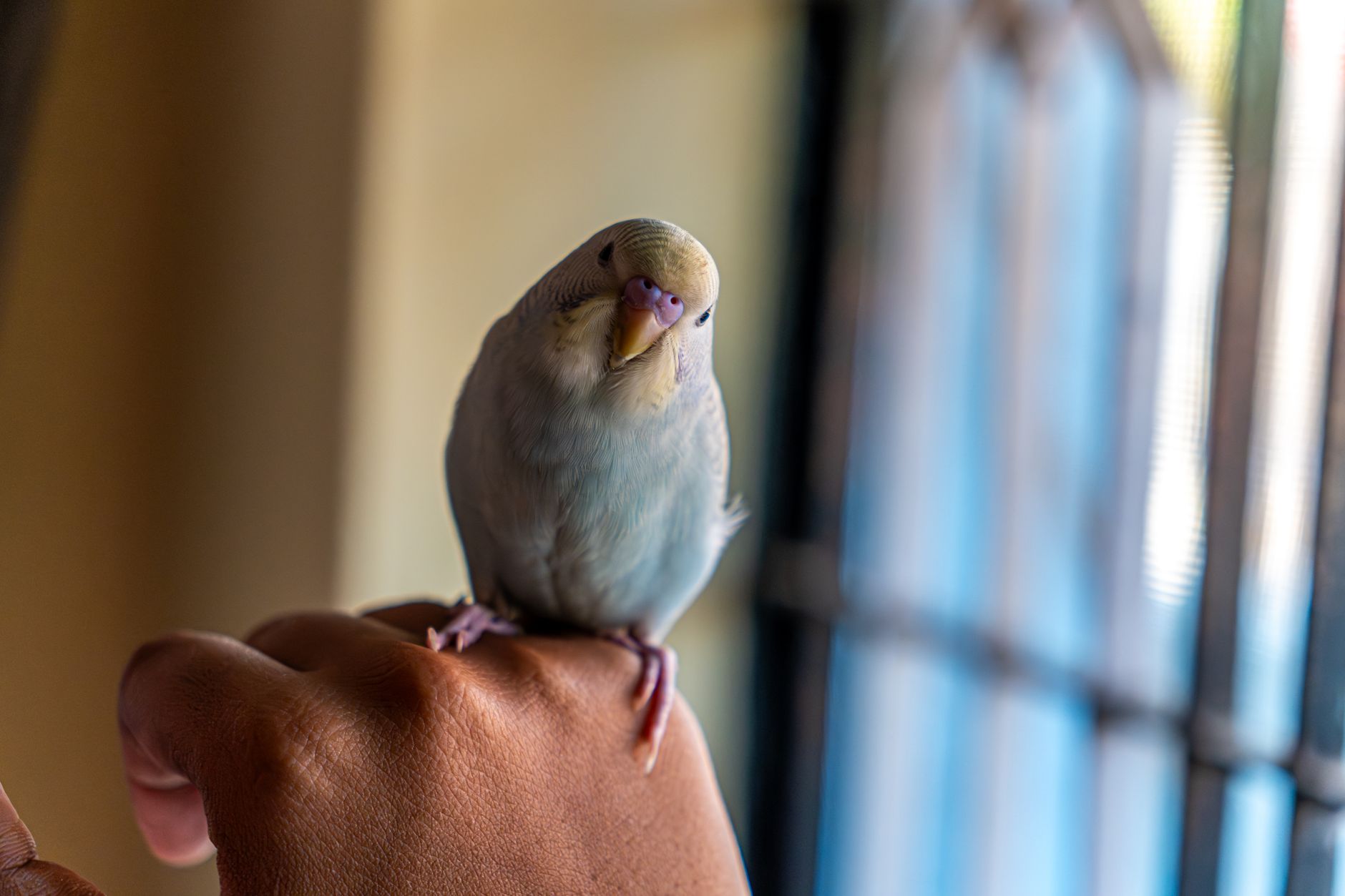
You’ve just brought home a budgie—a tiny, feathered dynamo that spends its first hours pressed against the far corner of its cage, eyes wide, beak slightly open. That’s normal. Budgies are prey animals, hardwired to see you as a predator. Hand-taming isn’t about “bonding” in the human sense; it’s about systematically proving you’re safe. Over the past decade of keeping budgies, I’ve tamed everything from a hand-fed baby to a five-year-old rescue who bit hard enough to draw blood. The average time to a reliable step-up is four to six weeks, but I’ve done it in two with a consistent, patient approach. This guide breaks down the process week by week, with specific product dimensions, price ranges, and brand comparisons—because guessing wastes time and trust.
Week 1: Cage Acclimation – Setting the Stage for Trust
Your budgie’s cage is its entire world during the first week. Size matters more than most guides admit. The absolute minimum for a single budgie is 18 × 18 × 18 inches (like the Prevue Hendryx F050, which measures 18 × 18 × 30 inches and costs about $70 on Chewy). But I recommend a wider footprint: the A&E Cage Co. 24 × 18 × 18 (around $90) gives room for multiple perches and a flight path. Bar spacing must be ½ inch or less—anything wider and a budgie can get its head stuck. The Vision S01 cage (20 × 12 × 18 inches, $100) has vertical bars that are easy to climb but its plastic base is harder to clean than a metal tray.
Place the cage in a quiet corner at eye level, with one side against a wall to create a “safe zone.” Cover the top and back with a light cotton cloth (not fleece, which traps heat) to reduce visual stimuli. For the first three days, do nothing but change food and water. Talk softly from a few feet away for 10–15 minutes, twice a day. On day four, start sitting next to the cage for 20 minutes without making eye contact—budgies interpret direct stares as a threat. I’ve found that reading aloud in a monotone voice works best; your budgie learns that your presence predicts nothing scary.
By the end of week one, your budgie should be eating normally and may even chirp when you approach. If it still freezes or panics, you moved too fast. Back up to day one and slow down. This phase cannot be rushed—every skipped day costs you at least two days of progress later.
Week 2: Hand Presence and Millet – The Currency of Trust
Millet spray is the single most powerful tool for taming a budgie. It’s high in fat, which budgies love, and it’s easy to hold. I use Kaytee Forti-Diet Pro Health Millet ($4.99 for a 4-ounce bag on Amazon) or Higgins Vita-Spray Millet ($5.49 for a 6-ounce bag). Both are free of artificial colors, but the Higgins spray is slightly longer (8–10 inches vs. 6–7 inches), giving you more surface area to present. Avoid generic store brands—they’re often dried out and less appealing.
Start by clipping a 4-inch piece of millet to the cage bars near a perch your budgie uses. Leave it for 24 hours. Once the bird eats from it, hold the millet through the bars with your fingers an inch away. Do this for 5 minutes, three times a day. On day three of week two, open the cage door and hold the millet just inside the opening. Your budgie will likely retreat at first—that’s fine. Wait motionless. On average, it takes 5–7 days for a budgie to eat from your hand inside the cage. I keep a log: “Day 8 – ate millet from hand for 3 seconds” reinforces my patience.
A common mistake is moving your hand too quickly. If you twitch, the budgie will fly off and you lose a day of progress. Breathe slowly. Also, never offer millet outside the cage yet; the cage is the bird’s safe zone. Use a consistent phrase like “good bird” when it eats. This pairs your voice with a positive reward. By the end of week two, your budgie should readily eat from your hand inside the cage. If not, extend this phase by another week—forcing a step-up too early sets you back.
Week 3: Step-Up Training – From Hand to Finger
Step-up training is the cornerstone of taming. The goal is for your budgie to step onto your finger when you gently press against its lower chest. But I never start with a finger—budgie bites on bare skin hurt and can cause a trust setback. Instead, use a smooth wooden dowel or a natural perch. I recommend the Manzanita Perch from Drs. Foster & Smith (12 inches long, $7.99) or the Pine Perch from JW Pet (10 inches, $4.99). Manzanita is harder and lasts years; pine is softer but cheaper. Both are ½ inch in diameter—perfect for a budgie’s grip. Avoid sandpaper perches; they cause foot sores.
Begin by holding the perch horizontally just below your budgie’s chest, with millet on the other side. Say “step up” in a calm voice. Most budgies will step onto the perch to reach the millet. Reward immediately. Repeat this 10 times per session, two sessions per day. After 3–4 days, replace the perch with your index finger, held flat and steady. Your finger is warmer and less stable, so expect hesitation. If the budgie bites, do not pull away—that teaches it that biting makes you retreat. Instead, gently blow on its face (a mild deterrent) and try again.
I’ve found that budgies who resist step-up often need more hand presence. Go back to week two for a day. The average time from first perch step-up to finger step-up is 7–10 days. Once your budgie steps up reliably inside the cage, try it at the cage door. Do not attempt outside the cage until step-up is 100% inside—otherwise you’ll have a panicked bird flying around the room. Keep sessions short: 10 minutes maximum. Budgies have short attention spans, and frustration on your part is contagious.
Common Mistakes That Derail Taming
Over my years of taming budgies, I’ve made every mistake in the book. The most damaging is rushing. If you try to pick up a budgie before it willingly steps up, you’ve just taught it that hands grab. That can take weeks to undo. Second is inconsistent scheduling. Budgies thrive on routine; skipping two days makes them wary again. I set a daily alarm for 10 AM and 4 PM—non-negotiable.
Another frequent error is staring directly at the bird. Budgies interpret prolonged eye contact as aggression. Instead, look slightly to the side or blink slowly (a calming signal in parrot language). Also, avoid sudden movements near the cage. When I refill water, I announce my approach with a soft “hello” to avoid startling the bird. Noise is another factor: loud TV or vacuuming during training sessions can spike cortisol levels. Keep the room quiet.
Many owners also misuse treats. They offer millet only during training, which is correct, but they give too much. A budgie should eat no more than 1–2 inches of millet spray per day. Overfeeding leads to obesity (budgies are prone to fatty liver disease) and reduces treat value. Rotate millet with small pieces of apple or spinach to keep interest high. Finally, never grab or towel a budgie for taming—that’s for emergencies only. If you need to catch it, dim the lights and gently cup it in the dark, but that’s a last resort.
Maintaining Trust and Building a Bond
Once your budgie steps up reliably, the work isn’t over. Trust is maintained through daily interaction. I spend 15 minutes each morning and evening with my budgie out of the cage. The out-of-cage area should be bird-proofed: close windows, cover mirrors (budgies fly into them), and turn off ceiling fans. I use a play stand from Prevue Hendryx (model F050P, $45) that has a removable tray for easy cleaning. It measures 12 × 12 × 18 inches, with three perches and a toy hook.
Daily time commitment is about 30 minutes total—15 for training, 15 for free flight. Cleaning the cage takes another 10 minutes every other day: remove soiled paper, wipe perches with vinegar-water solution (1:4), and wash food bowls. Weekly deep cleaning (scrubbing bars, replacing substrate) takes 30 minutes. Vet costs are modest but real: an annual well-bird checkup runs $50–$100 at an avian vet. Emergency visits for illness (like respiratory infections) can hit $200–$500. I set aside $30 per month for vet savings.
To strengthen the bond, incorporate clicker training. I use the i-Click (two-pack for $6.99 on Amazon) because it has a soft sound that doesn’t startle budgies. Charge the clicker by clicking then offering millet—10 reps. Then shape behaviors like targeting a chopstick (a 10-inch bamboo skewer works). This builds mental stimulation and deepens trust. Budgies are intelligent; a bored bird loses interest in you. Provide at least three toys in the cage, rotated weekly. I like the Planet Pleasures Cotton Kabob ($8.99) for shredding and the Bonka Bird Toys Mini Forager ($12.99) for foraging.
Troubleshooting: When Your Budgie Is Still Scared
Even with perfect technique, some budgies take longer. If after four weeks your budgie still won’t eat from your hand, check the cage location. Is it in a high-traffic area? Move it to a quieter room. Is the cage too small? A cramped budgie feels trapped and defensive. Upgrade to a 24 × 18 × 18 if possible. Also examine your body language: are you leaning over the cage? That’s predator posture. Sit sideways, at the same height as the bird.
Biting is the most common complaint. Budgie bites are more pinch than puncture, but they hurt. If your budgie bites during step-up, it’s usually fear, not aggression. Do not yell or jerk away. Instead, hold still and say “no” calmly. If it bites hard, blow gently on its face—a mild deterrent that doesn’t harm trust. Never flick or tap the beak; that teaches that hands are dangerous. If biting persists, return to perch training for a few days. In rare cases, a budgie may be hormonal (springtime). Reduce daylight to 10 hours and remove any mirror toys—they can trigger obsessive behavior.
Another issue is the budgie that flies away when you open the cage. This means step-up isn’t solid inside yet. Close the door and continue hand-feeding millet inside until the bird is comfortable. If it does escape, don’t chase. Leave the cage door open with millet inside; it will return when hungry. I once had a budgie fly to the curtain rod and refuse to come down for two hours. I sat quietly reading, and it eventually stepped onto my hand when I held millet near its perch. Patience always wins.
Advanced Taming: Beyond Step-Up
Once step-up is reliable, you can teach more advanced behaviors. Target training is my next step: use a 12-inch wooden skewer with a colored tip (I paint the end red with non-toxic acrylic). Teach your budgie to touch the target with its beak for a millet reward. Then use the target to guide the bird onto your shoulder, onto a scale, or into a carrier. This is invaluable for vet visits. I trained my budgie to step onto a digital kitchen scale ($12.99 from OXO) by targeting. Weekly weighing tracks health—weight loss of 2–3 grams signals illness.
Flight recall is another fun skill. Start in a small room (e.g., bathroom) with no hazards. Hold millet a foot away and say “come.” Gradually increase distance. My budgie now flies from across the living room to my hand. This takes daily practice for 2–3 weeks. I use a specific whistle (two short notes) as a recall cue. The key is to always reward success—never call the bird for something negative like nail clipping.
For owners who want to teach tricks, consider a training book like “
Related from our network
- Puppy Training Timeline: What to Teach at Every Age (dogbreedco)
- 15 Best Tarot Decks 2025: Ultimate Guide for Beginners (witchcraftforbeginners)
- Step-by-Step Guide to Creating Your First Poppet Doll (witchcraftforbeginners)
For the Love of Your Pet
Care guides, breed insights, and gentle advice for happier pets.