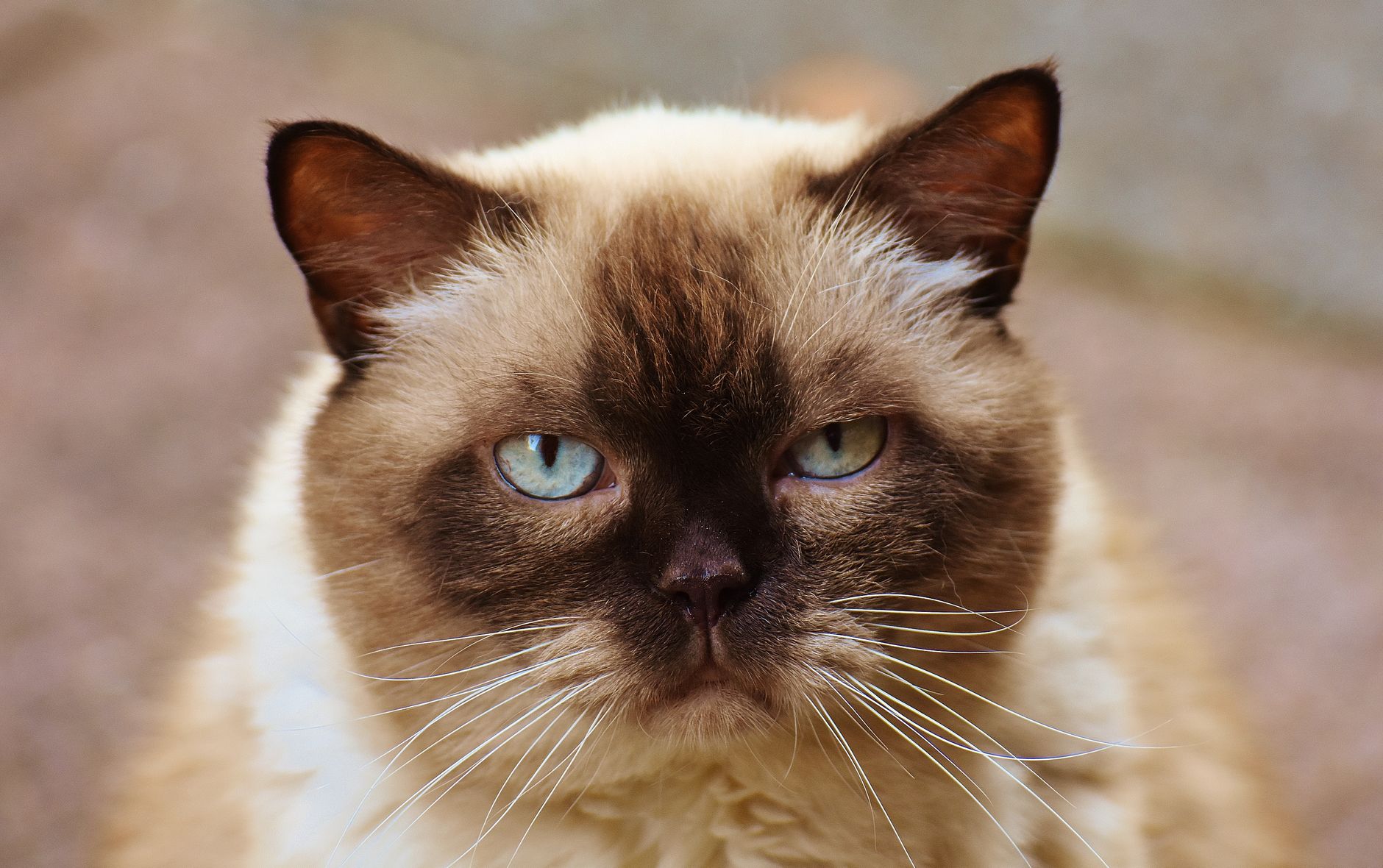
If you’ve ever watched a Siamese cat demand your attention with piercing blue eyes and vocal insistence, you already know this breed doesn’t do subtlety. Siamese cats are architectural marvels of personality—sleek bodies wrapped around an almost dog-like need for companionship. I’ve owned two Siamese across different decades, and I can tell you they’re genuinely not for everyone. They require active engagement, tolerate solitude poorly, and will literally follow you from room to room while narrating their every thought. But if you’re willing to give them the attention they crave, you’ll experience a bond that feels less like traditional cat ownership and more like living with a devoted, opinionated roommate. This guide covers everything from temperament traits that’ll surprise you to specific health conditions you need to monitor, plus real setup costs and daily time commitments so you can decide if a Siamese fits your life.
Siamese Temperament: What You’re Actually Getting Into
The Siamese personality is fundamentally different from most cat breeds—and that’s not marketing hype, it’s bred into their genetics. These cats score exceptionally high on what feline behaviorists call “human-oriented affiliation,” meaning they’re hardwired to seek your company. A study published in the Journal of Feline Medicine and Surgery found that Siamese and related Oriental breeds spent significantly more time interacting with their owners than domestic shorthairs—averaging 35-40% of their waking hours in close proximity to humans, compared to 15-20% for typical cats. When I brought my second Siamese home at 8 weeks old, she followed me to the bathroom, sat on my lap while I worked, and genuinely panicked if I closed a door she couldn’t get through. That’s not neediness; that’s breed temperament.
Vocalization is the other defining trait. Siamese cats don’t meow—they converse. They produce a distinctive loud, raspy yowl that sounds almost like a baby’s cry, and they use it constantly. Some owners find this charming; others, less so. My first Siamese would “ask” for breakfast at 5:30 a.m. every morning without fail, and there’s no snooze button when a Siamese has demands. They’ll vocalize about food, attention, the temperature of their water, or the mere fact that you’re in a different room. If you live in an apartment with thin walls, a Siamese may generate noise complaints. If you work full-time outside the home, your cat will struggle—separation anxiety is genuinely common in this breed. They’re also highly intelligent, which means they get bored easily and will invent entertainment you didn’t authorize. One of mine learned to open cabinet doors looking for toys; the other figured out how to unlock my bedroom door by jumping and twisting the knob.
Playfulness extends across their entire lifespan. Unlike many cats that mellow dramatically after age 3-4, Siamese remain kitten-like in energy until 8-10 years old. They crave interactive toys—fishing rod toys, ball launchers, puzzle feeders—and need 20-30 minutes of active play daily minimum. They’ll learn to fetch if you teach them early, and they enjoy training sessions that engage their problem-solving instincts. Siamese are also notoriously social with other pets if raised together, though they typically want to be the dominant personality in any multi-cat household. Introducing an adult Siamese to a home with established cats requires patience; they’ll compete for attention and resources aggressively if not managed carefully.
Physical Characteristics and Space Requirements
Siamese cats are distinctly elegant but deceptively muscular. The breed standard calls for a long, slender body supported by fine-boned legs, typically weighing between 2.5-5.5 kg (5.5-12 pounds) for adults, with males running heavier than females. Their coat is short, glossy, and comes in “pointed” patterns where the face, ears, legs, and tail are darker than the body. The original seal point (dark brown points on cream body) is most recognizable, but modern Siamese also come in chocolate point, blue point, and lilac point colorations. Their signature feature—those brilliant blue almond-shaped eyes—is actually linked to a genetic mutation in coat pigmentation, and it’s worth noting that most Siamese are born completely white. The pointed coloring develops over their first weeks of life as temperatures trigger pigment production.
Despite their delicate appearance, Siamese are athletes. They’re exceptional jumpers—capable of leaping 5-6 feet straight up—and they’re incredibly fast, which matters when you’re calculating vertical space. In my experience, a Siamese needs access to multiple levels: wall-mounted shelves at 5-6 feet height, cat trees that reach 6-7 feet tall, or strategically placed furniture they can navigate. The Vesper V-High Wall Mounted Cat Shelves (available in three sizes: 35cm, 50cm, and 70cm wide; approximately $45-$120 per shelf depending on size) are built well for supporting an active Siamese without wobbling. I prefer the 50cm width for mid-room placement and the 70cm for corner installations. The shelves are pine wood with a weight capacity of 15 kg each, which matters when a jumping cat lands at speed. Siamese also appreciate enclosed spaces—they’re paradoxically both social and prone to needing “off” time. A high perch where they can observe you without being forced to interact serves as a psychological reset button.
Floor space is secondary to vertical space for Siamese. A 70cm x 70cm bedroom is adequate for one cat’s essential needs, but that cat will be frustrated. In my current setup, my 5-year-old female Siamese has access to a 250 square-foot open living area plus a 120 square-foot bedroom, and she still develops behavioral issues if I’m away for more than 8-9 hours without leaving a puzzle feeder or training session before I leave. The Enabot Enabot Mylo interactive ball (approximately $35) or the CHEERBLE board-based puzzle feeders ($25-$40 depending on complexity level) provide 20-30 minutes of mental engagement, which slightly extends her tolerance for alone time but doesn’t replace human interaction. Siamese are not independent; they’re collaborative. Think less “pet cat” and more “live-in friend.”
Care Requirements: Daily and Weekly Commitments
Siamese coat maintenance is straightforward because their short fur doesn’t mat, but the actual care commitment extends far beyond grooming. Your daily obligations include: interactive play sessions (20-30 minutes minimum), feeding and water management, litter box maintenance, and dedicated attention time. I’ve found that splitting playtime into two 15-minute sessions (morning and evening) works better than one 30-minute marathon—Siamese get bored with repetitive motion faster than you’d expect. Change toys every 3-4 days. They remember what they’ve already conquered and lose interest in static play objects.
Grooming a Siamese takes 5-10 minutes weekly. Brush their coat twice weekly with a soft-bristled brush (the Hertzko Soft Slicker Brush, approximately $12) to remove loose hairs and distribute skin oils. Nail trimming is necessary every 2-3 weeks—I use the Gonicc Professional Cat Nail Clippers ($8-$12), which have a 2cm cutting surface and comfortable rubber handles. Most Siamese don’t enjoy having their paws handled, so starting nail maintenance early (8-10 weeks) is critical for establishing tolerance. Ear cleaning is more important for Siamese than many breeds because their large ears can accumulate debris. Check ears weekly and wipe with a damp cloth or pet-specific ear wipes (Earthbath Ear Wipes, approximately $6 per pack); only use drops if recommended by your vet. Dental care is overlooked by most owners but critical: Siamese are prone to periodontal disease. Brush teeth 4-5 times weekly with cat-specific toothpaste (Enzymatic Oral Care Pet Toothpaste, around $10). Yes, you read that correctly—weekly brushing matters for this breed.
Litter box management requires daily attention and weekly deep cleaning. Siamese can be particular about litter box conditions; I’ve experienced behavioral issues (inappropriate elimination) triggered purely by a box being too infrequently scooped. The rule I follow: scoop at least twice daily, completely replace litter weekly, and clean the box with pet-safe enzymatic cleaner (Nature’s Miracle Enzymatic Cleaner, approximately $7-$12 per bottle) every 10 days. I use Elsey’s Precious Cat Ultra Clumping Litter ($12-$16 per 18lb bag), which I’ve found reduces odor over 10-day periods and tracks less than alternatives. Use covered litter boxes if you have a Siamese—they tend to kick litter, and the enclosure contains scatter. The IRIS Top Entry Litter Box ($35-$45) has reduced my litter tracking by roughly 60% compared to open boxes, and the covered design satisfies Siamese’s instinct for privacy during elimination.
Water is a specific consideration for Siamese. They often prefer running water to still bowls, so investing in a cat water fountain can improve hydration. The Enabot Fresh & Clean Automatic Pet Water Fountain ($25-$45 depending on capacity) holds 2.4-3.2 liters and has a triple filtration system. In my experience, cats using fountains drink 25-30% more water daily than those with static bowls, which is particularly important for Siamese prone to urinary tract issues. Clean the fountain every 3-4 days and replace filters monthly ($8-$12 for replacement filters). Feeding should happen at consistent times—Siamese thrive on routine. Two meals daily (morning and evening) at the same hours reduces stress and gives your cat something to anticipate. Use stainless steel bowls rather than plastic; plastic can harbor bacteria and some cats develop sensitivity reactions.
Nutrition: Feeding Protocols and Health-Supporting Diets
Siamese cats have higher metabolic rates than many breeds, meaning they burn calories faster but also require nutrient-dense food. The breed is prone to developing gastrointestinal sensitivity—particularly to low-quality grains and fillers—so diet directly impacts coat quality, energy levels, and litter box consistency. I learned this the hard way with my first Siamese, who developed chronic soft stools on budget food until I switched to higher protein, limited-ingredient formulas. The difference was remarkable: firmer stools, shinier coat, better behavior. Siamese need protein percentages of 35-40% for optimal body composition, and fat content of 10-15%.
High-quality brands that consistently deliver these ratios include Purina Pro Plan Focus (Sensitive Skin & Stomach formula, approximately $1.50-$2.00 per pound) and Hill’s Science Diet Sensitive Stomach & Skin ($1.80-$2.30 per pound). Both are veterinarian-formulated and widely available. For premium options, Instinct Raw Boost ($2.50-$3.20 per pound) and Smalls Fresh Cat Food ($2.00-$2.80 per 5.5oz serving, requiring refrigeration and fresh thawing) provide raw-inspired or gently cooked proteins. I currently use Purina Pro Plan as my primary food because it’s accessible, consistent, and my current Siamese has zero digestive issues on it—a marked change from her first year on a discount brand. Daily feeding amounts depend on age and activity level. Adult Siamese typically need 180-220 calories daily; kittens (under 12 months) need 250-350 calories daily split across three meals. Use the food packaging guide as a baseline, then adjust based on your cat’s body condition. Overweight Siamese develop joint issues and metabolic disease; underweight Siamese lack energy for play and develop behavior problems. Your vet should assess body condition annually, but a simple self-check: you should feel their ribs when you gently press their sides, but not see them visibly.
Treats should comprise no more than 10% of daily calories (roughly 18-22 calories for an adult cat). I use freeze-dried chicken treats (Primal Freeze-Dried, approximately $10-$15 per 2oz package) for training because they’re protein-dense and low-calorie. Siamese are smart and will learn behaviors for these rewards, making them valuable for teaching recall or acceptable scratching surfaces. Avoid grain-filled treat sticks marketed as “dental” treats; they’re filler that adds unnecessary carbohydrates. If you want to support dental health through treats, consider the Virbac C.E.T. Enzymatic Oral Hygiene Chews ($12-$18 for a pack of 12), which have clinical evidence supporting plaque reduction.
Common Health Issues and Preventive Care Protocols
Siamese cats have several breed-specific health vulnerabilities that responsible owners must monitor actively. The most common is hypertrophic cardiomyopathy (HCM), a thickening of the heart muscle that can progress to heart failure. HCM is partially inherited in Siamese, meaning genetic testing before breeding has reduced incidence, but older cats and rescues may carry the condition undiagnosed. Screening for HCM should begin at age 3-4 years and repeat every 1-2 years. A veterinary cardiac ultrasound costs $300-$500 per scan; my vet recommends screening at ages 4, 6, and 8, then annually after age 8. It’s expensive but genuinely life-saving because early detection allows medication (typically beta-blockers like atenolol, approximately $15-$40 monthly) that extends survival by 1-3 years.
Urinary tract disease is another significant concern. Male Siamese are particularly prone to feline lower urinary tract disease (FLUTD) and urinary blockages—a life-threatening emergency requiring immediate veterinary intervention costing $1,500-$3,000 for catheterization and hospitalization. Prevention involves maintaining high water intake (fountains help), feeding wet food at least once daily, and managing stress. I feed my male Siamese two wet meals daily plus one kibble meal, supplemented with a water fountain. This protocol has kept him blockage-free through age 7. Wet food (Fancy Feast Classic, approximately $0.70-$1.00 per 3oz can) is more expensive than kibble ($0.40-$0.60 per serving equivalent) but critical for urinary health. Some vets recommend prescription urinary diets (Royal Canin Urinary SO, approximately $2.50-$3.00 per pound) for high-risk males, though not all cats will accept the taste.
Progressive retinal atrophy (PRA) and other eye conditions occur in Siamese at higher-than-breed-average rates. Regular eye exams during annual vet visits help catch early changes. Most eye conditions in Siamese are manageable with early detection; untreated glaucoma or retinal disease progresses to blindness. Siamese are also prone to strabismus (crossed eyes) and nystagmus (involuntary eye movement), which are usually cosmetic rather than functionally concerning, but any eye changes warrant professional evaluation. Respiratory sensitivity is another trait: Siamese often have narrower nasal passages than other breeds, leading to upper respiratory infections that recur more frequently than in domestic shorthairs. They’re also more sensitive to airborne irritants like cigarette smoke and strongly scented household cleaners. I use fragrance-free laundry detergent and unscented cat litter for this reason.
Vaccination and parasite prevention follow standard feline protocols, but Siamese owners should be aware of potential vaccine sensitivity. Some Siamese experience more pronounced post-vaccination lethargy or mild fever than other breeds. My vet spaces vaccines 2-3 weeks apart rather than combination administration to minimize reaction severity. Annual vet visits cost $150-$300 per visit (excluding procedures); I budget for 2 annual visits for a healthy adult ($300-$600 yearly). Dental cleanings under anesthesia cost $300-$600 and become necessary for most Siamese by age 8-10 if preventive brushing hasn’t been consistent. Senior bloodwork (age 8+) costs $150-$250 and should be done annually to catch early kidney or thyroid disease.
Training and Behavioral Management
Siamese are genuinely trainable to a degree that surprises most cat owners. Their intelligence and food motivation make them responsive to clicker training—the same positive reinforcement method used for dogs. At 10 weeks, my current Siamese learned to sit for treats within a week of consistent
Related from our network
For the Love of Your Pet
Care guides, breed insights, and gentle advice for happier pets.