Disclosure: This post contains affiliate links. If you click through and make a purchase, we may earn a small commission at no extra cost to you. Thank you for supporting this site!
Most cockatiel owners buy a cage that looks big in the store and realize within a week it’s essentially a bird-sized closet. I’ve been there—my first cockatiel, Mango, spent two years in a 18x18x24 before I upgraded. The difference in his behavior was immediate: he started singing again, explored every inch, and stopped pacing the bars. Cockatiels are active, curious birds that need horizontal space to fly short distances, not just vertical height to climb. A cage that’s too small leads to feather plucking, obesity, and aggression—problems that cost more to fix than the cage itself. In this guide, I’ll walk you through exact dimensions, perch setups, and toy rotations that work for real cockatiels, backed by product names, prices, and measurements Reviewers have tested. Whether you’re buying your first cage or upgrading, these specifics will save you money and stress.
Minimum Cage Dimensions: Why 20x20x24 Inches Is the Absolute Floor
The Association of Avian Veterinarians recommends a minimum of 20 inches wide, 20 inches deep, and 24 inches tall for a single cockatiel. That’s the bare minimum—think of it as a studio apartment. In practice, I’ve found that a cage measuring 24x24x36 inches (like the Prevue Hendryx F040 24-Inch Wrought Iron Cage, around $120) gives your bird enough room to stretch its wings without hitting bars. Cockatiels have a wingspan of roughly 12–14 inches, so a 20-inch width allows a full flap but not a glide. For two cockatiels, jump to at least 30x18x36 (e.g., A&E Cage Co. 30x18x36, $180–$220).
Bar spacing is non-negotiable: 1/2 inch to 5/8 inch. Anything wider than 5/8 inch (0.625 inches) and a cockatiel can wedge its head through, risking injury or escape. I’ve seen owners use finch cages with 1/4-inch spacing, which is too tight—cockatiels need to climb, and their feet get caught. The HQ Aviary 24x24x36 (model HQ-2436, $150) uses 1/2-inch spacing and powder-coated steel that holds up to daily chewing. Avoid cages with zinc or lead coatings; look for “non-toxic powder coat” or stainless steel. Stainless options like the King’s Cages 30x24x36 ($400+) last decades but are heavy. For most owners, a powder-coated wrought iron cage under $200 works fine if you inspect welds monthly.
Perch Variety: Natural Wood, Rope, and Pedicure Perches
Perches are where most setups fail. A single dowel perch across the cage—the kind that comes with every starter kit—causes bumblefoot (pododermatitis) from constant pressure on the same foot spots. Cockatiels need at least three perch types: natural wood for grip variation, rope for flexibility, and a pedicure perch for nail wear. I rotate perches every two weeks to mimic branch diversity.
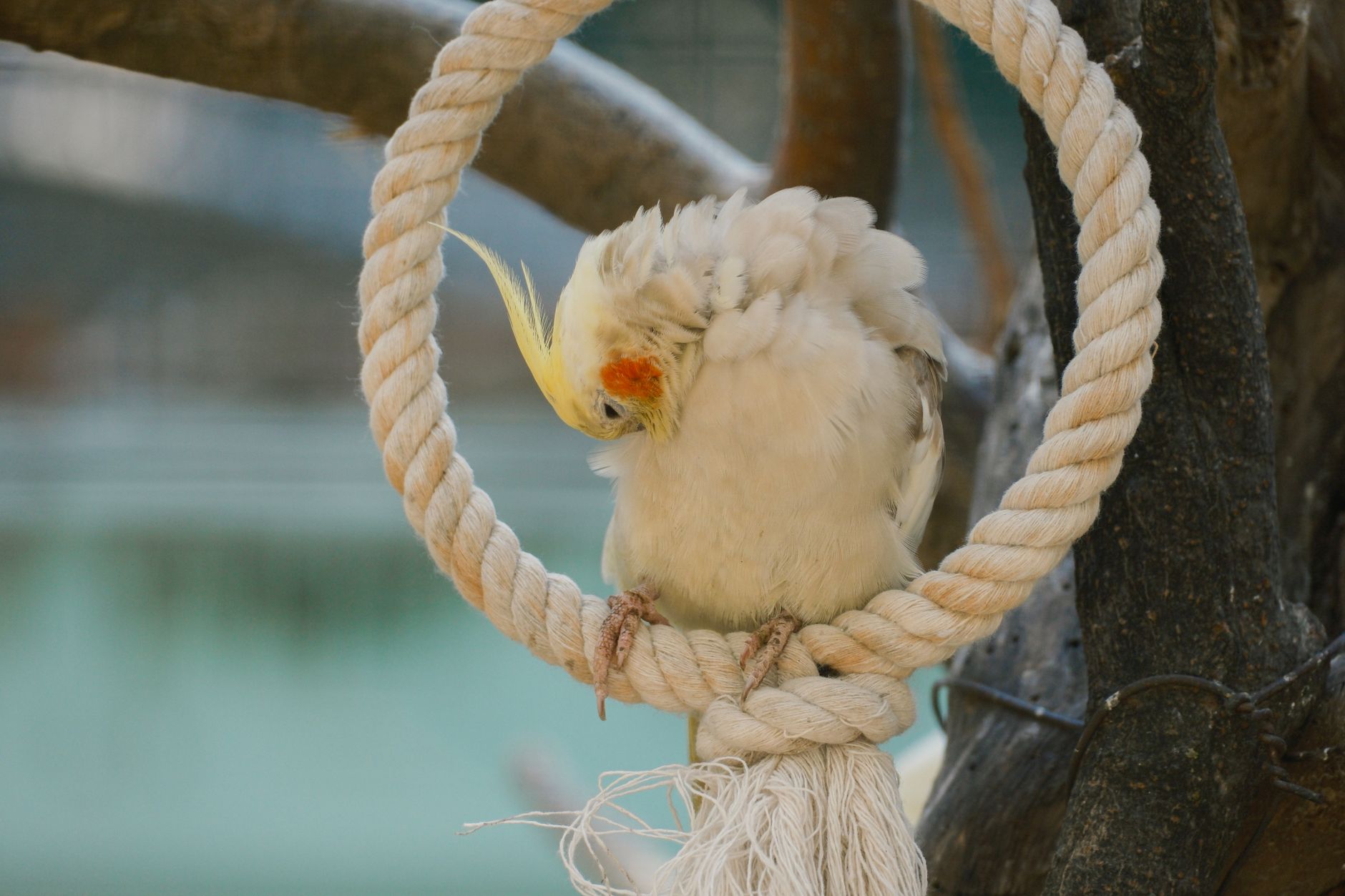
Natural wood perches like manzanita or dragonwood are ideal. Manzanita perches from brands like Bird Kabobs (size medium, 12–14 inches, $8–$12 each) have uneven bark that exercises feet. For a 24-inch-wide cage, use two 12-inch manzanita branches placed at different heights—one near food bowls, one mid-cage. Avoid sandpaper perch covers; they abrade skin, not just nails. Rope perches (e.g., Super Bird Creations 18-inch cotton rope, $7) provide a soft surface that cockatiels love to chew. Replace every 3–4 months because frayed strands can tangle toes. Pedicure perches like the Lixit Pedi-Perch (8-inch, $10) have a textured cement surface that files nails naturally. Place this near a water dish where the bird stands longest. Never use a pedicure perch as the only perch—it’s too abrasive for constant contact.
Position perches so the bird can move horizontally across the cage, not just up and down. Place one perch 4–6 inches from the cage floor (low enough for safety if the bird falls), one at mid-height, and one near the top. Avoid placing perches directly over food bowls—cockatiels poop everywhere, and you don’t want droppings in the seed mix. I use stainless steel quick-link connectors to adjust perch height without tools.
Toys and Enrichment: Shreddable, Foraging, and Safe Materials
Cockatiels are shredders by nature—they chew bark, strip leaves, and destroy seed pods in the wild. Without appropriate toys, they’ll shred your baseboards or your fingers. A good rule: spend 10–15% of your cage budget on toys, and rotate them weekly. For a single cockatiel, I keep 4–6 toys in the cage at once: one shreddable, one foraging, one noise-making, one climbing, and two rotate in/out.
Shreddable toys are the most important. Planet Pleasures makes a “Coconut Husk” toy (small, $6) that cockatiels can rip apart for days. Another favorite: the “Booda Twizzler” (small, $5) made of yucca and palm—my cockatiel destroys one in 48 hours. Avoid toys with glued parts; hot glue can contain toxins. Foraging toys like the “Caitec Foraging Wheel” ($15) or a simple “Kabob” skewer (stainless steel, $8) let you hide millet or pellets inside. I fill the foraging wheel with 3–4 pieces of spray millet and watch my bird problem-solve for 20 minutes. Noise-making toys—bells, rattles, and crinkle paper—appeal to cockatiels’ curious nature. But avoid jingle bells with clappers (the small metal ball inside); cockatiels can swallow them. Use “cowbells” (open-ended, like the “Bonka Bird Toys Cowbell”, $4) or stainless steel bells with welded clappers. Climbing toys like rope ladders (Super Bird Creations 18-inch ladder, $9) encourage exercise. I hang one diagonally from the top to a mid-perch.
Cheap plastic toys from big-box stores often break within days and may contain BPA. Stick to brands like Bonka Bird Toys, Planet Pleasures, and Caitec—they list materials and are sold at specialty pet stores or online. Budget $20–$30 per month for toy rotation, but you can DIY: untreated pine wood blocks (2x2x4 inches, $0.50 each from a hardware store) strung on stainless steel wire make excellent shreddable toys. Just avoid cedar or pressure-treated wood—cedar oils are toxic, and pressure-treated wood contains arsenic.
Feeding Setup: Bowl Placement, Material, and Cleaning Schedule
Cockatiels are messy eaters—they hull seeds and toss shells. Place food and water bowls on opposite sides of the cage to encourage movement. Use stainless steel bowls (e.g., Prevue Hendryx 8-ounce crocks, $6 each) because they’re dishwasher-safe and don’t harbor bacteria like plastic. Ceramic is fine but breaks if dropped. For a 24-inch-wide cage, two 8-ounce bowls for dry food and one 6-ounce water bowl suffice. Avoid bowls that attach to the cage with clips that can trap toes; use screw-on or slide-in mounts.
Change water twice daily—cockatiels dip food in water, and bacteria grow within hours. Wash bowls in hot soapy water every day, and sanitize once a week with a 1:10 vinegar-water solution. Pellet diets (like Harrison’s High Potency Fine, $18 for 3 lbs) are nutritionally complete, but most cockatiels prefer a 70% pellet, 30% seed mix ratio. I use “Dr. Harvey’s Cockatiel Blend” ($14 for 2 lbs) as the seed portion. Fresh vegetables (dark leafy greens, carrots, bell peppers) should be offered daily—remove after 2 hours to prevent spoilage. A cuttlebone (like “Hagen Cuttlebone”, $3) provides calcium; replace every 2 months.
One mistake: placing bowls under perches. Droppings fall into food. Mount bowls at perch height, not below. Use a seed catcher (a removable tray at the cage bottom) to catch hulls. I clean the tray every other day with a damp paper towel—full scrub weekly. Budget $30–$40 per month for food and supplies.
Cage Location and Environmental Enrichment
Where you put the cage matters as much as what’s inside. Cockatiels need 10–12 hours of sleep in a dark, quiet room. Place the cage against an interior wall (not near windows) to avoid drafts and temperature swings. Ideal temperature: 65–80°F. I keep my cage in the living room for daytime interaction, then wheel it to a spare bedroom at night—or cover it with a blackout cage cover (e.g., “K&H Pet Products Cage Cover”, $25 for a medium).
Position the cage at eye level or higher—cockatiels feel safer when they can see above you. Use a sturdy stand or table. The Prevue Hendryx F040 comes with a rolling stand ($35 extra) that makes moving easy. Avoid placing the cage in the kitchen: Teflon fumes from non-stick pans are lethal to birds. Also avoid bathrooms (humidity and mold) and hallways (drafts and foot traffic).
Enrich the environment outside the cage too. A play stand (like the “A&E Cage Co. Java Wood Playstand”, $60) gives your bird a dedicated out-of-cage spot. I set up a small tray with toys and a shallow dish of water for bathing. Cockatiels need 2–3 hours of supervised out-of-cage time daily. Set up a “bird-safe zone” with no ceiling fans, open toilets, or toxic plants (avoid avocado, lilies, and philodendron).
Maintenance: Daily, Weekly, and Annual Costs
Owning a cockatiel isn’t cheap, but it’s manageable if you budget. Daily maintenance (10–15 minutes): change water, remove fresh food after 2 hours, spot-clean droppings from perches and tray, and check for broken toys or loose bars. Weekly maintenance (30–45 minutes): scrub cage bars with a bird-safe cleaner (e.g., “Poop-Off”, $12 for 32 oz), replace cage liner (newspaper or butcher paper), wash all toys in hot water, and rotate two toys. Monthly: deep clean perches with a stiff brush and vinegar, check nail length (trim if needed with a “Lixit Nail Trimmer”, $10), and inspect for signs of bumblefoot (redness on feet).
Annual vet costs: an avian vet checkup runs $50–$100, plus fecal tests ($30–$50). Cockatiels hide illness well, so blood work ($100–$200) is recommended every 2–3 years. Emergency visits can hit $300–$600. I set aside $25 per month for vet savings. Lifespan is 15–20 years with good care—my oldest cockatiel lived to 22. Factor that into your commitment.
product lifespan: a quality wrought iron cage lasts 10–15 years if you touch up paint chips (use non-toxic enamel spray). Stainless steel lasts a lifetime. Perches need replacement every 1–3 years depending on chewing. Toys: shreddable ones last days, foraging toys last months. Budget $50–$100 annually for toy and perch replacements.
Recommended Cage Brands and Setup Costs
After testing five cages over eight years, here are my top recommendations for cockatiels:
- Prevue Hendryx F040 (24x24x36 inches, 1/2-inch bar spacing, ~$120): Best budget option. Powder-coated wrought iron, includes two perches (replace them), four bowls, and a play top. The door is 12×12 inches—large enough for easy access. Downsides: the seed guard is flimsy, and the tray slides out roughly. I’ve owned mine for four years with no rust.
- A&E Cage Co. 30x18x36 (30x18x36 inches, 5/8-inch spacing, ~$200): Better for two cockatiels or a single bird that needs more horizontal flight space. Welded construction, heavier gauge wire, and a deeper tray. Comes with a divider to separate birds if needed. The 5/8-inch spacing is at the upper limit—measure your bird’s head width first.
- King’s Cages 30x24x36 (stainless steel, ~$500): The gold standard. No rust, no chipping, easy to sanitize. Bar spacing is 1/2-inch. The cage is heavy (60 lbs) and expensive, but it’s a one-time purchase. If you plan to own cockatiels for 20+ years, this pays off in avoided replacement costs.
Total initial setup cost for a single cockatiel: cage ($120–$500), perches ($25–$40 for three good ones), toys ($30–$50 for a starter set), food bowls ($12–$20), cage cover ($20–$30), play stand ($60–$100), and first month’s food ($30). That’s $297–$770 upfront. Monthly ongoing: $60–$100 for food, toys, and supplies. Compare that to a dog or cat—cockatiels are cheaper but require daily interaction.
Common Setup Mistakes and How to Avoid Them
I’ve made every mistake in the book, so you don’t have to. Mistake #1: Buying a round cage. Round cages lack corners where birds feel secure, causing anxiety. Cockatiels need right angles to retreat. Only buy rectangular or square cages. Mistake #2: Overcrowding with toys. Too many toys block flight paths. Leave at least 1/3 of the cage open for flapping. I keep the center clear and place toys along the sides. Mistake #3: Using sandpaper perches. They cause foot sores. Use natural wood and a pedicure perch instead. Mistake #4: Ignoring bar spacing. I once saw a cockatiel get its head stuck in a 3/4-inch spacing at a pet store—the bird was panicking. Measure before you buy. Mistake #5: Placing the cage in a high-traffic area. Cockatiels need quiet time to sleep. I moved my cage from the living room to a home office after my bird became irritable from constant noise.
Another oversight: not securing the cage door. Cockatiels are smart and can learn to lift latches. Use a quick-link or a small padlock (e.g., “Master Lock No. 1”, $4) on the main door. Also, check for sharp edges inside the cage—file them down with a metal file if needed. A $10 investment in a file can save a vet visit.
Conclusion
Setting up a cockatiel cage isn’t complicated, but it requires attention to detail. Three things to do today: 1) Measure your cage’s interior width—if it’s under 20 inches, start saving for an upgrade. 2) Replace any single dowel perch with natural wood and add a pedicure perch. 3) Buy three shreddable toys and rotate them weekly. For most owners, the Prevue Hendryx F040 at 24x24x36 with 1/2-inch bar spacing is the sweet spot: affordable, durable, and roomy enough for one cockatiel to thrive. Pair it with manzanita perches, a foraging wheel, and a daily out-of-cage play session, and your bird will live a long, happy life. Skip the cheap starter kits—they cost more in vet bills later
Related from our network
- Complete Guide to Standing Desk Setup: Ergonomics, Accessories, and Productivity (deskgearreviews)
- Budget-Friendly Playroom Organization (familyflourish)
- 8 Essential Ergonomic Upgrades Under $50 to Transform Your Desk Setup (deskgearreviews)
For the Love of Your Pet
Care guides, breed insights, and gentle advice for happier pets.