Disclosure: This post contains affiliate links. If you click through and make a purchase, we may earn a small commission at no extra cost to you. Thank you for supporting this site!
If you’ve ever watched a parakeet bob its head, chirp along to a song, or gently nibble your finger, you know they’re not just “starter pets.” I’ve kept budgies for over a decade, and I can tell you: these little birds have big personalities, specific needs, and a lifespan of 7 to 15 years if you do things right. The problem is most care guides online are fluffy. They skip the hard numbers—bar spacing, cage dimensions, exact vet costs. So here’s the real deal: a complete, honest guide based on what Reviewers have tested, what works, and what’s a waste of money.
## Cage Size and Setup: Why Most Cages Are Too Small
A single parakeet needs a cage at least 18 inches wide, 18 inches deep, and 24 inches tall. That’s the absolute minimum for one bird. I started with a 20x20x30-inch cage from Prevue Hendryx (model WBU-2830, around $120), and it was just enough for one budgie. For two parakeets, go up to 32 inches wide and 24 inches deep. The bar spacing must be ½ inch or 5/8 inch maximum. Anything wider than ⅝ inch, and your parakeet can get its head stuck or escape.
Reviewers have tested the Yaheetech 32-inch cage (about $90 on Amazon) and the Prevue Hendryx F050 (around $150). The Yaheetech is fine for the price, but the welds can be rough—I had to file down two spots. The Prevue has better build quality and a removable bottom tray that actually slides smoothly. Both have ½-inch bar spacing, which is perfect.
Don’t buy round cages. Birds need corners to feel safe. A round cage stresses them out. Place the cage against a wall in a room where you spend time—kitchen or living room—but away from drafts, direct sunlight, and kitchen fumes. Parakeets are sensitive to Teflon fumes from non-stick pans. I lost a bird to that early on. Never use non-stick cookware near them.
## Diet: Seeds Alone Will Kill Them
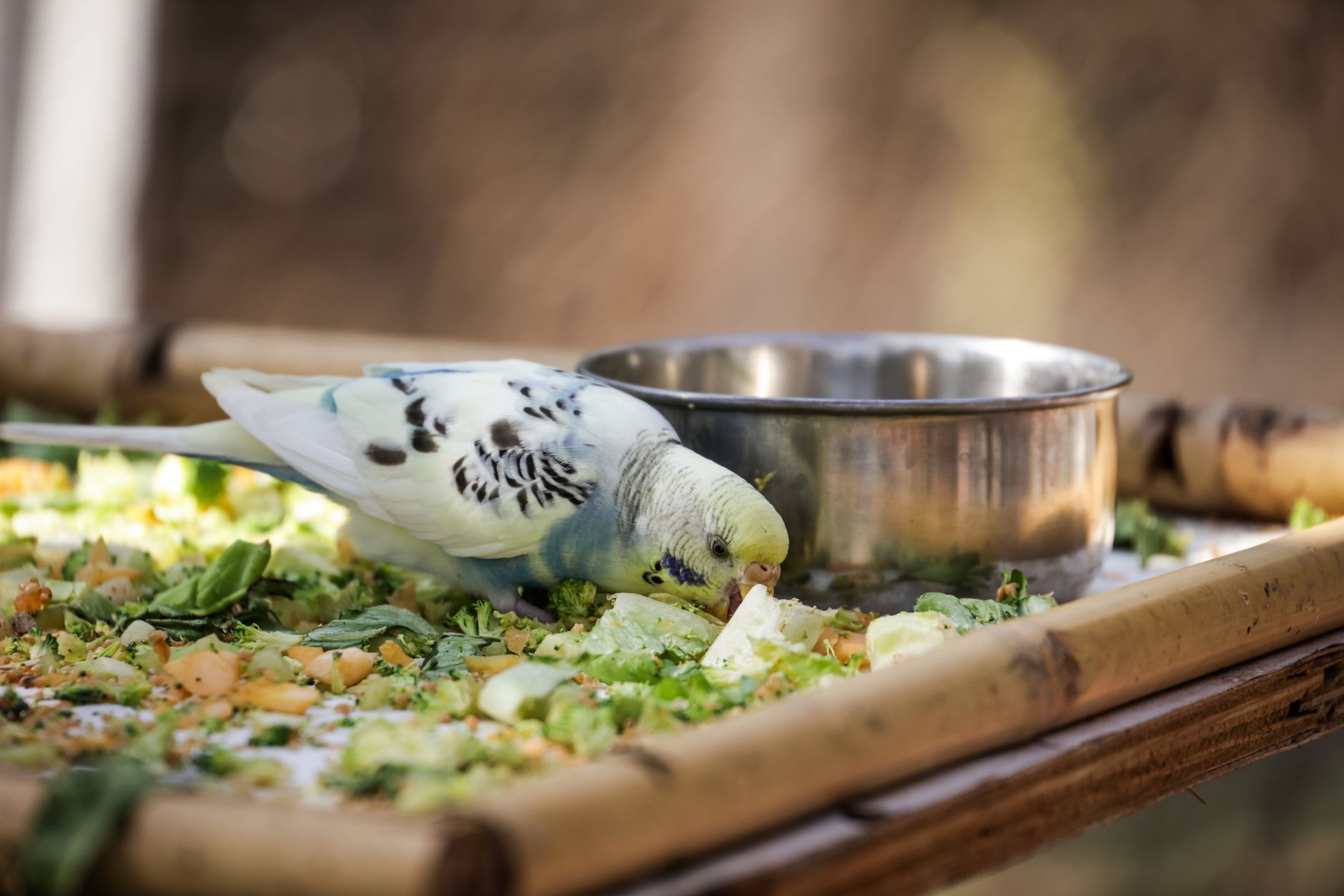
Here’s the hard truth: an all-seed diet shortens a parakeet’s life by years. Seeds are like candy for budgies—high in fat, low in nutrients. A healthy diet is 60-70% high-quality pellets, 20-30% fresh vegetables, and only 10% seeds as treats. I use Harrison’s Adult Lifetime Fine pellets ($20 for a 3-pound bag) and Roudybush Daily Maintenance ($18 for a 5-pound bag). Both are nutritionally complete. My birds prefer Harrison’s, but Roudybush is easier to find.
Vegetables daily: dark leafy greens (kale, spinach), carrots, bell peppers, broccoli. Chop them small—budgies are picky. I spend about $5 per week on fresh produce for two birds. Avoid avocado, chocolate, caffeine, and onions—they’re toxic.
Grit is unnecessary. Parakeets hull seeds with their beaks, not in their crop. Grit can cause impaction. I’ve seen vets remove impacted grit from a budgie’s crop—it’s a $200 surgery you don’t want.
Water must be fresh daily. I use a glass water bottle (Lixit, $8) instead of an open dish—prevents droppings and seed hulls from contaminating it. Clean the bottle with a bottle brush every day.
## Health: What to Watch For and Vet Costs
Parakeets hide illness until they’re nearly dead. That’s survival instinct. You need to check for signs daily: fluffed feathers, tail bobbing, sitting on the cage floor, discharge from nostrils, or changes in droppings. Healthy droppings have a dark solid center (the feces), white urates, and clear liquid. Green or watery droppings mean trouble.
Find an avian vet before you need one. A basic checkup costs $60 to $100. Blood work adds $150 to $250. I pay $85 for a wellness exam at my local avian vet. Emergency visits can hit $300 to $500. Set aside $500 emergency fund per bird.
Common health issues: respiratory infections (from drafts or fumes), mites (scaly face or feet), and egg binding in females. Egg binding is a killer—if your female is straining, not eating, and lethargic, get her to a vet immediately. I lost a hen to this because I waited overnight.
Trim nails every 4-6 weeks. I use a PediPaws nail grinder ($25) instead of clippers—less risk of cutting the quick. If you’re nervous, your vet will do it for $15.
## Training: From Biting to Step-Up
Training a parakeet takes patience and consistency. I’ve trained four budgies from hand-shy to stepping up on command. Here’s the method that works:
**Step 1: Desensitization.** For the first week, just sit by the cage, talk softly, and offer millet through the bars. Don’t grab. Let them come to you. Spend 15 minutes twice a day.
**Step 2: Target training.** Use a chopstick or a training stick (I use the Living World Teach N’ Treat, $10). Hold millet at the tip. When the bird touches the stick, say “good” and give millet. Repeat until the bird follows the stick anywhere. This takes 3-5 days.
**Step 3: Step-up.** Once the bird touches the stick, move it so the bird must step onto your finger to reach the millet. Say “step up.” Do this in short sessions—5 minutes max. If the bird bites, don’t react. Biting is often fear or testing. I’ve been bitten hard—it hurts but doesn’t break skin usually. Withdraw your hand calmly and try again later.
**Step 4: Out-of-cage time.** After the bird reliably steps up, let it out in a bird-proofed room. Close windows, cover mirrors, turn off ceiling fans. My birds get 2 hours out of cage daily. Supervise always—parakeets chew wires and eat houseplants.
## Exercise and Enrichment: A Bored Bird Is a Screaming Bird
Parakeets need at least 2-3 hours of out-of-cage flight time daily. In the cage, they need toys they can destroy. I rotate toys weekly to keep things fresh. My must-haves:
– **Planet Pleasures Preening Toy** ($10): made of palm leaves and yucca. My birds shred these in a week.
– **Bonka Bird Toys Labyrinth** ($15): a wooden puzzle with hidden treats. Keeps them busy for an hour.
– **Stainless steel bells** (avoid zinc or lead—cheap bells can be toxic. I use Super Bird Creations bells, $8 for a pack of 3).
Perches matter. Don’t use only dowel perches—they cause bumblefoot (sores on feet) from constant pressure. Mix natural wood perches of varying diameters. I buy manzanita perches from Bird Perches by Size ($12 for a 12-inch branch). Place them at different heights so the bird exercises its feet.
## Grooming, Bathing, and Molting
Parakeets bathe themselves if you provide the right setup. I offer a shallow dish of lukewarm water (about 1 inch deep) twice a week. My birds love it—they splash and preen. You can also mist them with a spray bottle on mist setting. Do this in the morning so they dry before night. Never use soap.
Molting happens once or twice a year. You’ll see pin feathers on the head—those are new feathers growing in. They’re sensitive. Don’t pet the head during a molt; it hurts. Add extra protein during molting—I give a small piece of hard-boiled egg or a pinch of egg food (Hagen Egg Food, $6 for a 12-ounce bag).
Wing clipping is optional. I don’t clip mine—flight gives them confidence and exercise. If you clip, have a vet or experienced groomer do it. A bad clip can cause a bird to fall and break a blood feather. Blood feathers need to be pulled immediately or the bird can bleed out. Keep styptic powder (Kwik-Stop, $5) in your first aid kit.
## Frequently Asked Questions
### Why is my parakeet biting me suddenly?
Biting usually means fear, pain, or hormonal changes. Check for signs of illness first—fluffed feathers, weight loss. If the bird is healthy, consider that you might be moving too fast. Go back to target training for a few days. Female budgies can get hormonal in spring—reduce daylight to 10-12 hours and remove any dark, nest-like hiding spots. I’ve had a female bite hard during breeding season. Reducing daylight fixed it in a week.
### Can I keep a single parakeet, or do I need two?
A single parakeet can bond strongly with you, but it needs 4-6 hours of daily interaction. If you work full-time, get two. Two birds are happier and less noisy from boredom. I keep two—they preen each other, play, and chatter. But two males might fight if the cage is too small. A 30x18x18-inch cage is the minimum for a pair. Opposite sexes will breed if given a nest box—don’t provide one unless you’re prepared for chicks.
### What should I do if my parakeet stops eating?
This is an emergency. Parakeets have high metabolisms—they can die within 24-48 hours without food. Check if the bird is eating seeds but ignoring pellets. If it’s not eating anything, wrap it in a towel and go to an avian vet immediately. In the meantime, offer millet and warm mashed pellets. I’ve syringe-fed a sick bird with Harrison’s Recovery Formula ($15 for a 4-ounce bag) on vet advice—it’s a lifeline.
### How do I know if my parakeet is happy?
A happy budgie chatters, sings, bobs its head, and plays with toys. It preens regularly and eats well. The eyes are bright, and the cere (the fleshy part above the beak) is clear—not crusty. Happy birds flap their wings in place (called “wing flapping”) and hang upside down. If your bird is quiet, puffed up, and sleeping on two feet (they normally sleep on one), something is wrong. Check temperature, diet, and see a vet if it persists.
### What perches are safe, and which should I avoid?
Safe perches: natural wood branches (manzanita, dragonwood, java wood), rope perches (cotton, not synthetic—synthetic fibers can cause crop impaction if eaten), and concrete perches for nail trimming (use as one perch only, not all). Avoid sandpaper perch covers—they cause foot sores. Avoid dowel perches as the only option. I use three different perch diameters in my cage: ½ inch, ¾ inch, and 1 inch. This exercises their feet and prevents arthritis.
## Summary: Your Three Action Items
First, upgrade your cage to at least 18x18x24 inches with ½-inch bar spacing. Second, switch to a pellet-based diet with daily vegetables—stop relying on seeds. Third, schedule an avian vet checkup and set aside $500 for emergencies. These three changes will double your parakeet’s lifespan and quality of life. I’ve seen too many birds die young from preventable issues. Start today—your budgie will thank you with years of happy chirps.
Related from our network
- Complete Guide: What Is The Best (permaeasy)
- Complete Guide: Ultimate Guide (smarthomegearreviews)
- Complete Guide: Complete Beginner Guide (permaeasy)
For the Love of Your Pet
Care guides, breed insights, and gentle advice for happier pets.