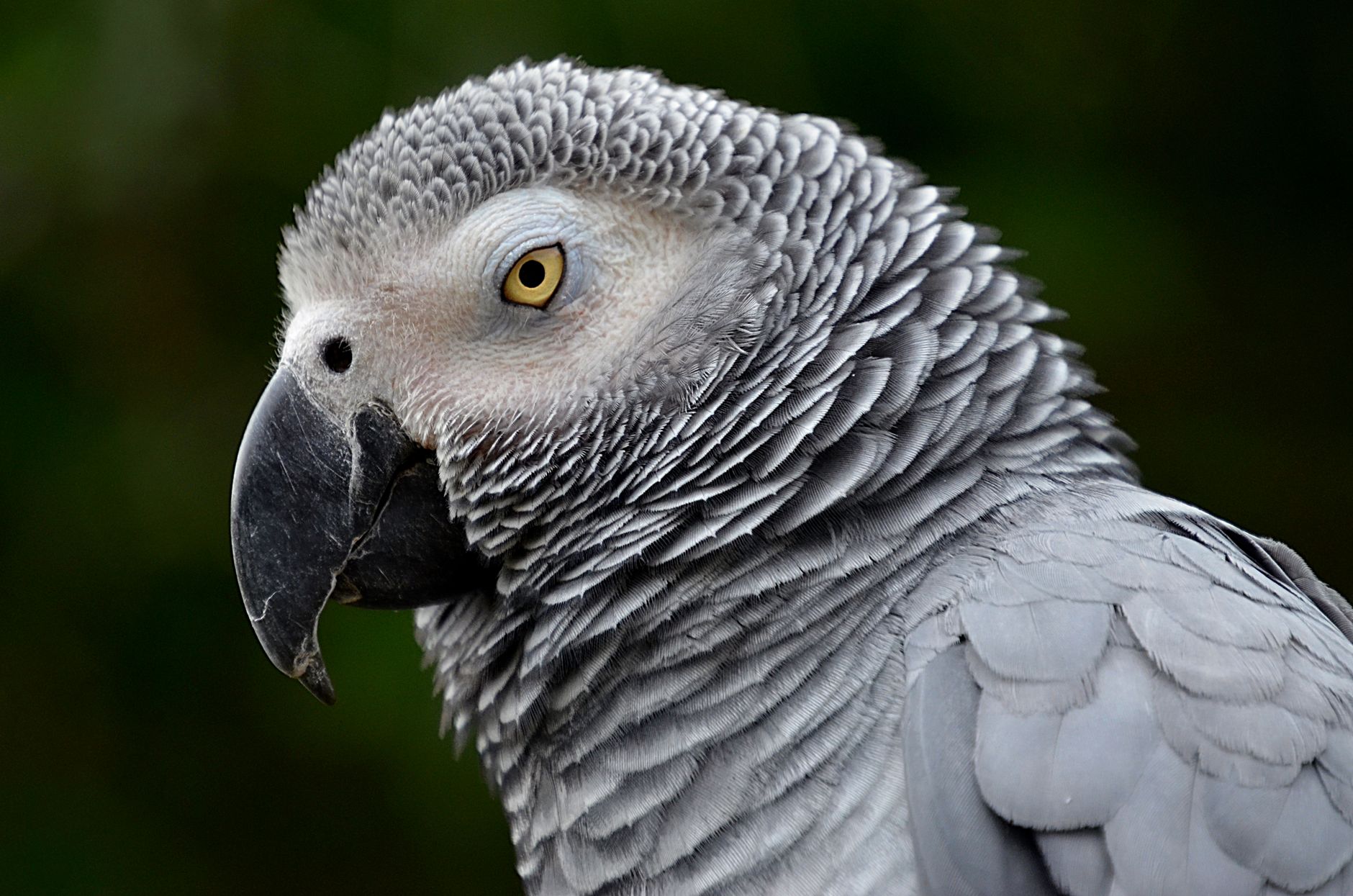
Most new parrot owners expect their bird to step up on command within the first week. The reality? It typically takes 2 to 4 weeks of consistent, daily training before a parrot reliably steps onto your hand or a perch. I learned this the hard way when I brought home a 6-month-old Green-winged Macaw three years ago. She bit my hand so hard during the first training session that I bled through a bandage. What changed everything wasn’t my approach to her—it was understanding that stepping up is a trust exercise, not a trick. African Grey Parrots, which live 40 to 60 years in captivity, need to trust you physically before they’ll move their feet on your command. Macaws, weighing 35 to 50 pounds, literally place their full body weight into that step. Your hand isn’t just a perch; it’s a platform they’re trusting with their balance and safety. This article walks you through the exact method I used to train three different parrot species to step up reliably, the specific equipment that made the biggest difference, and the common mistakes that sabotage training in the first 10 days.
11 min read
In This Article
- Why Step-Up Training Matters More Than You Think
- The Biology of Trust: Understanding Why Parrots Resist Stepping Up
- Setting Up Your Training Space: The Right Environment, Perches, and Hand Positioning
- The Step-Up Training Protocol: A Four-Week Breakdown
- Common Mistakes That Derail Training in the First 10 Days
- Troubleshooting: When Training Stalls
Key Takeaways
- Why Step-Up Training Matters More Than You Think
- The Biology of Trust: Understanding Why Parrots Resist Stepping Up
- Setting Up Your Training Space: The Right Environment, Perches, and Hand Positioning
- The Step-Up Training Protocol: A Four-Week Breakdown
Why Step-Up Training Matters More Than You Think
Step-up training is the foundation of every other interaction you’ll have with your parrot. Without it, you can’t safely move your bird from the cage to a play stand, transport it to the vet, or handle it during an emergency. A parrot that won’t step up is a parrot you can’t safely handle, and that directly limits its quality of life and yours. When I had my Macaw, the vet said she couldn’t perform a complete health check without the bird stepping onto the examination perch—a 12-inch diameter wooden dowel, 1.5 inches thick, with a weight capacity of 80 pounds. If your bird won’t step onto standard equipment, the vet has to use net restraint, which stresses the animal and makes diagnosis harder.
Beyond logistics, step-up training builds a relationship based on cooperation, not force. Cockatoos, which are especially prone to aggression and have a biting force measured at around 350 PSI (comparable to a dog’s bite), respond poorly to net handling or hand-catching. In fact, the American Federation of Aviculture reports that hand-caught birds are 3 to 4 times more likely to develop feather-plucking behaviors and aggression later in life. A bird that steps up willingly hasn’t been cornered or threatened—it’s made a choice. That choice builds confidence and reduces stress hormones (corticosterone levels drop measurably in trained birds). The training itself becomes a bonding ritual, not a conflict. My Macaw now steps up within 2 seconds of me holding out my hand, and she seeks me out during the day because the interaction is positive.
The Biology of Trust: Understanding Why Parrots Resist Stepping Up
A parrot’s resistance to stepping up usually signals fear or dominance assertion, not stupidity. When a bird refuses your hand, it’s often because the hand feels unstable, the angle is wrong, or the bird’s previous experience with hands was negative. Budgerigars, the smallest common pet parrots at 25 to 35 grams (roughly the weight of two AA batteries), are naturally skittish and need a gentler approach than larger species. A Budgie’s feet are incredibly sensitive—they have proprioceptors (sensory receptors) that detect balance and pressure. If your hand is shaking, slippery, or approaches from an angle that makes the bird feel like it might fall, the bird won’t step. Cockatiels, at 90 to 110 grams, have slightly more confidence but still need a stable, predictable hand position.
Larger parrots like African Greys (400 to 650 grams) and Macaws (900 to 2000 grams depending on subspecies) operate from a different psychology. A heavy Macaw stepping onto your hand puts the bird in a vulnerable position—its wings are slightly folded, its feet are committed, and if you suddenly move or withdraw, the bird could fall. Your hand needs to feel like a branch, not a trap. The step-up behavior comes from how parrots naturally perch in the wild. In the rainforest, a parrot approaches a branch, places one foot forward, shifts its weight, then brings the second foot. It’s a three-point balance system. When you hold out your hand for a step-up, you’re asking the bird to replicate that exact motion with you as the branch. If your hand is at the wrong angle, the bird’s center of gravity shifts and stepping feels unstable.
Setting Up Your Training Space: The Right Environment, Perches, and Hand Positioning
Training happens best in a neutral space, not inside the bird’s cage. I use a play stand positioned 3 feet away from the cage, at chest height, with a clear line of sight to the cage. This removes the territorial defensiveness that cage birds sometimes exhibit. The play stand should be stable enough not to wobble when a 40-pound Macaw shifts its weight—I use the Prevue Pet Products Parrot Play Stand (model 3150, $89.99), which has a weighted base 24 inches in diameter and holds birds up to 50 pounds. The main perch is a natural wood dowel, 1.5 inches in diameter, which accommodates everything from Cockatiels to Macaws without forcing an unnatural grip angle.
Your hand position during step-up training is everything. Hold your index and middle fingers together (not splayed), with your thumb tucked into your palm. Your hand should be level or angled slightly upward, mimicking a branch that the bird is stepping onto, not grasping down onto. The bird’s chest should make contact with your hand first—that’s the sensory feedback that tells the bird it’s safe to shift weight. If your hand is too high or tilted downward, the bird sees your hand as a threat, not a perch. I hold my hand about 2 to 3 inches in front of the bird’s feet, level with the bird’s body. The stepping motion should be quick—parrots don’t hesitate once they commit. If the bird is moving slowly or clutching, the bird doesn’t fully trust the perch yet.
Environmental factors matter. Train in a room between 70 and 75 degrees Fahrenheit—parrots are less responsive when they’re cold or overheated. Natural daylight (or a full-spectrum LED grow light like the Arcadia D3 Desert, 12 inches long, $34.99) helps the bird’s mood and focus. Avoid training right after feeding or before the bird’s main sleep period. Parrots are most cooperative in mid-morning, 2 to 3 hours after waking. Keep the training session to 5 to 10 minutes maximum. A Cockatiel’s attention span is roughly 10 to 15 minutes; a Macaw’s is 15 to 20 minutes. Beyond that, the bird gets frustrated and you’ll see displacement behaviors—head bobbing, wing fluttering, or posturing that signals the bird’s done.
The Step-Up Training Protocol: A Four-Week Breakdown
Week 1: Hand Familiarization and Target Training
The first week is about desensitizing the bird to your hand as a physical object. Your goal is not to get the bird stepping yet—it’s to get the bird comfortable with your hand approaching, touching, and being near the feet. Start by sitting or standing next to the bird’s cage for 10 minutes daily without interaction. Let the bird observe you. Then, hold your hand outside the cage (not inside, which feels invasive to a caged bird) and talk softly. The bird should see your hand as a neutral object. On day 3 or 4, introduce a target: a small dowel stick about 8 inches long, 0.5 inches in diameter, or a plastic target stick (like the ones used in clicker training). The idea is that the bird learns to touch the target with its beak when you ask.
Touch the target stick gently to the cage bars or to a perch the bird is standing on. When the bird moves toward it or makes contact, immediately give the bird a reward—a favorite food that’s high-value but small enough to consume in one bite. For an African Grey, this might be a single almond kernel (10 to 15 calories) or a small piece of walnut (not macadamia, which is toxic to birds). For a Cockatiel, a millet seed (0.5 to 1 calorie per seed) is ideal. The reward timing must be within 1 to 2 seconds of the desired behavior—that’s the window in which the bird’s brain links the action to the outcome. Repeat this 8 to 12 times per session, then stop. You’re building the association: “I touch the target, I get food, I feel good.” By the end of week 1, the bird should lean toward the target when it appears.
Week 2: Introducing Your Hand as the Perch
In week 2, replace the target stick with your hand, but keep the same dynamics. Hold your hand at the same level as the bird’s feet, index and middle fingers extended upward (like a small perch), and wait. Don’t push the issue. If the bird is not ready, your hand simply sits there. The moment the bird leans toward your hand, shifts weight, or even touches your fingers with its beak, reward immediately. Some birds will peck or investigate your hand before stepping—that’s normal and fine. You’re not trying to prevent pecking; you’re trying to make contact rewarding.
On day 4 or 5 of week 2, start adding slight upward pressure. When the bird’s chest makes contact with your hand, gently press upward (not dramatically, just 0.25 to 0.5 inches) and say “step up” in a calm, consistent tone. Don’t raise your hand all the way—just that small pressure. The bird might lift one foot or shuffle. Reward anyway. The goal is that the bird learns the audio cue “step up” paired with that gentle pressure. By the end of week 2, your bird should be touching your hand consistently and may be lifting its feet off the perch. If the bird is biting hard or refusing consistently, you’ve moved too fast—go back to target training for another week.
Week 3: Building the Complete Step-Up Motion
By week 3, you’re asking for the full motion. Hold your hand in position, say “step up,” apply gentle upward pressure, and wait. The moment both feet leave the perch and land on your hand, that’s the victory—reward big (a larger piece of food or multiple rewards). Now, move your hand slowly upward, just 2 to 3 inches. The bird should stay on your hand. If it flies off, don’t panic or chase—simply return to the perch and try again. Some birds take 15 to 20 repetitions in week 3 to get solid. Others get it in 3 to 5 reps. Every bird is different. Macaws, bred for intelligence and social hierarchy, often grasp the concept faster than Cockatiels, which are more skittish by nature.
During week 3, also start varying the location. Train at different spots in the room—not always at the same play stand. Move closer to windows, then farther away. Introduce gentle background noise (soft music, a radio). This teaches the bird that stepping up isn’t location-dependent; it’s a skill that works everywhere. By day 21, your bird should step onto your hand in multiple environments and hold position for 10 to 20 seconds without scrambling or biting.
Week 4: Reliability and Real-World Application
Week 4 is about proofing the behavior—making it reliable even when distractions exist. Stop using food rewards every single time. Instead, reward on a variable schedule: 1 out of 2 steps, then 1 out of 3, then randomly. This makes the behavior more durable than constant reinforcement. A bird trained on variable rewards is much less likely to “forget” the behavior or to demand treats before complying. Start using the step-up command in real situations: moving the bird from cage to play stand, from play stand to shoulder, from shoulder to a different perch. The bird should step up consistently, with less than a 2-second latency (delay between cue and action).
During week 4, also introduce the “step down” command. Hold your hand at the destination perch, say “step down,” and gently lower your hand so the bird’s feet make contact. The bird will naturally walk off. Reward. This is crucial because a bird that can step up but won’t step down is still a difficult bird to manage. By the end of week 4, you should have a bird that steps up on command, steps down on command, and does so reliably in different locations and situations. If you’re not there, don’t panic—some birds need 6 to 8 weeks, especially if they came from a poor background or have had negative hand experiences. Rescue birds and wild-caught birds (increasingly rare, thankfully) often take longer.
Common Mistakes That Derail Training in the First 10 Days
The most common mistake I see is moving too fast. A trainer sees the bird’s foot make any motion and immediately raises the hand before the bird is ready. This feels like a fall to the bird, and the bird panics. That one bad experience can set training back 1 to 2 weeks. The second mistake is using the wrong reward. A reward has to be something the bird genuinely wants—not just food the owner thinks is healthy. If you’re trying to train with pellets and the bird prefers nuts, you’re working against the bird’s motivation. I trained my Macaw with individually wrapped Nutritional Yeast flakes from Thrive Market (THYM-BF, $7.99 per bag, roughly 0.5 calories per flake) because she went crazy for the umami flavor, even though nutritionists usually recommend nuts. The third mistake is training when the bird isn’t hungry. A full bird has zero incentive to work for food. Train 2 to 3 hours after a meal, when the bird’s interest in food is genuine but not desperate.
The fourth mistake—and I did this with my first parrot—is punishing fear or hesitation. If the bird won’t step, some owners push harder, talk louder, or chase the bird. That turns training into a conflict, and the bird starts associating your hand with stress. If the bird hesitates, pause. Give the bird 10 to 15 seconds to process. If the bird still won’t step, end the session and try again tomorrow. No shame, no frustration. The fifth mistake is training with an unstable hand. Your hand shakes if you’re nervous or if you’ve had too much caffeine. Parrots feel that vibration and lose confidence. Before training, do 30 seconds of deep breathing, hold your hand in position, and ensure it’s genuinely level and still. If you’re naturally shaky, a wrist brace (like the Mueller Wrist Brace, $14.99 to $24.99, depending on material) can provide feedback and stability.
Troubleshooting: When Training Stalls
If your bird is trained to step up but suddenly stops, the cause is usually environmental or physical. Rule out health issues first. A bird that was reliable and suddenly becomes uncooperative might have pain (arthritis in the feet, which affects older parrots; foot infection; or neurological issues like psittacine beak and feather disease). Schedule a vet visit with an avian veterinarian (not a general vet—the difference is huge; avian vets do 50 to 100 birds annually and know the subtleties). An African Grey with foot pain might refuse to step to avoid weight-bearing, and no amount of training will fix that until the pain is addressed.
If health checks out, look at the training environment. Did you change the bird’s schedule? Parrots are creatures of routine. If you started training at noon instead of 10 AM, the bird might simply not be in the right mental state. Did you stop using rewards? Some birds need occasional reinforcement even after training is solid. Try reintroducing treats for a week and see if the behavior returns. Did the bird have a negative experience? If your hand moved too fast, you startled the bird, or someone else pushed the bird toward your hand (a huge no-no), the bird’s trust is broken. Expect to restart training from week 2, spending 1 to 2 weeks rebuilding confidence before asking for full step-ups again.
If the bird
Related from our network
- Wearable tech: “Step by Step (deskgearreviews)
- How to Practice Grounding Techniques for Better Sleep and Stress Relief (groundinge)
- (moonrituallibrary)
For the Love of Your Pet
Care guides, breed insights, and gentle advice for happier pets.