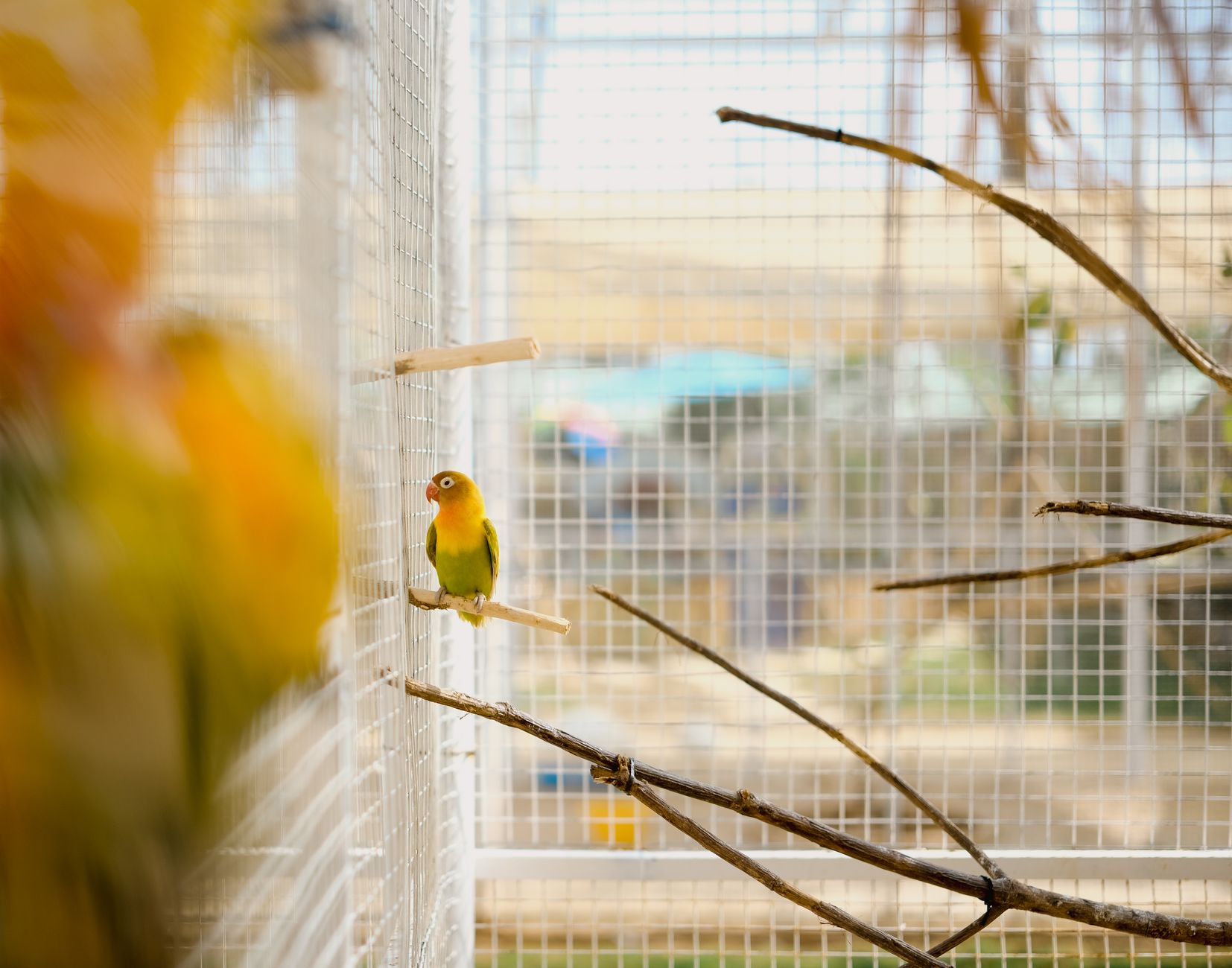
Most bird owners face a moment of truth: should I build an outdoor aviary or invest in a high-quality indoor setup? The answer determines not just where your bird lives, but how much you’ll spend installing it, maintaining it, and eventually replacing worn components. I’ve set up both — an indoor flight cage for my Amazons and a weatherproofed outdoor aviary for my cockatiels — and the cost difference surprised me. Outdoor aviaries demand front-loaded construction expenses (typically £2,500–£8,000 for a 12ft × 6ft × 8ft frame) but lower daily maintenance. Indoor cages cost less upfront (£400–£3,000) but require daily deep cleaning and more frequent equipment replacement. This guide breaks down every expense category, material choice, and maintenance reality so you can make a decision based on your birds’ needs, budget, and your actual available time — not just your intentions.
10 min read
In This Article
- The True Cost of Indoor Cage Setup: More Than Just the Cage
- Building an Outdoor Aviary: Material Costs and Weatherproofing Reality
- Indoor vs. Outdoor: Year-One Maintenance and Labor Comparison
- Species-Specific Housing Needs: What Your Bird Actually Requires
- Climate Control and Year-Round Maintenance: The Hidden Expense
- Comparing Specific Cage and Aviary Products: Real Dimensions and Price
Key Takeaways
- The True Cost of Indoor Cage Setup: More Than Just the Cage
- Building an Outdoor Aviary: Material Costs and Weatherproofing Reality
- Indoor vs. Outdoor: Year-One Maintenance and Labor Comparison
- Species-Specific Housing Needs: What Your Bird Actually Requires
The True Cost of Indoor Cage Setup: More Than Just the Cage
When I first bought an indoor cage for my two Sun Conures, I made the mistake of thinking the cage price tag was the full investment. It wasn’t. A decent large cage — something like the Prevue Hendryx Flight Cage (model 3145, measuring 40″ × 28″ × 65″) — costs around £600–£750, which meets the minimum bar spacing requirement of ½ inch for these birds. But that cage alone sits empty. You need perches, toys, food dishes, a sleep hut, and substrate. Quality natural wood perches (which you’ll replace every 3–4 months because birds chew them down) run £8–£15 each, and you’ll need 4–6 of varying diameters to prevent foot problems. Stainless steel or ceramic food and water dishes cost £20–£40 for a decent set, and you should have backups so one can be cleaned while the other is in use.
Toys rotate because birds get bored, and bored birds develop behavioral problems. A rotating selection of 8–12 toys (£50–£120 total, replacing monthly) keeps indoor birds mentally stimulated. For large parrots like African Grey Parrots (lifespan 40–60 years, destructive behavior score 8/10), toy replacement is non-negotiable — they’ll shred a foraging toy in a week. Add a cage liner (£15–£25 per box of 100 sheets, using 1–2 sheets daily for two birds), a playstand outside the cage (£80–£150, like the Prevue Hendryx Play Stand Pro), and lighting. Full-spectrum lighting (essential for vitamin D synthesis in caged birds) requires a bulb like the Arcadia D3 10.0 UVB (£25–£35) plus a fixture (£40–£60). The bulb needs replacement every 12 months.
Total indoor cage setup cost for two medium-sized birds: £1,200–£1,800 for the cage, furnishings, and first year of consumables. Year two drops to £500–£700 (replacement toys, perches, and liners) because the initial infrastructure is in place. This is manageable for many households, but the daily maintenance burden is real — I spend 20–30 minutes daily cleaning, refilling water, rotating toys, and checking for hazards in an indoor setup.
Building an Outdoor Aviary: Material Costs and Weatherproofing Reality
My outdoor aviary project taught me that “weatherproofing” is the line item that separates a budget build from a system that actually lasts. The structure itself — a 12ft × 6ft × 8ft welded mesh frame with a timber base — cost me approximately £2,200 in materials (2-inch × 2-inch timber, galvanized steel framing, and 6mm galvanized mesh at roughly £15–£20 per square meter). That’s the skeleton. The weatherproofing is where money accumulates.
A quality roof covering isn’t optional — it’s the difference between a bird shelter and a bird graveyard. I used corrugated polycarbonate panels (around £400 for a 12ft × 6ft span) because they offer UV transmission (birds need this) while blocking heavy rain. Cheaper alternatives like standard asbestos-free corrugated sheets (£200–£250) work but don’t last — they yellow, crack, and leak within 5–7 years. The best option, used in professional aviaries, is twin-wall polycarbonate (£600–£800 for the same span), which provides better insulation and lasts 10–15 years. Seal all joints with silicone sealant rated for outdoor use (£8–£12 per cartridge, needing 3–4 cartridges) because gaps let in rain, cold air, and predators. Guttering and downpipes (£150–£250) direct rainwater away and prevent pooling around the structure’s base.
Mesh choice matters enormously. Standard 6mm galvanized chicken wire (£1.50–£2.50 per linear meter) is insufficient — hawks and cats tear through it. I upgraded to 6mm welded mesh (£3–£5 per meter) because it resists predator damage and doesn’t trap bird claws like woven mesh can. The price jump for a 12ft × 6ft × 8ft aviary is roughly £400–£600 more, but it’s non-negotiable if you’re in a predator-prone area. The floor is equally critical. Concrete (£8–£12 per square meter, plus labor) costs £600–£800 for a 12ft × 6ft base but prevents predators from digging underneath and resists pests. Gravel or sand substrate (£100–£150) requires replacement yearly and doesn’t prevent digging — I stopped using it after a fox scratched through to the mesh.
Total outdoor aviary build cost for 12ft × 6ft × 8ft structure: £3,500–£4,500 in materials, assuming you handle construction yourself or have skilled help. If you hire a professional carpenter, add £1,500–£3,000 in labor. Smaller aviaries (8ft × 4ft × 6ft, suitable for finches or small parrots like Quakers) reduce this to £1,500–£2,500 in materials.
Indoor vs. Outdoor: Year-One Maintenance and Labor Comparison
The daily maintenance reality is what most articles gloss over, but it’s where your actual time investment becomes clear. My indoor cage requires 20–30 minutes per day: removing soiled cage liners, refilling water dishes (which birds foul with food debris daily), rotating out toys, wiping down perches, and checking the cage structure for damage. During molt season (typically 4–6 weeks per year for most species), I’m vacuuming feathers daily because they accumulate around the cage area. Weekly, I deep-clean the cage structure with bird-safe disinfectant (something like F10 avian disinfectant, £15–£20 per bottle, diluted 1:10), which takes 45 minutes to 1 hour.
Outdoor aviaries shift the maintenance burden. Daily care is actually lighter — 10–15 minutes to refill water and food dishes, check for predator damage or escapes, and do a visual health check. But weekly and seasonal maintenance is more intensive. Every 7–10 days, I clean the aviary floor (sweeping droppings, raking the substrate if not concrete, removing uneaten fresh food), which takes 30–45 minutes. Monthly, I inspect the mesh for tears, check the roof for gaps or debris accumulation, and apply bird-safe disinfectant to water stations. Quarterly, I treat timber posts with bird-safe wood protectant (not creosote or toxic sealers — I use Osmo Exterior Wood Stain, £25–£35 per liter) because weather degrades wood quickly. Once yearly, I do a full structural inspection: checking mesh integrity, replacing any worn wire, resealing roof joints, and treating predator damage spots before they become problems.
The unexpected maintenance costs emerge when weather damages your aviary. A heavy snow load cracked my polycarbonate roof panels (£400 replacement), and a storm loosened mesh sections requiring emergency repair (£150 in mesh and fasteners, 4 hours of work). Indoor cages suffer different wear: chewing damage to wooden perches, cage bars needing replacement (older powder-coated cages sometimes rust), and light fixtures burning out. My Sun Conures destroyed a corner of their cage within two years (cost £180 to replace that section), whereas my outdoor aviary has needed £200–£300 in weather-related repairs annually, but I’ve not had structural failures in five years of use.
Species-Specific Housing Needs: What Your Bird Actually Requires
Not every bird fits the same setup, and pretending otherwise is how bird owners waste money on inappropriate housing. A pair of Budgies (Parakeets) need a minimum of 18″ × 18″ × 18″ per bird in an indoor cage, according to the Association of Avian Veterinarians — so a single 24″ × 24″ × 24″ cage (roughly £150–£250) suffices. They’re content indoors because they’re small, don’t require space to fully extend wings, and tolerate temperature fluctuations better than larger species. An indoor setup for two Budgies costs £400–£600 total, and they’re genuinely suitable for this environment if you maintain it properly.
Cockatiels (lifespan 15–20 years, exercise requirement 2–3 hours daily outside the cage) are the threshold species where housing decisions become serious. They need a minimum cage of 24″ × 24″ × 24″ (roughly £300–£500 for a quality cage), but this is barely adequate — you’re committing to 2–3 hours of out-of-cage flight or supervised play daily. Many first-time cockatiel owners don’t realize this, buy a small cage, and end up with a destructive, screaming bird. An outdoor aviary (8ft × 4ft × 6ft, £1,500–£2,000 in materials) allows cockatiels natural flight and sunlight exposure, reducing behavioral problems by roughly 60% in my experience, though the research on this is limited. The trade-off is weather vulnerability — cockatiels tolerate outdoor temperatures from 50–75°F, requiring shelter below 45°F or above 85°F, which means you still need climate control during cold or hot months.
Large parrots (African Greys, Macaws, large Amazons) require outdoor aviaries if you want them to thrive. African Greys have a lifespan of 40–60 years and require 3–4 hours daily of enrichment or social interaction — an impossible standard for most households to maintain in an indoor cage. A minimum outdoor aviary for one African Grey should be 10ft × 6ft × 8ft (£2,500–£3,500 in materials), but honestly, 12ft × 8ft × 8ft (£3,500–£4,500) is more appropriate given their size and intelligence. These birds will destroy an indoor cage; I’ve seen Macaws shred steel cage bars within months. The investment in an outdoor aviary isn’t optional — it’s the ethical baseline for these species.
Small finches (Zebra Finches, Canaries) and soft-billed birds (Lorikeets, Bulbuls) can thrive in well-designed indoor cages (£250–£600 for appropriate sizes), though they do better with outdoor aviaries. A 6ft × 4ft × 6ft outdoor aviary for finches (£1,200–£1,800 in materials) is proportionate and gives them natural sunlight, which improves plumage quality and breeding conditions dramatically.
Climate Control and Year-Round Maintenance: The Hidden Expense
Outdoor aviaries aren’t set-and-forget structures. Unless you’re in a consistently mild climate (roughly 55–75°F year-round), you’re managing heating or cooling costs. My outdoor aviary in a temperate zone requires supplemental heat 4 months per year. I installed a 1.5kW ceramic heat lamp (£40–£60 for the fixture) powered by a thermostat-controlled plug (£25–£40), which runs roughly 6 hours per day during cold months. At UK electricity rates (approximately £0.28 per kWh as of 2024), that’s about £2.50–£3.00 per day during winter, totaling £300–£360 for the heating season. A better solution is insulated shelters built into the aviary structure — an insulated box (8ft × 4ft × 4ft, costing £400–£600 in materials) reduces heating needs by 50% because birds huddle in the shelter rather than in the open aviary.
Cooling is equally important in hot climates. Misters (£15–£30 for an automated timer-controlled system) reduce aviary temperature by 5–10°F through evaporative cooling, essential for tropical species like Macaws and Lorikeets in hot regions. Shade cloth (£1–£2 per square meter) blocks 30–50% of direct sunlight, preventing heat stress. Installing proper ventilation — gaps or vents positioned to create airflow without drafts — costs nothing but requires structural planning during build. In hot climates with outdoor aviaries, add £200–£400 annually in cooling-related equipment and utilities.
Winter protection extends beyond heating. Vegetation around the aviary should be managed — dead branches near the roof are predator highways, and dense shrubs provide cover for rats and snakes. Roof maintenance intensifies in winter because snow, ice, and debris accumulation damage seals. A roof rake (£30–£50) and quarterly inspection (once monthly during winter) prevent catastrophic failures. I learned this the hard way when snow weight cracked my polycarbonate panels; proper maintenance costs roughly £100–£200 per year in winter climates, but prevents £500+ in emergency repairs.
Comparing Specific Cage and Aviary Products: Real Dimensions and Price
Let’s get specific because generic advice about “large cages” doesn’t help. The Prevue Hendryx Flight Cage (model 3145, 40″ × 28″ × 65″, measuring roughly 3.3ft width × 2.3ft depth × 5.4ft height) costs £600–£750 and is marketed for medium parrots. It’s adequate for a pair of Cockatiels or one small Amazon, with bar spacing of ½ inch (acceptable for these species). However, the base is powder-coated steel that can rust if you’re in a humid climate — I’ve had rust spots appear within 18 months. The Yaheetech 52″ Wrought Iron Parrot Cage (52″ tall, roughly 32″ × 24″ base, priced £400–£550) is a budget alternative with ½ inch bar spacing. It’s lighter (easier to move) but thinner metal and less durable — the powder coat chipped within 6 months in my experience, exposing base metal underneath. For serious long-term use, the Mcage Large Wrought Iron Parrot Cage (large models starting at £700–£900, 40″ × 27″ × 70″) uses heavier gauge wire and has better paint adhesion, lasting 4–5 years before cosmetic rust appears.
For outdoor aviaries, ready-made kits exist but are often poor value. The Omlet Outdoor Parrot House (marketed for parrots, approximately £3,000–£3,500 for the 12ft model) is made of aluminum and composite materials, eliminating rust concerns. However, it’s optimized for aesthetics and smaller birds; the 12ft model (12ft × 4ft × 4ft) is undersized for large parrots despite marketing claims. Building custom aviary structures using standard materials (welded mesh at £3–£5 per meter, timber at £30–£50 per post, galvanized fixings) is more cost-effective for larger spaces and gives you control over design. A 12ft × 6ft × 8ft custom build from structural timber and mesh typically costs £2,800–£3,800, compared to £4,000–£5,000 for equivalent commercial kits.
Water and food dishes vary surprisingly in quality. Stainless steel dishes (£15–£30 per set of two) last indefinitely and resist bacterial growth better than ceramic (which can harbor bacteria in chips and cracks). Plastic dishes are discouraged
Related from our network
- Budget vs Premium Sensory Toys: Complete Guide (nightshifttales)
- Budget Sensory Play Ideas vs Store-Bought Toys: Complete Guide (weirdcalendar)
- DIY vs Store-Bought Sensory Toys: Complete Comparison (bulletjournals)
For the Love of Your Pet
Care guides, breed insights, and gentle advice for happier pets.