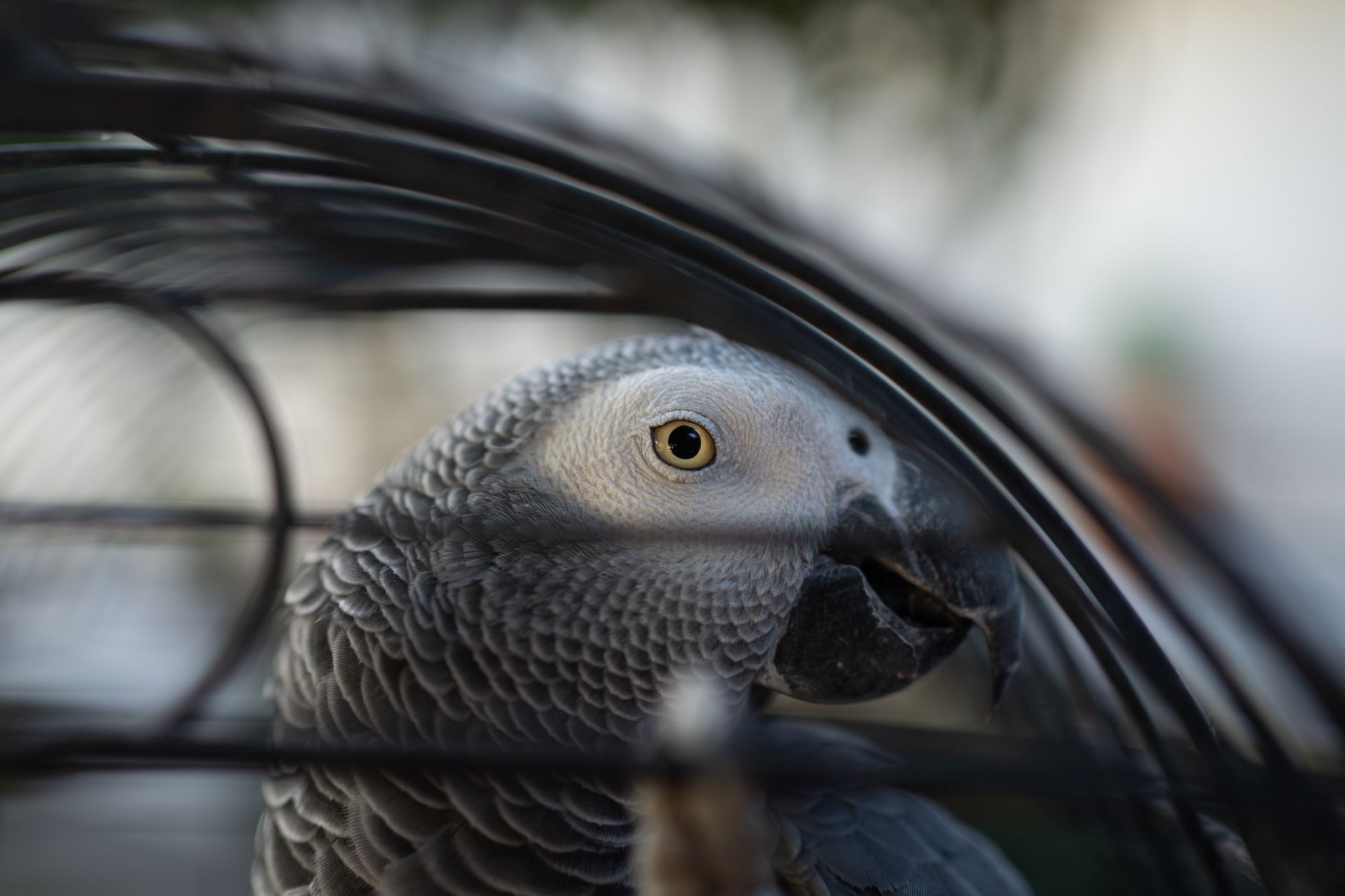
Most people seriously underestimate cage size when they commit to a large parrot. I’ve watched well-meaning owners arrive home with a macaw or African grey, only to realize their “spacious” cage is actually a glorified bird prison. The difference between a cage that’s merely acceptable and one that actually supports a large parrot’s physical and psychological health isn’t subtle—it’s the difference between a bird that plucks its feathers in frustration and one that thrives. For macaws, African greys, and cockatoos, we’re talking about creatures with wingspans reaching 3 to 4 feet and lifespans pushing 50 to 80 years. The cage isn’t just a place to sleep; it’s the foundation of your bird’s entire life. This guide breaks down the exact dimensions, materials, and specifications these species actually need, not the minimum retailers will sell you.
Why Cage Size Matters More Than You Think
Here’s a hard truth: the industry standard “minimum” cage size is often what manufacturers can cheaply produce, not what veterinarians recommend. The Association of Avian Veterinarians doesn’t publish a single universal cage size chart, but behavioral research consistently shows that inadequate space triggers chronic stress, aggression, and feather plucking in large parrots. When a macaw or African grey can’t fully spread its wings or fly even short distances, it’s constantly in a state of mild panic—like living in a room where you can’t fully stand up.
Size directly impacts behavioral outlets. Larger parrots need space to climb, forage, and move between perches without bumping their tail feathers every five seconds. A cage that’s 2 feet wide might meet bare-minimum legal standards in some regions, but a 4-foot width lets your bird actually *live* rather than just exist. The cost difference between a mediocre cage and a proper one is typically $400 to $1,200—a small fraction of what you’ll spend on vet bills, toys, and food over your bird’s lifetime.
Macaw Housing: Dimensions and Material Specifics
Macaws are among the largest parrots, with several species worth considering separately. Greenwings (scarlet macaws) and blue-and-golds have wingspans around 40 inches, while smaller species like the hahn’s macaw max out around 24 inches. For any macaw larger than a hahn’s, you need a minimum cage footprint of 48 inches wide by 36 inches deep by 60 inches tall. I’d honestly recommend larger: 60 x 48 x 72 inches if you have the space and budget. This gives your bird room to spread wings fully without tail feathers hitting the back bar.
Material choice matters enormously. Stainless steel is the gold standard but costs $2,500 to $6,000 for a quality macaw-sized unit (examples: the Majestic Parrot Aviary 60x48x72 runs around $4,200, or the Prevue Pet Products flight cage line hovers $1,800 to $3,500 depending on configuration). Powder-coated steel works if applied correctly—look for cages with a minimum coating thickness of 5 mils and ensure seams are sealed. Avoid galvanized cages entirely; zinc toxicity is a real risk, and macaws’ chewing power can compromise the coating within months. Wrought iron isn’t ideal either—it’s difficult to sanitize properly and chips easily under aggressive use.
Bar spacing matters more than people realize. For macaws, bars should be no more than 1 inch apart. Anything wider risks a beak getting wedged. Macaws have incredibly strong jaw muscles and can cause serious injury to themselves thrashing against wider spacing. I’ve also seen owners choose cages with bars set at slightly off-angles; this actually increases injury risk by creating more unpredictable gaps. Vertical bar orientation is safest—your macaw will climb these naturally, and the design is proven for large parrots.
Look for cages with multiple access points. A single front door gets old quickly when you’re managing a bird that weighs 2 to 3 pounds and has opinions about cooperation. Top-opening cages allow your macaw to step up naturally (parrots prefer stepping up to stepping down). Side doors make cleaning and perch changes easier. The Prevue Henckels 3180 (48 inches wide, around $2,400) and the A&E Cages Superior X-Large both offer solid door configuration with practical hinges that won’t wear out after six months of daily opening.
African Grey Specifications and Real-World Setup
African greys—both Congo and Timneh subspecies—present different challenges than macaws. They’re slightly smaller (Congo greys around 32-inch wingspan) but more intelligent and neurotic about space. A Congo African grey needs minimum 48 x 36 x 60 inches; Timneh greys (smaller, around 12 inches tall) can work in 36 x 24 x 48 inches, but honestly, bigger is still better given their cognitive needs. The intelligence factor matters: an undersized cage for a grey isn’t just physically restrictive; it’s cognitively understimulating. These birds need space to engage problem-solving behavior—rearranging toys, exploring different levels, and maintaining multiple feeding stations.
African greys are destructive chewers, even more than macaws in some respects. They’ll systematically dismantle anything wood-based, which means your cage design needs to prioritize non-destructible materials. Stainless steel is non-negotiable for greys (cost: $2,200 to $5,500 for proper sizing). The Cornerstone Steel Bird Cage (48 x 36 x 72 inches in stainless steel) runs approximately $3,100 and has a solid reputation among grey owners. Powder-coated cages work only if the coating is genuinely thick and you’re prepared to touch up annually; I’ve seen powder-coated cages where greys chewed through to bare metal within 18 months.
Perch material is critical. Unlike macaws, which prefer natural wood and will naturally wear down their beaks against it, African greys will eat their perches. Manzanita wood, apple wood, and willow are fine because greys will destroy them—that’s the point. But avoid anything treated or painted. Rope perches are controversial; some behaviorists worry about entanglement risk, but properly installed 3/4-inch diameter rope perches (secured at both ends, not frayed) actually provide excellent grip variation and the fibers help with natural beak conditioning. The Java Wood Perches (around $15 to $40 per perch in various diameters) and Booda Comfy Perches (natural rope, $12 to $25) both hold up reasonably well to grey chewing.
Flooring deserves attention. Greys produce a lot of dust (powder down feathers)—their natural cooling mechanism. This means cage flooring needs to be solid enough to manage mess but easy to clean daily. A metal or plastic grate prevents your bird from standing in accumulated debris, which reduces respiratory issues. The ideal setup uses a removable stainless steel grate with a catch tray below it (at least 8 inches deep to contain thrown food and dust). This gets cleaned every morning; the tray itself gets washed every 2 to 3 days.
Cockatoo Cages: Handling Size and Aggression
Cockatoos occupy a strange middle ground: they’re actually smaller than large macaws or Congo greys, but their behavior requires larger spaces. A Sulphur-crested cockatoo (largest species, around 24 inches tall) needs a minimum 48 x 36 x 60 inches, same as a grey. Smaller species like Moluccan or Umbrella cockatoos (20 to 22 inches) can technically fit in 36 x 24 x 48 inches, but I’d push for 48 x 36 x 60 inches. Cockatoos are prone to aggression and self-destructive behavior when confined, and space directly reduces both.
The material choice for cockatoos is even more critical than for other large parrots because of their aggressive behavior. Cockatoos will bite cage bars repeatedly, creating stress fractures in cheaper metals. Stainless steel is essentially mandatory (budget $2,400 to $5,800 for proper sizing). The Majestic Aviary Stainless Steel Cages (available in 48 x 48 x 72 inches for around $4,600) and Signature Series bird cages are popular because they’re reinforced for heavy-duty use. Bar spacing should be exactly 3/4 to 1 inch—cockatoos are less likely to stick beaks through than macaws, but their curved beaks can do serious damage if wedged awkwardly.
Cockatoos produce significant noise and aggression, both worsened by inadequate space. You’ll often see recommended cage sizes for cockatoos listed as larger than for similar-sized greys or macaws—this isn’t arbitrary. A cockatoo in a 36-inch-wide cage will develop behavioral problems within 6 to 12 months; a cockatoo in a 48 to 60-inch cage will be significantly calmer. This is also where multi-level caging starts becoming practical. A 60-inch tall cage gives you room for two or three distinct perching levels, separated by 18 to 20 inches, allowing your cockatoo to move vertically and reduce stress on joints and feet.
Perch management for cockatoos demands frequent replacement. These birds destroy perches as a form of stress relief and beak maintenance. Budget $30 to $50 monthly for replacement perches. Natural wood (apple, willow, elm) works best; avoid pressure-treated wood or anything with synthetic coatings. Some cockatoo owners use PVC pipe or rope perches for variety, but natural wood should dominate your setup.
Material Comparison: Cost and Durability Analysis
Let’s break down the actual cost of different cage materials, because this is where people make expensive mistakes. Stainless steel dominates the market for large parrots, and for good reason. A quality stainless steel cage (48 x 36 x 72 inches) typically costs $2,500 to $5,500 depending on brand and features. Examples: The Prevue Pet Products Stainless Steel Flight Cage (large model) runs $3,200 to $3,800; the A&E Cage Company Stainless Steel models start around $2,400 and go up to $6,000+ for custom sizing. Lifespan is 15 to 25+ years with minimal maintenance beyond regular cleaning. You’re essentially buying once and moving on.
Powder-coated steel is cheaper upfront ($800 to $2,000 for comparable size) but shorter-lived. The coating needs annual inspection and touch-up, especially in areas where your bird chews or rubs. Expect 5 to 10 years of use before the coating degrades enough that rust begins. The cost-per-year math actually favors stainless steel for large parrots; you’re looking at roughly $150 to $250 per year (stainless) versus $150 to $200 (powder-coated, accounting for touch-ups and replacement after 7 to 8 years).
Wrought iron is still sold and is genuinely cheap ($400 to $900), but it’s a false economy. Wrought iron is difficult to sanitize thoroughly, corrodes despite paint, and doesn’t hold up to aggressive chewing. I’d avoid it entirely for macaws, greys, and cockatoos. Aluminum cages are lightweight and corrosion-resistant but lack the strength needed for large parrots’ chewing and climbing behavior. Aluminum bends, dents, and creates sharp edges under stress—not ideal for a bird that weighs 2 to 3 pounds and climbs aggressively.
One overlooked factor: cage flooring cost. A quality stainless steel grate with a deep catch tray ($150 to $350) should be part of your budget. Cheap plastic grates warp within a year; thin metal grates bend under climbing. Invest in a 10 to 12-inch-deep stainless steel catch tray and a solid grate system. This is worth $200 to $400 of your total cage budget.
Installation, Placement, and Environmental Setup
Cage placement is as important as cage size. A 60-inch tall cage placed in a kitchen corner near stovetops, heating vents, or aluminum cookware is a disaster waiting to happen. Teflon fumes from non-stick cookware kill parrots in minutes—this isn’t an exaggeration. Non-stick cookware, self-cleaning ovens, and some space heaters all release fumes fatal to birds. Your cage needs to be in a room where you control the cooking method (cast iron or stainless steel cookware only) and temperature stays between 65 and 75°F.
Sunlight exposure matters. Large parrots need 10 to 12 hours of daylight or full-spectrum lighting daily. This isn’t optional; it regulates hormones, supports vitamin D synthesis, and improves mental health. Position your cage where it gets natural morning or afternoon sun (at least 4 hours daily) or supplement with avian full-spectrum lighting (10.0 UVB is standard for parrots). The Zoo Med Aviansun 5.0 or Arcadia D3 Plant and Reptile lamps are solid choices, costing $30 to $60 for the bulb and $50 to $100 for a proper fixture. Run these 10 to 12 hours daily, positioned 12 to 18 inches from where your bird perches.
Installation also means securing the cage properly. A large parrot cage weighs 200 to 400 pounds when fully equipped with toys, perches, and water. A standard cage stand is insufficient; you need a sturdy, stable base. Many owners mount cages to walls using heavy-duty brackets (L-brackets rated for 300+ pounds), which costs $40 to $100 in hardware and requires wall studs or proper anchoring. Free-standing cages must have a weighted, non-tip base. The Prevue Pet Products stands designed specifically for large cages (roughly $200 to $400) are worth the investment over DIY solutions.
Ventilation is often overlooked. A cage in a corner without airflow creates stagnant zones where mold, bacteria, and dust accumulate. Ensure your cage location has gentle air circulation—not air conditioning directly on the cage (too cold and drafty), but adequate room-level airflow. This also means keeping the cage away from walls on at least three sides if possible. Even 12 to 18 inches of clearance significantly improves air circulation and makes cleaning easier.
Comparing Popular Large Parrot Cages: Real Products and Prices
Let’s look at actual cages people buy and why they work or don’t work. The Prevue Henckels Stainless Steel Flight Cage (model 3180, 48 x 36 x 72 inches) is one of the most popular choices for macaws and greys. Price: approximately $2,400 to $2,800 depending on retailer. It features 304 stainless steel (superior to 430 grade due to nickel content, making it more corrosion-resistant), powder-coated side panels, and a solid grate. Pros: durable, reasonable price for stainless, widely available. Cons: smaller than ideal for large macaws, and the doors are a bit flimsy if you’re upgrading from smaller birds.
The A&E Cage Company Superior X-Large stainless steel cage (60 x 36 x 72 inches) runs $3,200 to $4,000 and is genuinely spacious. It’s used by bird sanctuaries and some professional breeders. The 60-inch width is a real advantage for macaws that need full wingspan extension. Doors are heavy-duty, grate is 10 inches deep, and materials feel premium. The trade-off: heavier than the Prevue (making it harder to install), and you’ll need professional help with assembly if installing wall-mounted.
For cockatoos specifically, the Majestic Parrot Aviary line (available in stainless steel, 48 x 48 x 72 inches or 60 x 48 x 72 inches) costs $4,200 to $5,200. These
Related from our network
- Budget vs Premium Sensory Toys: Complete Guide (nightshifttales)
- Budget Sensory Play Ideas vs Store-Bought Toys: Complete Guide (weirdcalendar)
- DIY vs Store-Bought Sensory Toys: Complete Comparison (bulletjournals)
For the Love of Your Pet
Care guides, breed insights, and gentle advice for happier pets.