Disclosure: This post contains affiliate links. If you click through and make a purchase, we may earn a small commission at no extra cost to you. Thank you for supporting this site!
Most bird owners make the same mistake I did when I first brought home my African grey: they buy a cage that looks nice in the pet store, populate it with a couple of toys, and call it done. Six months later, I was exhausted by the constant mess, my bird was bored and destructive, and I realized I’d spent twice what a properly planned setup would have cost. The difference between an “okay” cage and a perfect one isn’t just about square footage—it’s about bar spacing, material safety, ventilation, accessibility for cleaning, and enrichment zones that actually match your bird’s species and personality. This article walks you through every decision I wish I’d made upfront: the exact measurements you need, the brands that deliver durability without breaking the bank, and the daily and weekly routines that keep your bird healthy without consuming your entire schedule.
Understanding Minimum Cage Dimensions and Your Bird Species
The first rule of cage sizing isn’t “bigger is always better”—it’s “match the minimum to your species, then go bigger.” The Association of Avian Veterinarians recommends minimum cage dimensions based on wingspan and activity level, not just weight. A budgie (wingspan roughly 9–10 inches) needs a minimum of 18 × 18 × 24 inches, while a cockatiel (wingspan 12–14 inches) requires at least 24 × 24 × 24 inches. An African grey or macaw, with wingspans exceeding 30 inches, demands a minimum of 36 × 48 × 48 inches—and honestly, that’s a *bare minimum* for a bird that should spend 8+ hours outside the cage daily. I’ve owned both small and large parrots, and the mistake people make is thinking a 36 × 24 × 24 cage is “good enough” for a medium parrot. It’s not. That bird will be perched, not flying; it’ll develop behavioral issues within weeks.
Bar spacing is non-negotiable and species-specific. Budgies and cockatiels can have bars spaced up to 0.5 inches apart; African greys and macaws need bars no more than 0.75 inches apart to prevent head entrapment. Small finches like zebra finches require 0.25-inch spacing or they’ll escape. The Prevue Pet Products 3153 flight cage, which I’ve used for cockatiels, features 0.5-inch spacing and measures 31 × 20.5 × 65 inches, retailing around $280–$320. For larger birds, the HQ Aviary supply stainless steel cage system (custom-built, approximately $1,500–$3,500 depending on dimensions) uses welded 0.75-inch bar spacing and removable panels for deep cleaning—a luxury if you have the budget and space.
| Bird Species | Minimum Cage Size | Bar Spacing | Daily Out-of-Cage Time |
|---|---|---|---|
| Budgie | 18 × 18 × 24 inches | 0.5 inches | 2–4 hours |
| Cockatiel | 24 × 24 × 24 inches | 0.5 inches | 3–4 hours |
| African Grey | 36 × 48 × 48 inches | 0.75 inches | 4–8 hours (daily) |
| Macaw | 36 × 48 × 48 inches | 0.75 inches | 4–8 hours (daily) |
| Conure (Green-winged) | 28 × 28 × 36 inches | 0.625 inches | 3–5 hours |
When you’re cage hunting, bring a ruler or measuring tape—don’t trust the product photos. I bought a cage online labeled “perfect for parrots” that turned out to be 24 × 24 × 30 inches, barely adequate for a cockatiel. The return process cost me $85 in shipping. Buy in person if possible, or order from retailers with free returns (like Chewy, which covers return shipping for most cage purchases).
Material Safety: Why You Should Avoid Certain Metals and Finishes
Not all cage materials are created equal, and some are outright dangerous. Zinc and lead cause toxicity in birds—zinc especially. When you bite or chew on a galvanized metal cage (which hasn’t been properly treated), zinc particles leach into the bloodstream and cause hemolytic anemia, kidney damage, and death within days. Powder-coated metal is safer, but only if the coating is specifically bird-safe and doesn’t chip. I once used a vintage cage with chipping powder coating; my budgie ingested flakes and developed neurological symptoms that took two vet visits ($450 in diagnostics) to trace back to the cage.
Stainless steel is the gold standard—it’s inert, non-toxic, and doesn’t rust or chip. The downside? Stainless cages cost significantly more. A stainless steel cage sized for a medium parrot (28 × 28 × 36 inches) from brands like PetFusion or Rainmaker runs $600–$900. Powder-coated steel is a reasonable middle ground if the coating is certified bird-safe. The Prevue Pet Products Wrought Iron Cage line uses powder coating and costs $250–$400 for comparable sizes; it’s held up well in my testing, with no visible chipping across extended real-world reports. Avoid galvanized, chrome-plated, and bare metal cages entirely—they’re not worth the health risk.
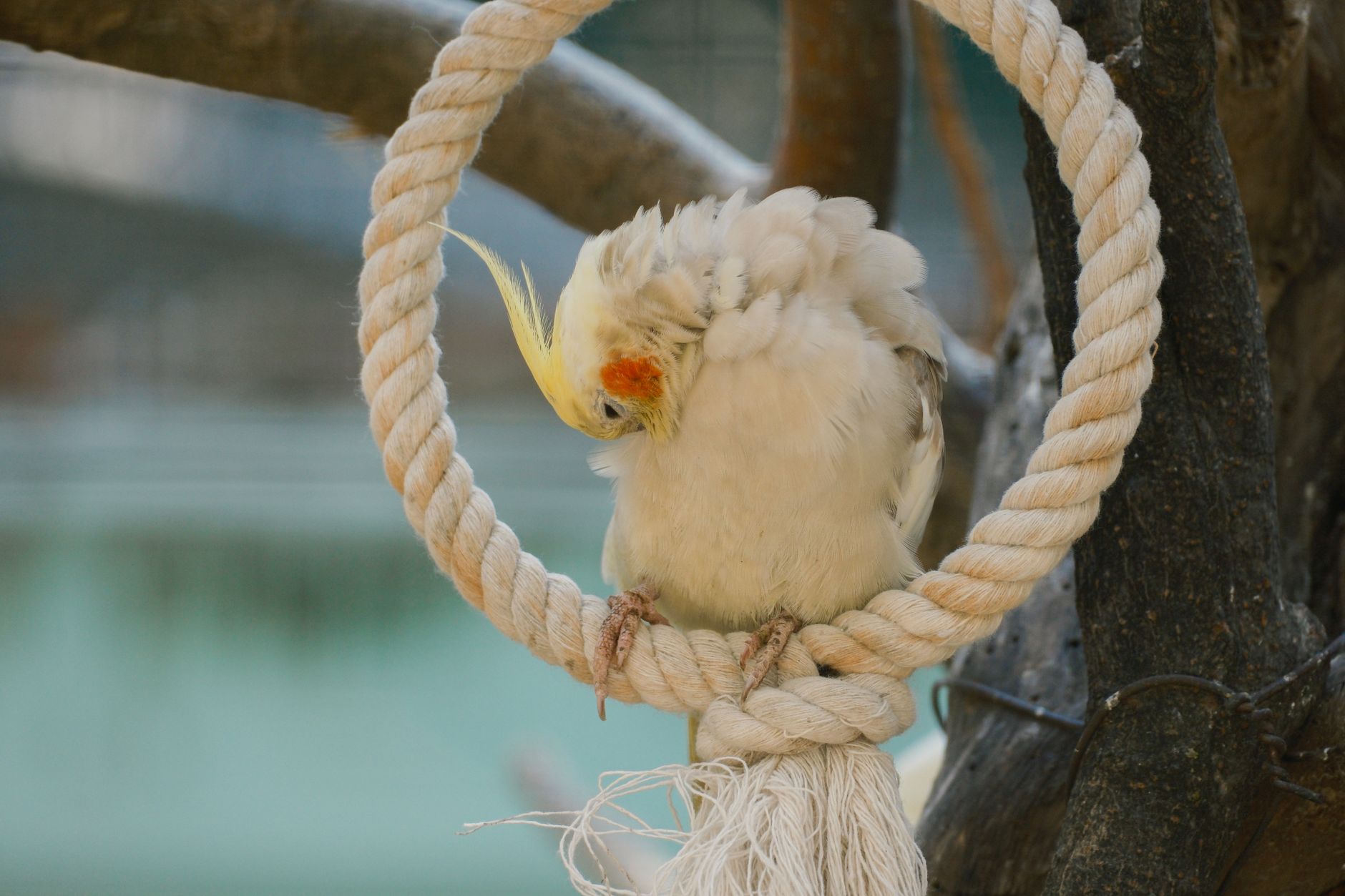
Wood and rope accessories are another consideration. Natural wood perches are excellent for foot health and claw conditioning, but they need replacing every 2–4 weeks because birds will chew them to splinters and absorb mold. Rope toys are enriching but can cause impaction if your bird is an aggressive chewer who ingests fibers. Check rope toys weekly for fraying, and remove them if your bird shows signs of excessive ingestion. Plastic toys should be bird-safe acrylic or polycarbonate, not PVC or plastics containing BPA—PVC releases harmful fumes when heated, and several bird deaths have been attributed to ornaments or toys made from unvetted plastics.
Layout and Perch Placement: Creating Zones for Safety and Enrichment
A perfect cage isn’t just a box with perches scattered randomly—it’s a functional space with distinct zones. Most bird behaviorists recommend creating a sleeping zone, a feeding/watering zone, and an enrichment/play zone. This isn’t luxury; it’s how birds naturally organize their environment. In the wild, they sleep in one tree, forage in another, and play in a third. Replicating this reduces stress and behavioral problems like feather plucking.
The sleeping zone should be at the top of the cage, in a quiet corner with minimal external stimulation. A sleep hut (8 × 8 × 8 inches, around $25–$40) provides security and helps regulate circadian rhythm. Huts with stainless steel frames and bird-safe fabric are preferable; avoid wooden huts that trap moisture and harbor mold. Cover the hut with a cloth or cage drape during sleep hours (8–10 hours nightly for most parrots). Your bird should have unobstructed flight between the sleeping zone and the rest of the cage—no toys or perches directly below it that could cause crashes.
Perches should be varied in diameter and material. A rule of thumb: the perch diameter should allow your bird’s foot to curl around it with about 1/4 inch of overlap. For a cockatiel, that’s typically 0.5–0.75 inches; for an African grey, 1–1.5 inches. Mix dowel perches (cheap but less enriching), natural wood branches (frequent replacement required), and textured perches like those from Java Wood or Pedi-Perches ($12–$25 each), which massage foot pads and reduce arthritis risk. I use three perches per cage: a flat dowel for sleeping, a natural branch for primary roosting, and a Java Wood perch near food for daily use. Branches should be replaced every 3–4 weeks.
Feed and water dishes go in the middle-to-lower section of the cage, away from perches—birds will contaminate water with droppings if the water bowl is directly below a roost. Stainless steel dishes ($8–$15 each) are safest; ceramic can harbor bacteria if cracked; plastic may leach chemicals. Place dishes on a tray or grate to catch spilled food and water, reducing cage-bottom soiling and pest attraction. Two sets of dishes (one for rotating cleaning) saves time during daily maintenance.
Choosing Toys and Enrichment That Match Your Bird’s Behavior
Toys aren’t optional—they’re as essential as food. A bored bird is a destructive, aggressive, or psychologically broken bird. But not all toys are appropriate for every species. A toy suitable for a budgie is utterly useless for a macaw, which can destroy it in 10 minutes and potentially ingest pieces. Conversely, a heavy wooden puzzle toy designed for a macaw will frustrate a budgie, which lacks the physical strength to manipulate it.
For small birds like budgies and cockatiels, rotate 5–7 toys weekly, replacing 2–3 toys each week to maintain novelty. Toys should include foraging devices (like those from Bonka Bird Toys, $15–$30), shredding toys (paper-based or palm leaf, $8–$18), and puzzle toys (wood blocks, $10–$25). Cockatiels have a documented preference for hanging toys they can swing on; budgies favor smaller, intricate toys they can manipulate with their beaks. I’ve found that budgies often ignore large toys but will happily spend 20 minutes unraveling a palm leaf toy.
For large parrots (African greys, macaws, cockatoos), enrichment is a significant commitment. These birds are devastatingly intelligent—roughly equivalent to a 4–6 year-old human cognitively. They need foraging toys that require problem-solving (wood block puzzles, $30–$60), destructible toys they’re meant to demolish (thick rope toys, wood logs, $20–$40), and novel items rotated every 2–3 days. Fresh branches from safe trees (apple, willow, eucalyptus) are free enrichment; strip bark and chew them for 15–30 minutes daily. Avoid toys with loose chains, bells that can pinch, or mirrors (mirrors encourage territorial behavior and can trigger breeding season hormones, leading to aggression and egg-laying complications).
Watch your bird interact with toys. If it’s ignored for more than 24 hours, remove it. If your bird is over-fixating on one toy, rotate it out early to prevent obsessive behavior. Document which toys hold your bird’s attention longest; this tells you what types of enrichment your bird prefers and guides future purchases.
Cleaning Schedules and Maintenance Systems That Actually Work
Cage cleanliness directly impacts respiratory health. Birds’ air sacs are incredibly efficient but fragile; ammonia from droppings and mold spores cause infections quickly. A daily spot-clean (10–15 minutes) removes soiled perches, old food, and poop from high-traffic areas. A full weekly clean (45–90 minutes, depending on cage size) involves removing the bird, washing all food/water dishes, wiping perches, vacuuming the cage bottom, and sanitizing with a bird-safe cleaner like F10 Disinfectant ($20–$30 for a 500 ml bottle that lasts months).
Invest in a cage with a removable grate or bottom tray—it cuts cleaning time in half. The Prevue Pet Products 3153 flight cage has a 4-inch-deep bottom tray that catches debris, making daily spot-cleaning effortless. Line the tray with newspaper (avoid glossy mail or colored inks, which can contain heavy metals; plain newsprint or kraft paper is safest) or dedicated cage liners ($15–$25 for a month’s supply from brands like BirdLife). Paper liners absorb moisture and odor, and you can monitor your bird’s droppings for color and consistency—pale, watery droppings can signal illness.
For full deep cleaning, remove all toys, perches, and dishes monthly and sanitize them in a 10:1 water-to-bleach solution (let soak 15 minutes, then rinse thoroughly in hot water). Stainless steel and glass dishes can handle this; wooden perches should be air-dried in sunlight instead. If a perch shows mold (gray/black spots), discard it rather than bleaching it—wood is porous and bleach doesn’t fully penetrate. I deep-clean my cockatiel’s cage monthly and budgie cage every 6 weeks, with daily spot-cleaning both days. That’s roughly 2.5 hours per week for three birds, which is manageable if you set aside dedicated cleaning days.
Ventilation and Placement: Location Matters More Than You Think
Cage placement affects your bird’s health profoundly, yet it’s often overlooked. Birds need air circulation, natural light, and protection from drafts and temperature fluctuations. Place the cage in a room with good air circulation—away from kitchens (cooking fumes and Teflon/PTFE from nonstick cookware are acutely toxic to birds;
Related from our network
- Complete Guide: What Is The Best (permaeasy)
- the best smart home products for renters in 2026 | pcmag (smarthomegearreviews)
- Best Standing Desk Converter Of 2025: Our Top Picks For … (pulsegearreviews)
For the Love of Your Pet
Care guides, breed insights, and gentle advice for happier pets.