Introduction: Why Your Bird’s Cage Setup Determines Everything
Imagine bringing home a $2,000 macaw only to watch it pluck its feathers within three months because you placed the cage in a drafty corner with aluminum perches. The cage isn’t just a container—it’s your bird’s entire ecosystem, and most setups fail before the bird even arrives. A proper bird cage setup isn’t about aesthetics; it’s about engineering a space that supports flight, foraging, sleep, and mental stimulation in a way that mirrors their wild instincts. Whether you’re a first-time budgie owner or you’re upgrading a parrot’s enclosure, the decisions you make now will directly impact feather health, vocalization, and lifespan. This guide walks you through every practical step, from bar spacing to toy rotation schedules, so you can stop second-guessing and start setting up a cage that actually works.
Disclosure: This post contains affiliate links. If you click through and make a purchase, we may earn a small commission at no extra cost to you. Thank you for supporting this site!
Choosing the Right Cage Size and Shape: The Foundation of Your Setup
Let’s cut through the myth right now: “Bigger is always better” is only half true. A cage that’s too large with too few perches can actually cause a small bird to feel exposed and stressed, while a cage that’s too narrow prevents flight altogether. The goal isn’t a mansion—it’s a well-proportioned living space.
Minimum Dimensions by Bird Size
Use these as floor minimums, not ideals. If you can go larger, do it—but only if you fill the space correctly.
| Bird Type | Minimum Width | Minimum Depth | Minimum Height | Ideal Bar Spacing |
|---|---|---|---|---|
| Budgie / Parakeet | 18 inches | 18 inches | 24 inches | 1/2 inch |
| Cockatiel / Lovebird | 24 inches | 18 inches | 30 inches | 5/8 inch |
| Conure / Senegal | 30 inches | 20 inches | 36 inches | 3/4 inch |
| African Grey / Amazon | 36 inches | 24 inches | 48 inches | 1 inch |
| Macaw (Large) | 48 inches | 30 inches | 60 inches | 1 to 1.5 inches |
Actionable Tip: Measure your bird’s wingspan from tip to tip. The cage width should be at least 1.5 times that wingspan so the bird can stretch fully without touching both sides. For flighted birds, double that.
Shape Matters More Than You Think
Dome-top and round cages are dangerous—your bird has no corner to retreat to, which increases stress and anxiety. Stick with rectangular or square cages. Birds use corners to feel safe, and round cages create a continuous perimeter with no escape zone. If you already own a round cage, repurpose it as a travel carrier or sunning station, not a primary home.
Bar Spacing, Material, and Safety: The Non-Negotiables
This is where most “bird cage setup best” advice glosses over details, and it’s exactly where injuries happen. Bar spacing isn’t about looks—it’s the difference between a secure home and a head-trapping hazard.
How to Test Bar Spacing
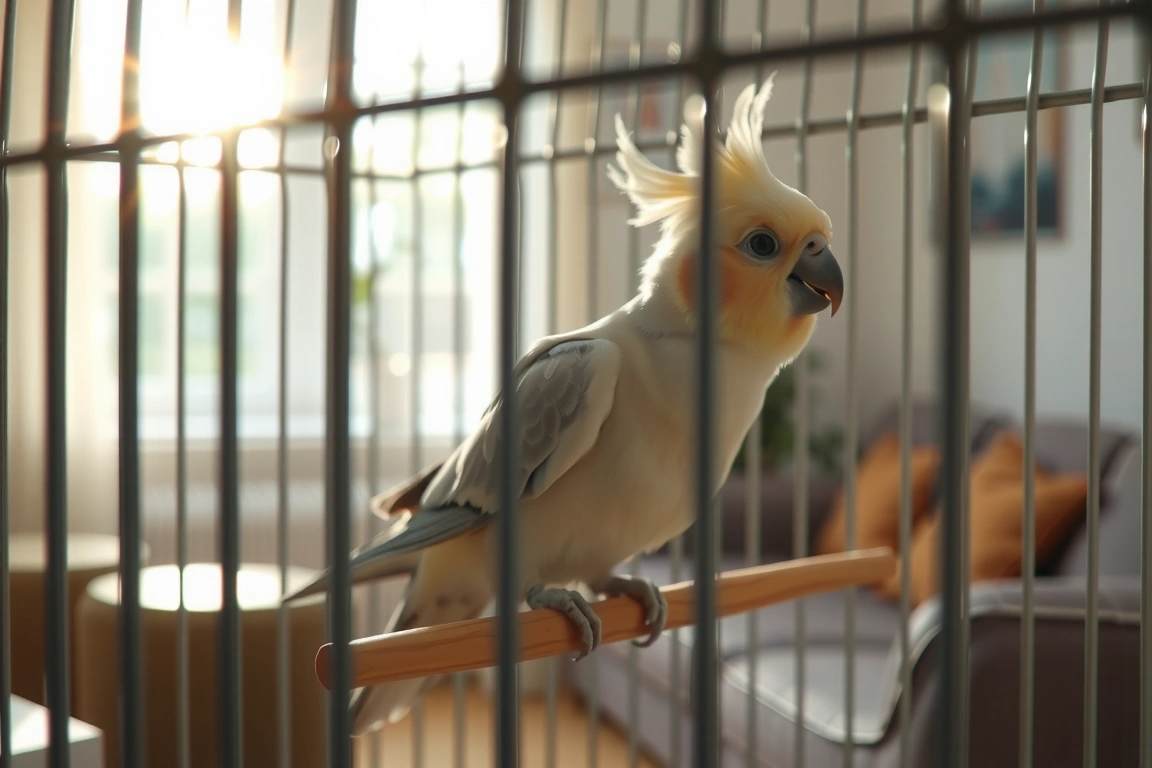
If your bird can fit its head between two bars at all, the spacing is too wide. Here’s the practical test: take a nickel and see if it slides through the bars easily. If it does, your bird’s head can follow. For small birds like budgies and parrotlets, the gap should be narrow enough that only a pencil fits. For large macaws, you want spacing that prevents a beak from hooking around the bar.
Material Quality Checklist
- Powder-coated steel: Best overall for durability and safety. Look for non-toxic, lead-free coating. Avoid cheap paint that chips.
- Stainless steel: Gold standard, especially for large parrots who chew. No rust, no chipping, no toxins. The Prevue Hendryx Pet Products Stainless Steel Cage ($299–$599 depending on size) is a solid investment that lasts two decades.
- Wrought iron: Acceptable for medium birds if coated properly, but inspect for rust spots monthly.
- Zinc or brass: Never. These metals are toxic when chewed or ingested.
Actionable Tip: Run a damp white cloth over every bar when you first unbox the cage. If any colored residue transfers, return it immediately—that’s loose paint that will end up in your bird’s digestive tract.
Cage Placement: Where to Put the Cage for Optimal Health
You can have the most expensive cage of stainless steel, but if it’s in the wrong spot, your bird will be miserable. Placement directly impacts sleep quality, socialization, and even respiratory health.
The Rule of Two Walls
Position the cage so two sides are against walls. This gives your bird a sense of security—no one can approach from behind. The remaining two sides should face into the room so the bird can observe family activity without feeling exposed. Never center a cage in the middle of a room; that’s a stress invitation.
What to Avoid at All Costs
- Direct sunlight through a window: Glass magnifies heat. Even on a 70°F day, the inside of a cage can hit 120°F in under 20 minutes. Keep cages at least 3 feet from windows.
- Kitchen: Teflon pans release fumes that are lethal to birds. Also, hot oil splatter, open flames, and steam are all respiratory hazards. Never place a cage in a kitchen.
- Drafts from vents or doors: Birds are sensitive to temperature shifts. Avoid placement near HVAC vents, exterior doors, or drafty windows.
- High-traffic hallways: Constant movement stresses birds. Choose a room where people gather but don’t rush past.
Actionable Tip: Buy a small hygrometer-thermometer combo (about $12 on Amazon) and place it near the cage. You want 40–60% humidity and 65–80°F. If you see consistent spikes above 85°F or humidity below 30%, adjust placement or use a humidifier.
Essential Cage Accessories: What to Add and What to Skip
This section alone separates a “bird cage setup guide” from the kind of advice that actually improves feather condition and behavior. Accessories aren’t decoration—they’re tools.

Perches: Diversity Is Medicine
Never use only dowel perches. They cause bumblefoot and arthritis because your bird grips the exact same diameter all day. Build a perch diversity system:
| Perch Type | Diameter | Placement | Recommended product |
|---|---|---|---|
| Natural wood (manzanita, dragonwood) | Varied (0.5–1.5 inches) | Primary sitting areas | Manzanita Perch Natural Branch ($15–$30) |
| Rope (cotton or hemp) | 1 inch | High spots, near toys | Planet Pleasures Cotton Rope Perch ($12–$18) |
| Mineral / Calcium | 1 inch | Near food bowl | HARI Mineral Perch ($10–$14) |
| Pedicure / Pumice | 0.75–1 inch | Low, near bottom | JW Pet Pedicure Perch ($9) |
Actionable Tip: Arrange perches at different heights so no two are at the same level. Birds need horizontal flight paths, not a ladder. Leave at least one clear airspace across the full width of the cage so your bird can fly between perches.
Food and Water Bowls: Material and Position
Stainless steel wins. Ceramic is second. Plastic breeds bacteria in the micro-scratches and should be avoided. Position bowls away from perches so your bird cannot perch directly above its water—that’s how droppings contaminate drinking water within minutes.
- Recommended: Lixit Stainless Steel Crock (4-pack, $22) — heavy enough not to tip, easy to sanitize.
- Recommended: Kontax pH Balanced Bird Water Bottle ($15) as a backup water source during the day, but always keep a bowl as primary.
Actionable Tip: Put the water bowl on the opposite side of the cage from the food bowl. This forces your bird to move across the cage to eat and drink, encouraging exercise and preventing boredom.
Toys: The Three-Category System
Birds need three types of toys, and you must rotate them weekly. If you provide only one type, your bird will either get bored or become destructive.
- Foraging toys: Hide treats inside. Examples: Planet Pleasures Foraging Wheel ($16) or Caitec Bamboo Foraging Box ($12). These engage problem-solving skills.
- Destructible toys: Things your bird can shred, chew, or unwrap. Bonka Bird Toys Shredders (6-pack, $14) or simple pine cones (bake at 250°F for 30 minutes to sterilize).
- Comfort/Foot toys: Soft items your bird can carry, hold, or wiggle. Stainless steel bell toys (avoid zinc bells—check the clapper with a magnet).
Actionable Tip: Never put more than four toys in the cage at once. Overcrowding raises stress. Rotate two toys out every Saturday and put two new ones in. Your bird will treat them like Christmas morning.
Step-by-Step Bird Cage Setup Guide: From Box to Bird-Ready
Follow this order exactly. Most people set up the cage, then realize they forgot to sanitize something, and their bird ends up exposed to bacteria from the factory floor.
Step 1: Sanitize Everything (Even If It Looks Clean)
Wash the cage tray, bars, and all accessories with hot water and a 50/50 white vinegar solution. Rinse thoroughly with hot water. Let it air dry completely. Do not use bleach, soap with fragrance, or any chemical cleaner. Vinegar kills most bacteria and is safe if trace amounts remain.
Step 2: Install the Grate and Liner
The grate keeps your bird off the droppings tray. Place the grate first, then choose a liner for the bottom tray. Avoid corncob bedding, sandpaper sheets, or walnut shell litter—all can cause respiratory issues or impaction if ingested. Use:
- Paper-based liner: Kaytee Clean & Cozy Bird Liner ($9 for 100 sheets) — unscented, absorbent.
- Newspaper: Acceptable if the ink is soy-based (most modern newspapers are). Avoid glossy ad inserts.
Never use cedar or pine shavings—they release phenols that damage bird lungs.
Step 3: Place Perches in the Correct Order
Install the highest perch near the top of the cage on one side. This will be your bird’s sleeping spot. Place the lowest perch near the bottom front (this will be the “eating” zone). Middle perches go at staggered heights to create flight lanes.
Step 4: Position Food and Water
Attach bowls at mid-height on opposite sides. Never place food directly under a perch. If you’re using a water bottle, attach it at beak height—your bird should not have to reach up or down to drink.
Step 5: Add Toys Strategically
Place one foraging toy near the sleeping perch (so your bird wakes up and works for breakfast). Put one destructible toy in a middle corner. Keep the comfort toy near the food bowl. Leave the cage center open for flight.
Step 6: Set Up a Sleep Cover
Birds need 10–12 hours of uninterrupted dark sleep. Use a breathable fabric cover (blackout curtains cut to size work perfectly—around $20 at a fabric store). Do not use thick blankets that trap heat. Drape the cover over three sides, leaving one side partially open for air circulation.
Comparison Table: Top Bird Cages for Different Budgets
| Cage Model | Best For | Dimensions (W x D x H) | Bar Spacing | Material | Price Range | Key Feature |
|---|---|---|---|---|---|---|
| Prevue Pet Products F040 | Budgies, Cockatiels | 20 x 18 x 30 in | 1/2 inch | Powder-coated steel | $85–$110 | Pull-out tray, seed guard |
| Yaheetech 64-Inch Play Top | Conures, Senegals | 32 x 21 x 64 in | 5/8 inch | Wrought iron + powder coat | $120–$150 | Play top with ladder |
| HQ Vision Large Breeder | Lovebirds,
Why is my bird’s cage setup so important?A proper cage setup is your bird’s entire ecosystem, not just a container. It directly impacts feather health, vocalization, and lifespan by supporting natural instincts like flight, foraging, and mental stimulation. A poor setup, like one with wrong perches or bad placement, can lead to severe stress and issues like feather plucking. Is a bigger bird cage always better?Not exactly. While spacious is good, a cage that’s too large with too few perches can make a small bird feel exposed and stressed. The goal is a well-proportioned living space that allows for flight and is filled correctly with appropriate perches and enrichment, not just an empty mansion. What is the minimum cage size for a budgie?The absolute minimum dimensions for a single budgie are 18″ W x 18″ D x 24″ H, with an ideal bar spacing of 1/2 inch. However, these are floor minimums, not ideals. You should always opt for a larger cage if you can, provided you fill the extra space appropriately with perches and toys. Can a bad cage setup cause feather plucking?Absolutely. Environmental stress from a poor cage setup is a major cause of feather plucking. Factors like placing the cage in a drafty area, using uncomfortable aluminum perches, or lacking mental stimulation can trigger this destructive behavior. A proper, species-appropriate habitat is crucial for preventing it. For the Love of Your PetCare guides, breed insights, and gentle advice for happier pets. |