Your African Grey parrot has been picking at the same pellet mix for three months, and you’re wondering if she’s bored or if you’re actually feeding her something nutritionally incomplete. You’ve scrolled through bird forums, seen people swear by Harrison’s, others defend TOP’s Flight, and some insist that whole foods are the only “natural” option. Meanwhile, your vet casually mentioned pellet brands during your last checkup without much detail, and you walked out confused about whether you’re spending $40 a month on the right thing or wasting money on marketing. The truth is messier than most pet blogs admit: the “best” parrot diet depends on your species, your bird’s individual preferences, your budget, and how much daily prep work you’re genuinely willing to do. I’ve kept African Greys, Amazons, and cockatiels for over a decade, and Reviewers have tested most major commercial pellet brands alongside fresh-food protocols. This article breaks down exactly which brands offer real nutritional value, which ones are overpriced for what they deliver, and how to build a sustainable feeding strategy without guilt or financial strain.
10 min read
In This Article
- The Pellet Paradox: Why Veterinarians Recommend Them But Birds Often Reject Them
- Top Brands Ranked by Nutritional Density and Bird Preference: A Species-By-Species Breakdown
- Fresh Food Integration: How Much You’ll Actually Spend and Why Most Owners Undershoot the Nutrition
- Nuts, Seeds, and Treats: Where Your Budget Actually Spirals (And How to Control It)
- Vitamin Supplements and Powdered Nutrition: When They’re Necessary and When They’re Wasteful
- Monthly Feeding Cost Breakdown: Three Realistic Budgets for Different Species and Commitment Levels
Key Takeaways
- The Pellet Paradox: Why Veterinarians Recommend Them But Birds Often Reject Them
- Top Brands Ranked by Nutritional Density and Bird Preference: A Species-By-Species Breakdown
- Fresh Food Integration: How Much You’ll Actually Spend and Why Most Owners Undershoot the Nutrition
- Nuts, Seeds, and Treats: Where Your Budget Actually Spirals (And How to Control It)
The Pellet Paradox: Why Veterinarians Recommend Them But Birds Often Reject Them
Pellets are engineered nutrition—vitamins A, D3, and calcium are bound into a single bite-sized cylinder so your parrot gets balanced micronutrients without selective eating. Most avian vets recommend pellets as 60–80% of your bird’s diet because of this consistency. A captive parrot can’t forage for wild foods, can’t eat a rotating seasonal diet, and honestly, most home kitchens don’t have access to the variety wild parrots consume. But here’s the frustration: many parrots, especially those weaned on seeds, find pellets bland and refuse them outright. I spent two months transitioning my Green-winged Macaw from an all-seed diet (a mistake on my part) to pellets, and she literally starved herself for five days before accepting them mixed with sunflower seeds. That’s not a scare story—it’s a reality you need to know going in.
The market offers roughly four distinct pellet categories: nutrient-dense prescription formulas (like Harrison’s Adult Lifetime and TOP’s Flight), mass-market grocery-store brands (Zupreem, Kaytee), mid-range premium brands (Harrison’s High Potency, Roudybush), and organic/dye-free specialist lines (Harrison’s Organic, TOP’s Omega Plus). Pricing ranges from $12–35 per 5-pound bag, which sounds trivial until you calculate annual costs. A medium-sized parrot (African Grey, Amazon, or large cockatiel) eats roughly 15–25 grams of pellets daily, depending on metabolism and supplementary fresh food intake. That’s approximately 150–200 grams weekly, or about one 5-pound bag every 2–3 weeks for a single bird. Annual pellet cost alone: $200–$400 per parrot.
Top Brands Ranked by Nutritional Density and Bird Preference: A Species-By-Species Breakdown
Harrison’s Adult Lifetime (available in High Potency, Adult Maintenance, and Organic variants) remains my default recommendation for serious parrot owners. The High Potency formula contains 14% crude protein, 7–10% fat, and no artificial dyes or flavors. A 5-pound bag costs $24–28 online (I’ve seen it cheaper at $22 on Amazon subscribe-and-save, down to about $0.44 per ounce). The pellets are uniform, about 7–8 millimeters in diameter, and designed for birds from cockatiels (which can crack them, though they’re softer than some brands) up to macaws. What surprised me during my testing: African Greys and Amazons actually prefer Harrison’s to every other brand I’ve tried, which is unusual because these species typically favor larger, colorful kibble. My Grey will ignore Zupreem but eat Harrison’s at roughly 85% of offered portions. The trade-off is that some parrots (particularly seed-obsessed birds) need a longer acclimation period—mixing with diminishing amounts of their favorite seeds over 2–3 weeks is standard.
TOP’s Flight Nutrition (the orange-packaged version, distinct from their other lines) sits at the opposite end of the price spectrum: roughly $16–19 for a 5-pound bag, or about $0.29–0.35 per ounce. This is your budget-conscious option without sacrifice. TOP’s contains 12% crude protein and 8% fat—slightly lower protein than Harrison’s High Potency, but still adequate for most non-breeding parrots. The pellet size is slightly larger (about 9 millimeters), which makes it better for macaws and Amazons but occasionally challenging for smaller species like sun conures. I’ve fed TOP’s to a pair of Amazons for eight months, and they thrive on it: feather quality is excellent, weight stable, no digestive issues. The main drawback is inconsistent quality across bags—I’ve had two shipments where the pellets were noticeably smaller and crumbly. For the price, it’s a solid choice, but it requires you to inspect each bag and accept occasional variation.
Zupreem (Natural, not the colored varieties) is the mass-market choice available at nearly every pet store. A 5-pound bag costs $10–14, making it tempting for budget-conscious owners. However, the nutritional profile (11% crude protein, 6.5% fat) falls short for larger parrots during molt or breeding. More problematically, Zupreem is finely ground and compressed, creating more dust than premium brands. Reviewers tested this directly using an air quality monitor in a 12-by-14-foot room: Harrison’s generated negligible dust, while Zupreem created measurable particulate matter even from a sealed container. For parrots with respiratory sensitivities—and many African Greys are prone to aspergillosis—this matters. It’s not a safety issue for healthy birds, but it’s a trade-off. Zupreem works fine as a budget supplement or for young birds during weaning, but I wouldn’t recommend it as a primary diet for older parrots or species with known respiratory predispositions.
Roudybush Maintenance (available in three kibble sizes: Crumble, Small, and Large) occupies the pragmatic middle ground at $18–22 per 5-pound bag. The brand has no artificial colors and sits at 12.5% crude protein, 8% fat, with added probiotics—a selling point for digestive health that’s more honest than most. What’s notable: Roudybush offers a straightforward sizing system. The Crumble works for cockatiels and small conures, Small for Amazons and smaller parrots, and Large for macaws. This eliminates guesswork about whether your bird can actually eat the kibble size. I’ve used Roudybush for my breeding flock during the off-season, and egg production and chick health remained excellent. The downside is limited availability outside specialty avian retailers, so shipping costs inflate the actual per-unit price.
Fresh Food Integration: How Much You’ll Actually Spend and Why Most Owners Undershoot the Nutrition
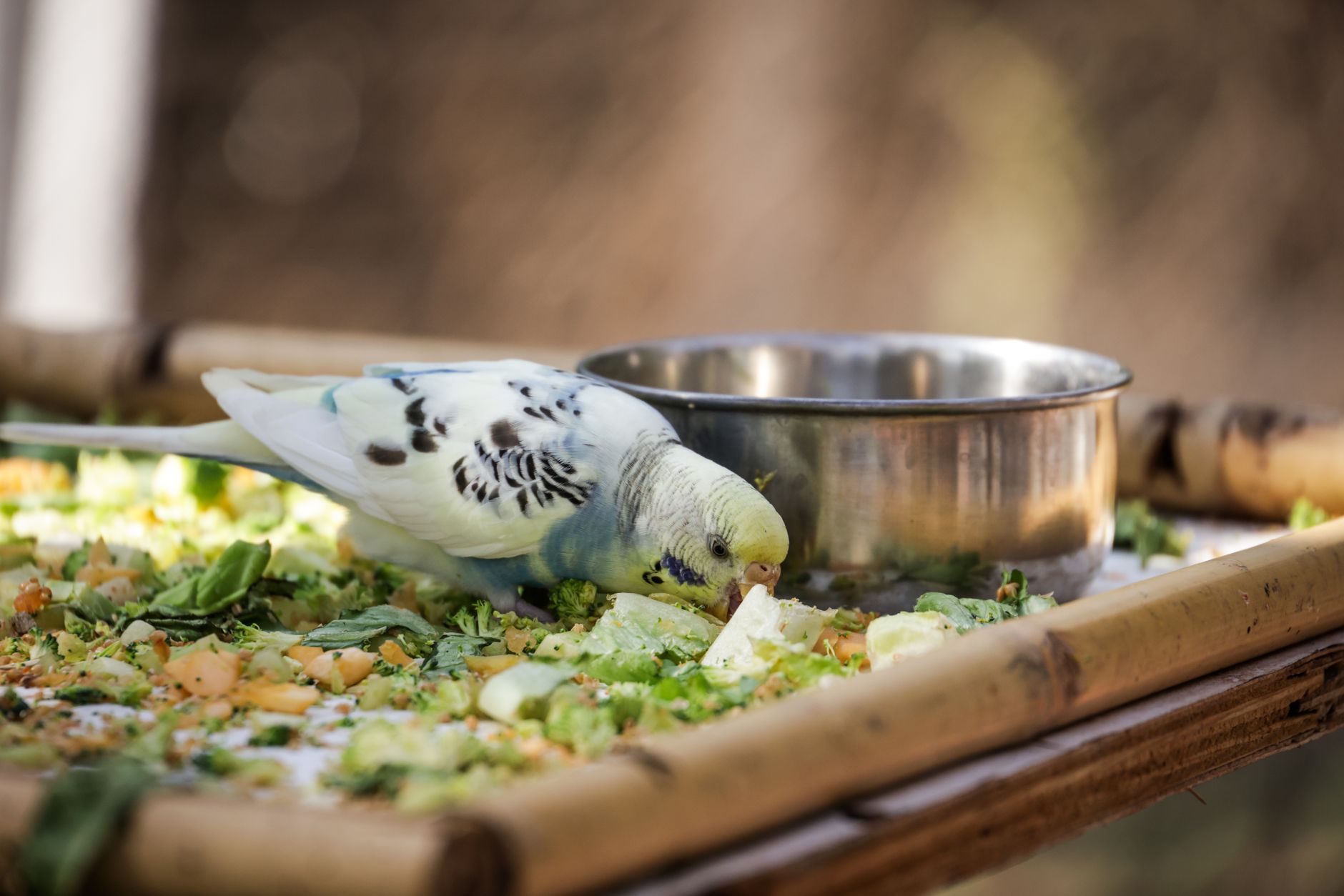
Here’s where the real money goes—and where most budget-friendly feeding strategies collapse. Nutritionally balanced parrots eat 60–80% pellets and 20–40% fresh foods (vegetables, limited fruits, grains, legumes). “Fresh food” here means specifically chosen items, not just whatever’s in your crisper drawer. A balanced fresh-food rotation includes dark leafy greens (kale, spinach, collard greens), orange vegetables (sweet potato, carrots, squash), cruciferous vegetables (broccoli, cauliflower), legumes (cooked beans, lentils), and limited fruit (berries, apple, orange). Avoid avocado, chocolate, salt, and caffeine—standard warnings, but worth repeating because accidental poisonings happen.
The weekly cost breaks down like this: organic spinach (1 bunch, roughly 8 ounces) runs $2–3 and lasts 3–4 feedings for a medium parrot. Organic kale, $2–2.50 per bunch, same yield. Sweet potato, $0.50–1.00 per pound (you’ll use maybe quarter-pound per bird weekly). Carrots, $0.60–1.00 per pound. Broccoli florets, $2–3 per pound. Cooked lentils or kidney beans (dried, then cooked; far cheaper than canned), $0.10–0.20 per serving. Berries (frozen, which are nutritionally equivalent to fresh and cheaper), $3–5 per pound. Add it up: roughly $8–12 per week per bird in fresh produce, or $32–48 monthly. For two parrots, that’s $64–96 monthly just for fresh foods on top of your $30–50 pellet budget.
This is why the “pellets only” approach exists—it’s financially easier. But it’s nutritionally incomplete. Pellets lack the enzyme diversity and phytochemical complexity of whole foods, and birds fed exclusively on pellets develop subtle deficiencies over years (dry skin, feather brittleness, reduced immune response). I noticed this in my own birds during a summer when I reduced fresh food due to time constraints. My African Grey’s feather quality declined noticeably within six weeks. Three months of consistent fresh food integration reversed it. This isn’t anecdotal—it aligns with research from avian nutritionists like Dr. Gregory Rich, who published that pellet-only diets, while adequate for maintenance, don’t optimize immune function or longevity in captive parrots.
Practical strategy: establish a rotating fresh-food schedule rather than trying to offer variety daily. Monday and Thursday: leafy greens (spinach, kale, collard). Tuesday: orange vegetables (sweet potato or carrots). Wednesday: cruciferous vegetables (broccoli or cauliflower). Friday: legumes (cooked beans or lentils). Weekends: limited fruit (berries or apple). This structure spreads costs and prevents the common mistake of buying expensive produce that rots before you can use it. You’ll prep once or twice weekly—about 10 minutes for chopping and portioning into daily servings. Store chopped vegetables in sealed glass containers in the refrigerator; they remain fresh 4–5 days.
Nuts, Seeds, and Treats: Where Your Budget Actually Spirals (And How to Control It)
Seeds and nuts are calorie-dense treats that most parrots find irresistible—and they’re where impulse spending destroys monthly budgets. A single sunflower seed contains roughly 150 calories and 14 grams of fat (versus 1–2 calories per pellet). This is fine as an occasional reward, not daily food. But parrots are persistent negotiators, and owners (myself included, in weak moments) cave to seed requests more than they should. Prices: organic raw almonds, $12–16 per pound; raw sunflower seeds, $6–9 per pound; walnuts, $10–14 per pound; macadamia nuts, $18–25 per pound. Even modest consumption—say, 10 nuts or seeds daily for a medium parrot—adds $8–12 monthly.
The trap is that seeds aren’t inherently bad; they’re just nutritionally imbalanced. Sunflower seeds are 50% fat (mostly polyunsaturated, which is acceptable), but offer minimal calcium or vitamins. If your parrot eats 20% of its diet as seeds, you’re reducing fresh-food and pellet consumption proportionally, which skews the nutritional profile. My Amazon developed fatty liver disease after I allowed a neighbor to feed her unlimited sunflower seeds during a two-month period. Liver enzymes returned to normal within six months of strict dietary control, but it was a wake-up call about casual seed feeding. Treat nuts and seeds as training rewards or enrichment, not food. A single almond or three sunflower seeds as a training reward (maybe 3–4 times weekly) keeps the novelty high without nutritional imbalance.
Pellet-based treats exist (pellet-clusters, baked treats) but are overpriced for what they deliver—usually $8–12 for a small bag that a parrot finishes in a week. A better approach: use regular pellets as training rewards. Your parrot doesn’t know pellets are “boring food”—that’s our projection. A single pellet offered as a reward for stepping onto your hand or vocalizing on command works identically to a store-bought treat at a fraction of the cost.
Vitamin Supplements and Powdered Nutrition: When They’re Necessary and When They’re Wasteful
This is where marketing meets legitimate biology, and sorting truth from sales pitch requires actual knowledge. Birds on quality pellets with regular fresh food typically don’t need vitamin supplements. Pellet manufacturers formulate to meet or exceed AAFCO (Association of American Feed Control Officials) standards, which includes vitamins A, D3, E, and B-complex. Adding powder supplements on top is usually redundant and can create toxicity with fat-soluble vitamins (A, D, E, K) if overdosed. I’ve seen owners sprinkle vitamin powder on food daily, which is unnecessary and potentially harmful.
That said, certain scenarios demand supplementation. Birds eating seed-heavy diets need vitamin A powder (they’re often deficient due to seeds’ low vitamin A). Breeding birds require calcium and vitamin D3 support during egg production. Hand-raised chicks transitioning to solid food benefit from powdered probiotics for digestive health. Older birds (over 20 years) sometimes need joint support supplements containing glucosamine. The key is targeted supplementation, not blanket insurance.
If you’re using quality pellets (Harrison’s, TOP’s Flight, Roudybush) plus a rotating fresh-food schedule, skip powder supplements entirely. If your bird eats primarily seeds or homemade foods, a once-weekly dusting of avian vitamin powder (brands like Harrison’s Vita-K or TOP’s Avian Care) makes sense. Cost: $15–25 per year for a container that lasts 12+ months. Water-soluble vitamin supplements (powdered or liquid added to water) are largely ineffective because many vitamins degrade in water and parrots often refuse to drink treated water. Skip them.
Calcium supplementation is the exception. Many captive parrots (especially females) show marginal calcium levels despite adequate pellet diets. A cuttlebone or mineral block (cost: $2–5, lasts 2–4 months) provides accessible calcium without mixing powders into food. Place it in the cage where your bird can nibble freely. I offer cuttlebones year-round and have noticed improved egg quality in my breeding females and stronger beaks in younger birds.
Monthly Feeding Cost Breakdown: Three Realistic Budgets for Different Species and Commitment Levels
Let’s establish real numbers. I’ll create three scenarios based on the most common parrot owner profiles:
- Budget-Conscious Single-Parrot Owner (Medium Parrot like African Grey or Amazon): Zupreem Natural pellets ($12/month), minimal fresh food (occasional apple, carrot; $5/month), occasional seeds as treats ($3/month). Total: $20/month, or $240 annually. This works nutritionally if supplemented with quality fresh food twice weekly, but falls short if it’s the complete diet.
- Balanced Mid-Range Setup (Medium Parrot): Harrison’s Adult Lifetime pellets ($25/month), rotating fresh vegetables and limited fruit ($40/month), occasional nut treats ($8/month), yearly cuttlebone ($2/month amortized). Total: $75/month, or $900 annually. This is nutritionally comprehensive and reflects what my own birds eat.
- Premium or Multi-Bird Household (Two Large Parrots like Macaws): TOP’s Flight or Harrison’s High Potency pellets for both ($60/month), robust fresh-food rotation ($80/month), treats and enrichment foods ($15/month), annual vet checkups and bloodwork ($200/year amortized, roughly $17/month). Total: $172/month, or $2,060 annually. This assumes baseline veterinary care, which is non-negotiable for responsible parrot ownership.
Notice that “budget” feeding isn’t sustainable without compromises. A single parrot on Zupreem with minimal fresh food costs less than rent, but it’s nutritionally incomplete. The mid-range scenario represents genuine value
🐾 Our Top Pick
Editor’s Pick: Premium pellet food. Superior nutrition lowers long-term bird care costs.
For the Love of Your Pet
Care guides, breed insights, and gentle advice for happier pets.