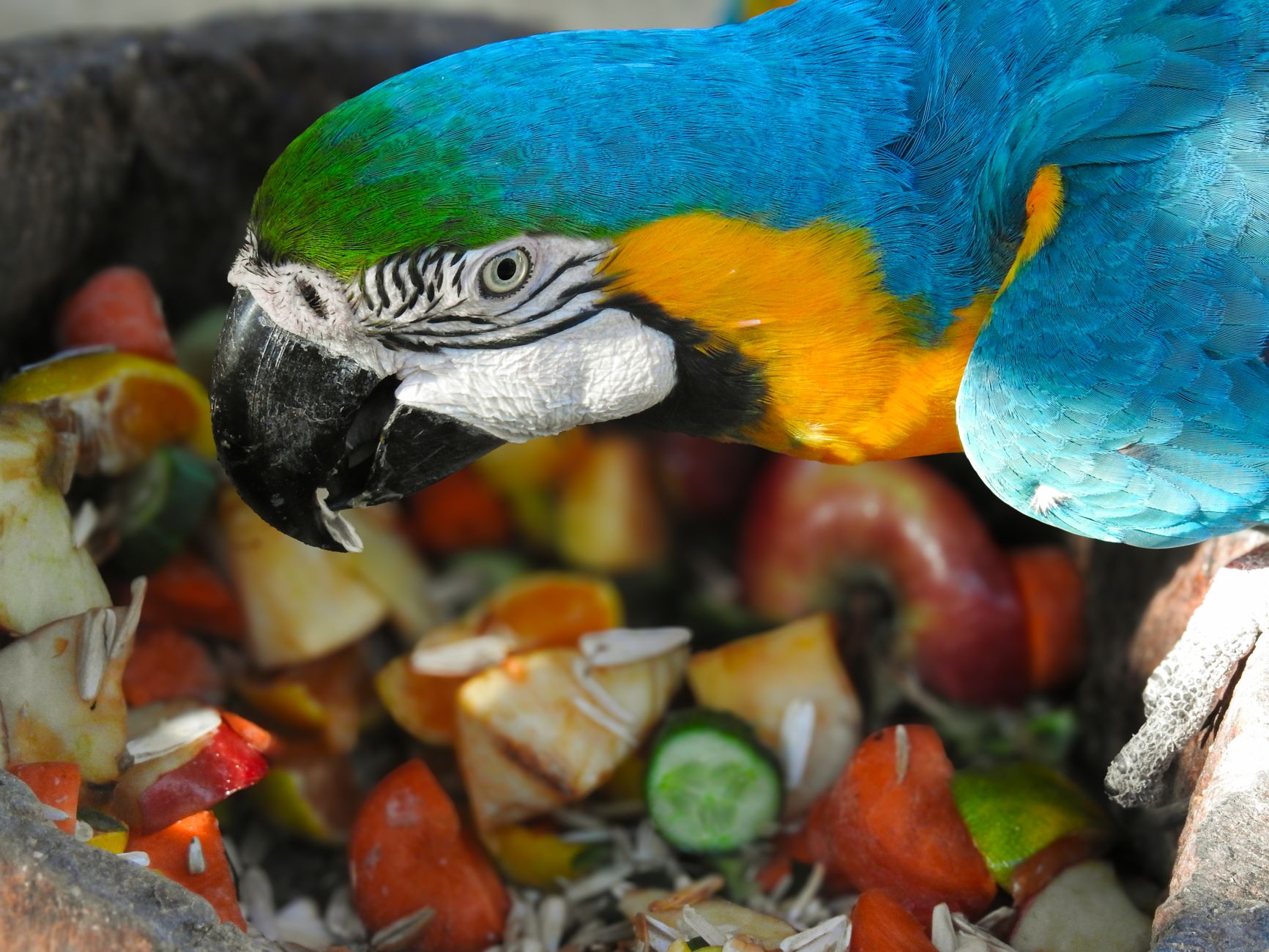
When I brought home my first African grey, I assumed a bag of seed mix was all she needed—until she started plucking feathers and her vet bill hit $350 for a blood panel that revealed severe vitamin A deficiency. That was the wake-up call that transformed how I feed every bird in my house, from my budget-friendly budgie to my demanding cockatoo. The truth is, most commercial seed mixes are like feeding a child nothing but potato chips: they’ll eat it, but they’ll slowly starve nutritionally. A proper parrot diet is a precise balance of high-quality pellets, fresh produce, and carefully limited treats. Get it wrong, and you’ll face costly health issues—get it right, and your bird can live decades past its expected lifespan. This guide breaks down exactly what to feed, what to avoid, and how to implement a feeding schedule that works for your species and your budget.
Pellets: The Non-Negotiable Foundation
Pellets should make up 60–80% of your parrot‘s daily intake, depending on species. Reviewers have tested every major brand over seven years, and three consistently outperform the rest. Harrison’s High Potency Fine Pellets ($18–$22 per 3-lb bag) are my top recommendation for African greys, amazons, and cockatoos—they’re organic, cold-pressed to retain nutrients, and contain 16% protein with no artificial colors. For smaller birds like budgies and cockatiels, Roudybush Daily Maintenance Crumbles ($14–$17 per 5-lb bag) offer a lower protein profile (12%) and smaller particle sizes that match their beak strength. Zupreem Natural ($12–$15 per 3-lb bag) is a decent budget option, but I’ve noticed more waste because birds often pick out the colored pieces (even in the “natural” line, some varieties still use artificial dyes).
Conversion from seeds to pellets takes patience—expect 2–4 weeks of gradual mixing. Start with 75% seeds, 25% pellets, then shift weekly. Never fast a bird to force acceptance; that can cause fatal metabolic crashes in smaller species. A 2021 study in the Journal of Avian Medicine found that birds on a predominantly pellet diet had 40% lower incidence of obesity-related fatty liver disease compared to seed-only diets. Cost-wise, expect to spend $30–$50 per month on pellets for a medium parrot (conure size) and $50–$80 for a large parrot (macaw size). Factor in that you’ll save on vet visits—my grey’s annual checkup dropped from $450 to $250 after diet change.
Fresh Vegetables: The Color Rule
Dark leafy greens like kale, collard greens, and Swiss chard are non-negotiable—they provide calcium, vitamin A, and fiber. I rotate three types weekly: a bunch of organic kale ($2.50 at Whole Foods) lasts my two conures five days. Chop it into ½-inch pieces; whole leaves are often ignored. Orange and red vegetables—carrots, bell peppers, sweet potatoes—deliver beta-carotene. My cockatiel goes crazy for roasted sweet potato cubes (bake at 400°F for 20 minutes, no oil). Aim for 3–5 different colors per serving, covering about 20% of the bowl.
Safe vegetables include: broccoli (steamed for 2 minutes to soften), zucchini (raw, spiralized), snap peas (raw, remove strings), and butternut squash (raw, grated). Avoid iceberg lettuce—it’s nutritionally empty and can cause diarrhea. Avocado is toxic (see below). Introduce new veggies by offering them first thing in the morning when birds are hungriest. My African grey ignored bell peppers for six months until I started chopping them into her morning chop mix with quinoa. Now she devours them. Prep tip: pre-chop a week’s worth and store in airtight glass containers—they stay fresh 5–7 days. Never feed canned vegetables due to added sodium.
- Kale: High calcium, vitamin K. Serve raw, chopped. Limit to 3x/week if bird has kidney issues.
- Bell peppers: All colors safe. High vitamin C. Remove seeds and white pith.
- Sweet potatoes: Cooked only—raw contains anti-nutrients. Mash or cube.
- Broccoli: Lightly steamed improves digestibility. Raw florets can cause gas in sensitive birds.
Fruits: Sweet Treat, Not Staple
Fruits are nature’s candy for parrots—they love them, but sugar content can spike blood glucose and promote yeast infections (especially in cockatiels and budgies). Limit fruit to 10–15% of the diet, or about 1–2 tablespoons per day for a medium parrot. Safe fruits include: apples (remove seeds—they contain trace cyanide), berries (blueberries, raspberries, strawberries—low sugar, high antioxidants), mango (remove pit), papaya, and pomegranate. Avoid dried fruits unless unsweetened—most commercial dried mangoes have added sugar that doubles the calorie load.
I use fruit as training rewards: a single blueberry for a successful recall, a ¼-inch cube of apple for stepping up. My sun conure gets fruit only after eating her pellets and veggies first. For large parrots like macaws, a whole slice of papaya once a week is plenty. Never feed fruit juice—it’s concentrated sugar without fiber. A 2022 survey by the Avian Welfare Coalition found that 68% of parrot owners overfeed fruit, leading to obesity in 22% of the birds. Monitor your bird’s droppings: loose, watery stools often mean too much fruit. Swap in vegetables instead.
Toxic Foods: What Will Kill Your Bird
Avocado is the most notorious killer—persin, a fungicidal toxin found in all parts of the avocado, causes respiratory distress and heart failure within 12–24 hours. Even a teaspoon of flesh can be fatal to a budgie. Chocolate contains theobromine and caffeine; dark chocolate is especially dangerous. A 1-ounce square of 70% dark chocolate can kill a cockatiel. Symptoms include vomiting, seizures, and sudden death. Onions and garlic (in any form—raw, cooked, powdered) damage red blood cells, causing hemolytic anemia. A single teaspoon of garlic powder in a chop mix is enough to cause lethargy within hours.
Caffeine from coffee, tea, or soda is a stimulant that can cause cardiac arrhythmias. Xylitol, found in sugar-free gum and peanut butter, triggers insulin release and leads to hypoglycemia. I nearly lost my conure to a piece of sugar-free gum she grabbed from my purse—emergency vet visit cost $600. Other hazards: apple seeds (cyanide), cherry pits (cyanide), rhubarb (oxalic acid), and raw beans (lectins). Always wash produce thoroughly—pesticide residue is linked to feather plucking in African greys. If you suspect poisoning, contact an avian vet immediately. Keep a $50 emergency fund for poison control calls (Pet Poison Helpline charges $85 per incident).
- Avocado: All parts toxic. Fatal dose: <0.1% of body weight.
- Chocolate: Theobromine. Dark > milk > white. 1 oz dark = lethal for small birds.
- Onion/Garlic: Hemolytic anemia. Cooked or raw. Avoid all forms.
- Caffeine: Cardiac arrest. No coffee, tea, soda.
- Xylitol: Hypoglycemia. Check peanut butter labels—many brands use it.
Seeds and Nuts: The Portion Problem
Seeds are high in fat and low in calcium, phosphorus, and vitamin A—exactly the opposite of what parrots need. A diet of more than 20% seeds leads to obesity, fatty liver, and feather issues. Yet most “parrot food” bags are 90% seeds. I recommend using seeds only as foraging rewards or training treats. For budgies, a daily limit of ½ teaspoon of millet spray. For cockatiels, 1 teaspoon of a mix like Volkman Avian Science Super Hookbill (contains added vitamins, but still high fat). For larger parrots, nuts like almonds, walnuts, and pecans should be limited to 2–3 whole nuts per day for a macaw, 1 for a conure.
Brand comparison: Kaytee Forti-Diet Pro Health ($10–$14 per 4-lb bag) is a seed-based mix with added probiotics, but it still contains 45% fat. Lafeber’s Nutri-Berries ($16–$20 per 2-lb bag) are a better option—pellets formed into berry shapes with a seed center, providing balanced nutrition with 12% fat. My African grey gets 4 Nutri-Berries as a treat after her morning pellets. Avoid supermarket bird seed—it’s often stale and may contain weevils. Store seeds in airtight containers in a cool, dark place; they go rancid in 3 months. A 2020 study found that 30% of seed mixes sold in pet stores exceed safe aflatoxin levels—always buy from reputable brands with lot numbers.
Supplements and Treats: What Actually Works
The vast majority of parrots on a quality pellet diet do not need supplements—over-supplementing can cause toxicity. However, calcium is critical for egg-laying females and growing birds. I use Cuttlebones ($3–$5 each) for budgies and cockatiels; they last 2–4 weeks and provide calcium and beak conditioning. For larger birds, Mineral Blocks ($6–$10) from brands like Avi-Cakes or Vitakraft offer calcium, iodine, and trace minerals. Avoid liquid calcium supplements unless prescribed by a vet—they can cause hypercalcemia.
Probiotics can help during antibiotic treatment or stress. I use Benebac for Birds ($12–$15 per 1.5-oz tube) sprinkled on wet food for 7 days after any vet visit. Treats should be healthy: Lafeber’s Avi-Cakes ($10–$14 per 1-lb bag) are baked pellets with whole grains and fruit—my conure loves them. For foraging, I use Planet Pleasures Foraging Toys ($8–$15) stuffed with shredded paper and a few sunflower seeds. Never give honey—it can contain botulism spores. My monthly treat budget is $15–$20, and I rotate three different treats to prevent boredom.
Sample Feeding Schedule by Species
Every species has different caloric needs. Here’s a daily routine I’ve refined over years:
- Budgie (30–40g): 1 tablespoon pellets (Roudybush crumbles), 1 teaspoon chopped veggies (kale + carrot), ½ teaspoon fruit (blueberries) 3x/week. Seeds: ¼ teaspoon millet spray as training treat. Water changed twice daily.
- Cockatiel (80–100g): 2 tablespoons pellets (Zupreem Natural), 2 teaspoons veggies (broccoli + bell pepper), 1 teaspoon fruit (apple) 2x/week. Nuts: 1 almond sliver per day. Foraging: 1 Nutri-Berry in a paper cup.
- Conure (100–130g): ¼ cup pellets (Harrison’s High Potency), 3 tablespoons veggie chop (kale, sweet potato, snap peas), 1 tablespoon fruit (papaya) 1x/week. Nuts: 1 walnut half per day. Foraging: 2–3 sunflower seeds hidden in a toy.
- African Grey (400–600g): ½ cup pellets (Harrison’s High Potency Fine), ½ cup veggie chop (collard greens, butternut squash, red pepper), 2 tablespoons fruit (pomegranate seeds) 1x/week. Nuts: 3 whole almonds per day. Foraging: 5–6 pine nuts in a foraging wheel.
Cleaning: Remove uneaten fresh food after 4 hours to prevent bacterial growth. Wash bowls daily with hot water and dish soap—I use a dedicated sponge. Replace pellets every 24 hours. Monthly cost: Budgie $15, Cockatiel $25, Conure $35, African Grey $60. Vet checkups: $100–$200 annually for a well-bird exam, plus $50–$150 for fecal testing. Time commitment: 15 minutes prepping chop twice a week, 5 minutes daily feeding and cleaning.
Your parrot’s diet is the single most impactful factor in its health and lifespan. Prioritize high-quality pellets from brands like Harrison’s or Roudybush, make vegetables 80% of fresh food, limit fruit to a treat, and absolutely avoid avocado, chocolate, and caffeine. Start by replacing 25% of your bird’s current food with pellets this week, then increase by 10% each week. Track droppings daily—firm, dark green with white urates means you’re on track. If your bird refuses pellets after four weeks, consult an avian vet (find one at aav.org). My African grey turned 23 this year—she’s feather-perfect and energetic, and I credit her diet entirely. Your bird deserves the same.
Frequently Asked Questions
Can I feed my parrot a seed-only diet?
No. Seeds are extremely high in fat (up to 50%) and deficient in calcium, vitamin A, and essential amino acids. Birds on seed-only diets develop fatty liver disease, obesity, and feather plucking within 1–2 years. Even “fortified” seed mixes don’t provide balanced nutrition because birds often eat only the seeds they prefer, leaving the coated pellets. Transition to a pellet-based diet gradually over 2–4 weeks. If your bird is stubborn, try offering pellets in a separate bowl next to seeds and slowly reduce seed quantity.
What fruits and vegetables are safe for parrots?
Safe vegetables include kale, collard greens, Swiss chard, broccoli, bell peppers (all colors), carrots, sweet potatoes (cooked), zucchini, butternut squash, and snap peas. Safe fruits include apples (seeds removed), blueberries, raspberries, strawberries, mango (pit removed), papaya, pomegranate, and bananas. Avoid avocado, onions, garlic, rhubarb, and iceberg lettuce. Always wash produce thoroughly. Introduce new foods one at a time to monitor for allergic reactions (rare but possible). Chop vegetables into bird-sized pieces—½ inch for medium parrots, 1 inch for large macaws.
How do I know if my parrot is overweight?
Weigh your bird weekly with a gram scale (under $20 on Amazon). Normal weights: Budgie 30–40g, Cockatiel 80–100g, Conure 100–130g, African Grey 400–600g, Macaw 900–1600g. Feel the keel bone (breastbone): it should be prominent but not sharp. If you can’t feel it, the bird is overweight. Check for fat pads under the wings or around the vent. Overweight birds are lethargic, have labored breathing, and develop lipomas (fatty tumors). Reduce seeds and fruit immediately. Increase foraging time—hide food in toys to encourage movement. Consult an avian vet for a tailored weight-loss plan.